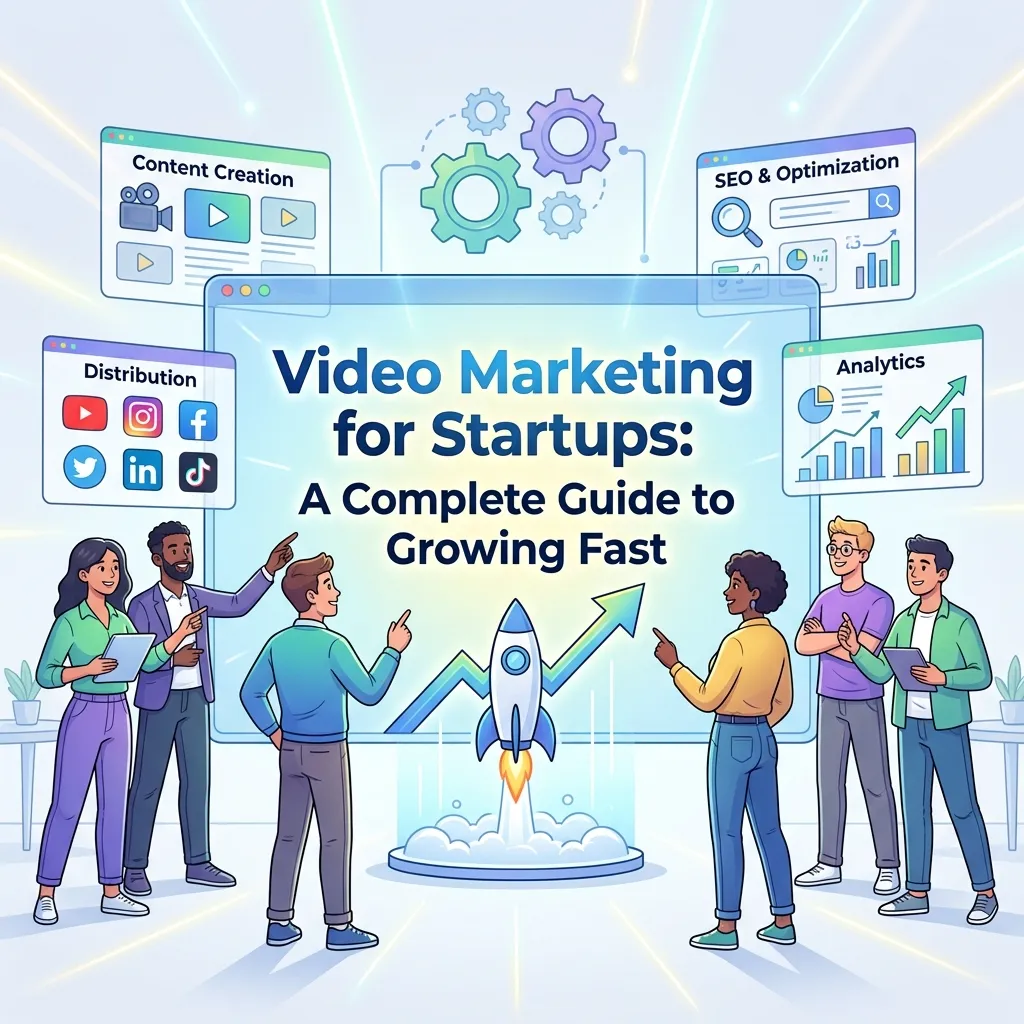
Video marketing for startups doesn’t require a big production budget or an in-house creative team — it requires a clear strategy, the right platforms, and consistent execution. This guide walks through exactly how early-stage companies can use video to build awareness, generate leads, and earn trust, even with limited resources. You’ll get a complete framework covering strategy, tools, distribution, and the metrics that actually matter when every dollar and every hour counts.
Startups rarely have the luxury of a six-figure production budget, an internal video team, or months to plan a single campaign. What startups do have is speed, authenticity, and a founder story worth telling — and video happens to be the format best suited to communicate all three. A short, honest product demo or a founder explaining a problem on camera can outperform a polished, expensive commercial simply because it feels real.
The challenge is figuring out where to start when time and budget are both tight. This guide breaks down a complete approach to video marketing for startups: why it matters at the early stage, how it differs from what larger brands do, and a practical step-by-step framework you can start executing this week.
Why Video Marketing Matters for Startups
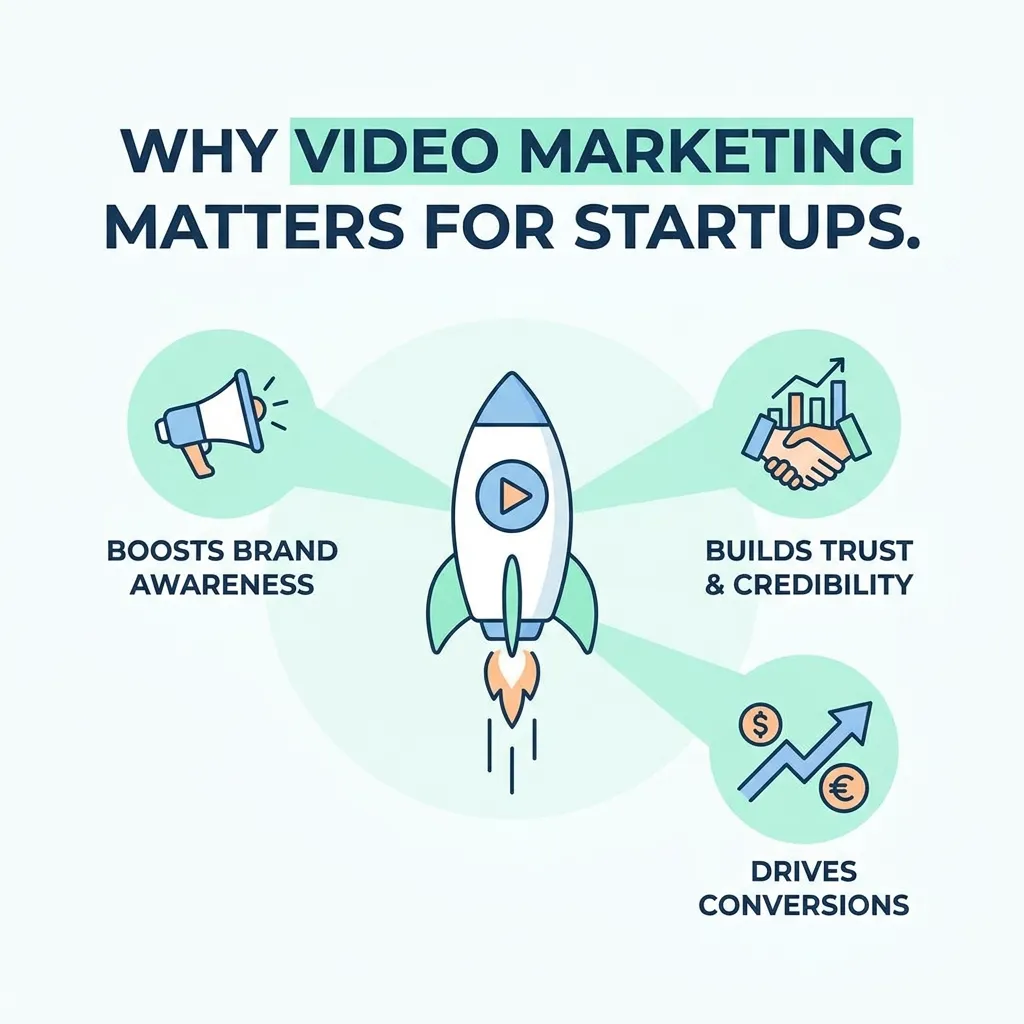
Early-stage companies live and die by how quickly they can build trust with strangers. Text and static images ask an audience to imagine the product; video shows it. For a startup with no brand recognition yet, that difference is enormous — a 60-second demo can do more to convince a skeptical prospect than a page of feature bullet points ever could.
There are a few specific reasons this channel deserves early investment:
- It builds trust fast. Seeing a real founder or real product in motion closes the credibility gap that a new company naturally starts with.
- It performs well organically. Social platforms and search engines both favor video content, which means a startup with limited paid budget can still get meaningful reach.
- It’s reusable across the funnel. A single well-made video can become an ad, a landing page asset, a sales enablement tool, and a piece of onboarding content.
- It compounds with word of mouth. People share video far more readily than long-form text, and wompromotion’s breakdown of word-of-mouth marketing strategies makes the same point — content that’s easy to pass along is what actually spreads.
Video Marketing for Startups vs. Established Brands
Larger companies often approach video with big budgets, agency partners, and long production timelines. That approach doesn’t translate to an early-stage company, and trying to copy it usually leads to wasted months and an empty runway. Startups win by moving faster and being more willing to publish something imperfect but genuine.
The other key difference is proof. An established brand can lean on reputation alone; a startup usually can’t. That means startup video content tends to work best when it leads with evidence — a real customer using the product, a founder demoing a feature live, or a before-and-after that makes the value obvious in seconds rather than minutes.
The Complete Framework: Video Marketing for Startups Step by Step
Building an effective video program at an early-stage company comes down to eight practical steps.
Step 1: Set a Realistic Budget and Clear Goals
Before shooting anything, decide what success looks like and how much you can actually spend. Some formats, like short social clips filmed on a phone, cost almost nothing. Others, like a polished brand film, can run into the thousands. Understanding what different types of video advertising actually cost upfront prevents you from either overspending early or under-investing in the one format that would have moved the needle.
Step 2: Choose the Right Platform for Your Audience
Not every channel deserves your limited production time. A B2B SaaS startup selling to enterprise buyers should prioritize LinkedIn and YouTube over TikTok, while a consumer app targeting Gen Z should flip that priority entirely. Match the platform to where your actual buyers spend time rather than chasing whichever channel is trending.
Step 3: Build a Lightweight but Real Strategy
You don’t need a fifty-page video marketing plan, but you do need a clear point of view on what stories you’re telling and why. A proven approach to building a video marketing strategy that works can help you avoid the common trap of publishing random, disconnected clips that don’t build toward anything.
Step 4: Lead with Product Demos and Founder Stories
Two formats consistently outperform everything else for early-stage companies: a clear product demo that shows the value in under two minutes, and a founder or team member speaking directly to camera about the problem being solved. Both are cheap to produce and both directly address the trust gap a new company faces.
Step 5: Lean on Short-Form and Social-Native Formats
Startups rarely need cinematic production values to get results. Short, native-feeling clips shot on a phone often perform better than a polished ad because they feel authentic to the platform they’re on. Prioritizing quick, frequent content over rare, expensive shoots is almost always the better use of limited resources at this stage.
Step 6: Use AI Tools to Stretch a Small Team
A lean team doesn’t need to skip video just because there’s no dedicated editor. Today’s AI-powered video marketing tools can handle editing, captions, repurposing long clips into shorts, and even generating variations for testing, letting a single founder or marketer produce far more than they could manually.
Step 7: Repurpose Video Across Every Channel
A single piece of video content shouldn’t live in only one place. A product demo can become a landing page hero, a paid ad, a sales follow-up attachment, and a series of social clips. This is also where complementary formats help extend reach — startups running lead-generation webinars, for example, can pull short clips directly from those sessions, and webinarmarketo’s guide on why webinars work for B2B lead generation is a useful companion resource if live video is part of your broader funnel.
Step 8: Track the Metrics That Actually Matter
Vanity metrics like total views feel good but rarely tell you whether video is driving the business forward. Watch completion rate, click-through rate to your product or signup page, and downstream conversion instead. Our guide to measuring video marketing success breaks down exactly which numbers matter at each stage of the funnel.
Real Examples of Video Marketing for Startups Done Well
The most effective video marketing for startups shares a few traits regardless of industry: it’s short, it leads with a real problem, and it doesn’t try to look like a big-budget commercial. A 90-second explainer that opens with a relatable pain point, shows the product solving it, and ends with a simple call to action will usually outperform something more elaborate that takes three times as long to say the same thing.
Customer testimonial clips are another format that punches well above their production cost. A 30-second clip of a real customer describing their result carries more weight for a skeptical prospect than almost any other asset a young company can produce, precisely because it isn’t coming from the company itself.
Common Mistakes Startups Make with Video Marketing
Even well-intentioned video marketing for startups efforts run into predictable problems:
- Over-investing in production value too early. A single expensive brand film often delivers less return than a dozen scrappy, fast-turnaround clips.
- Skipping strategy entirely. Publishing videos with no consistent theme or goal makes it hard to build any kind of audience momentum.
- Ignoring distribution. A great video that never gets pushed across multiple channels won’t generate the reach needed to matter.
- Optimizing for views instead of action. A video that gets a lot of views but no clicks or signups isn’t actually doing its job.
- Waiting for perfect instead of shipping. At the startup stage, a good-enough video published this week beats a perfect one published next quarter.
Building a Sustainable Video Marketing Habit
The startups that win with video marketing for startups long-term treat it as an ongoing habit rather than an occasional campaign. That usually means setting a realistic cadence — even one short video a week is enough to start building momentum — and reviewing performance regularly enough to double down on what’s working. As the audience and budget grow, so can the production quality, but the fundamentals of clear messaging and consistent output stay the same at every stage.
This mindset also connects back to trust-building more broadly. A startup that consistently shows up with useful, honest video content earns the kind of long-term credibility that eventually turns customers into advocates, which is exactly the compounding effect wompromotion describes in their guide to building brand trust — consistency over time matters more than any single piece of content.
Your First Three Videos: A Practical Starting Point
When resources are tight, the question isn’t “what’s the ideal video content strategy” — it’s “what are the first three videos worth making this month.” For most early-stage companies, the answer is the same regardless of industry.
Video one: the 60-second product demo. This is the single most important asset a startup can produce. It should open with the problem, show the product solving it in real time, and end with a clear next step. This one video can be repurposed as an ad, a landing page hero, and a sales follow-up attachment, which makes it the highest-leverage piece of content most startups will make all year.
Video two: the founder story. A short, unpolished video of a founder explaining why the company exists builds a level of trust that no amount of copywriting can replicate. This works especially well on LinkedIn and in email outreach, where a human face significantly outperforms plain text.
Video three: a customer proof point. Even a single early customer willing to speak on camera for thirty seconds is worth more than a testimonial quote on a webpage. If no paying customers exist yet, a beta user or design partner works just as well.
Once these three exist, everything else — social clips, ads, webinar recordings, longer explainers — becomes easier, because the foundational assets and messaging are already in place. Startups that try to skip straight to advanced formats like animated explainers or multi-scene brand films before nailing these basics often end up with polished content that doesn’t actually convert.
How Video Fits Into a Broader Startup Marketing Stack
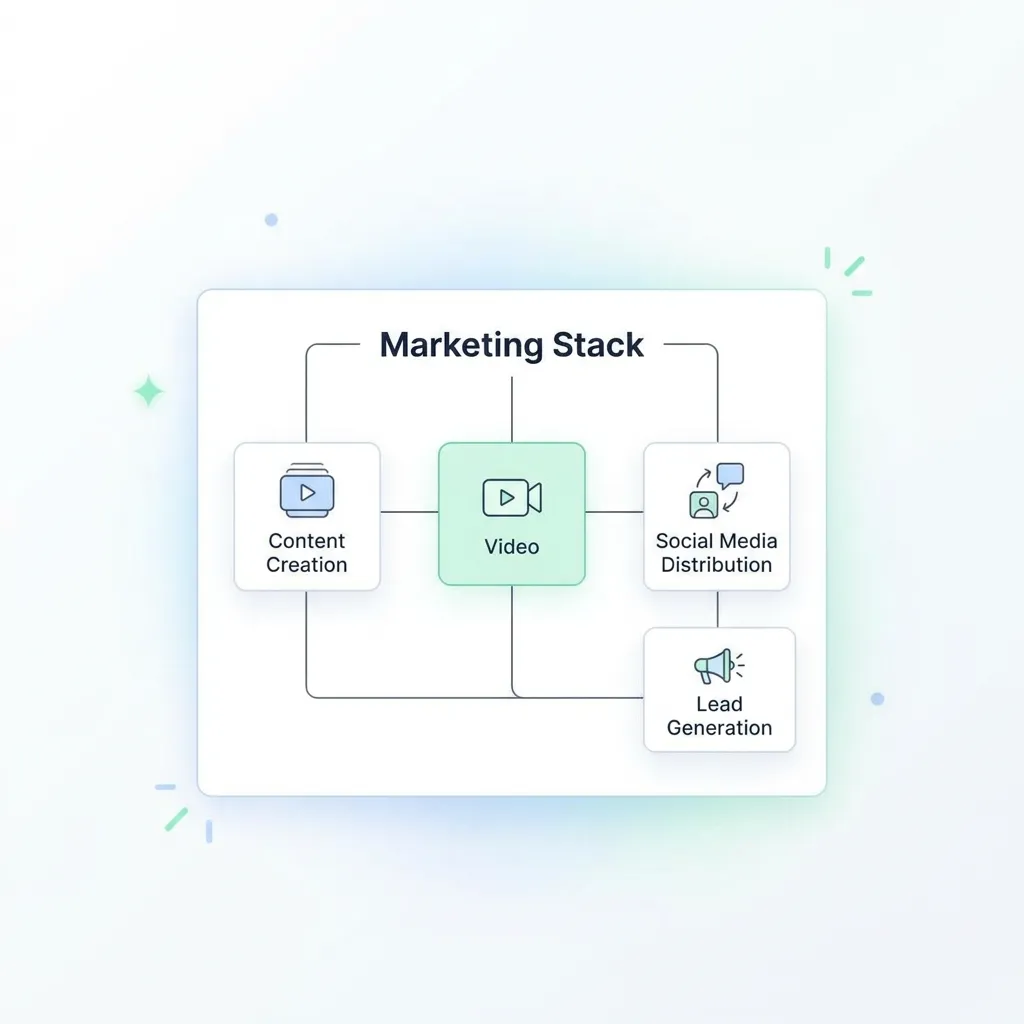
Video marketing for startups rarely works in isolation — it performs best when it’s connected to the rest of the growth stack. A product demo drives more signups when it sits on a well-converting landing page. A founder story spreads further when it’s paired with an organic social push. And a customer testimonial does more work when it shows up in outbound email, not just on a testimonials page.
The startups that get the most out of video marketing for startups budgets are usually the ones treating it as one channel among several, feeding into the same funnel rather than existing as a disconnected side project. Video should support the goals already set for the funnel — signups, demo requests, or trial activations — rather than being measured against a completely separate set of expectations.
Conclusion
Video marketing for startups isn’t about matching the production budgets of bigger competitors — it’s about using speed, authenticity, and a real story to build trust faster than anyone else in the market. Set a realistic budget, choose the platforms where your actual buyers spend time, lead with product demos and founder stories, and use AI tools to get more out of a small team. Track the metrics that connect to real business outcomes rather than vanity numbers, and treat video as an ongoing habit instead of a one-off campaign. Done consistently, video becomes one of the highest-leverage channels a resource-constrained startup has available.
Frequently Asked Questions
1. Why is video marketing important for startups specifically?
Video builds trust faster than text or static images, which matters enormously for a startup that doesn’t yet have brand recognition or a long track record to lean on.
2. How much should a startup spend on video marketing?
There’s no fixed number, but many startups get strong early results by starting with low-cost, phone-shot content and reserving bigger budgets for formats proven to convert.
3. What type of video content works best for startups?
Product demos and founder-led explainer videos tend to perform best, since both directly address the trust gap a new company faces with unfamiliar prospects.
4. Do startups need a professional video team?
Not at first. Many early-stage companies produce effective content with a smartphone, basic editing software, and AI tools that handle captions, cuts, and repurposing.
5. Which platforms should startups prioritize for video?
It depends entirely on the audience. B2B startups often see the best results on LinkedIn and YouTube, while consumer startups typically lean toward TikTok and Instagram.
6. How often should a startup publish video content?
Consistency matters more than volume. A single short video published weekly, done reliably, usually outperforms sporadic, high-production content released once a quarter.
7. Can video marketing help a startup generate leads directly?
Yes. Product demos and explainer videos placed on landing pages or in ads can drive signups directly, especially when paired with a clear, single call to action.
8. Should startups repurpose long-form video into shorter clips?
Absolutely. Cutting long-form content like webinars or product walkthroughs into short clips extends the value of every piece of video already produced.
9. What metrics should startups track for video marketing?
Completion rate, click-through rate, and downstream conversion tell you far more about business impact than raw view counts.
10. Is customer testimonial video worth the effort for an early-stage company?
Yes. A short, authentic testimonial often carries more persuasive weight with skeptical prospects than any content the company produces about itself.
11. How does AI help startups with video marketing?
AI tools can automate editing, generate captions, repurpose long clips into shorts, and speed up production significantly, letting a small team produce far more content.
12. What’s the biggest video marketing mistake startups make?
Over-investing in a single polished, expensive video instead of consistently publishing simpler content, which tends to build more momentum over time.