A video marketing campaign is a coordinated set of video assets built around a single goal — launching a product, driving signups, building awareness — rather than a single standalone clip published and forgotten. The businesses that get real results from video treat it as a campaign with a strategy, a timeline, and a measurement plan, not a one-off creative project. This guide covers exactly how to plan, produce, distribute, and measure a video marketing campaign that actually moves the numbers you care about.
A lot of brands publish video without ever running an actual campaign. They shoot one nice-looking clip, post it once, and move on to the next idea before finding out whether it worked. That approach almost never compounds into anything meaningful. A real video marketing campaign, by contrast, starts with a clear objective and builds a connected set of assets, channels, and follow-up content designed to hit that objective on purpose.
This guide breaks down what separates a genuine campaign from a random video post, why the campaign structure matters so much for results, and a complete framework you can follow from initial planning through post-launch measurement.
What Is a Video Marketing Campaign?
A video marketing campaign is a planned initiative built around one core video asset, or a family of related assets, all working toward a specific business outcome within a defined timeframe. It typically includes a hero video, several shorter cutdowns for different platforms, a distribution plan across paid and organic channels, and a way to measure whether the campaign actually achieved its goal.
This is different from ad-hoc video content, which is usually produced and published without a specific target in mind. A single explainer video sitting on a homepage is content. A coordinated push involving that same explainer, three social cutdowns, a paid ad variant, and an email sequence — all built around a product launch date — is a campaign.
Why Running an Actual Campaign Matters
Treating video as a campaign rather than a series of disconnected posts changes the outcome in a few important ways:
- It creates focus. A defined goal forces every asset in the campaign to serve the same objective instead of competing ideas pulling in different directions.
- It multiplies reach. A single hero video repurposed into multiple formats and pushed across several channels reaches far more of the target audience than one video posted in one place.
- It makes measurement possible. Without a defined campaign structure, it’s nearly impossible to say whether video actually contributed to a result. A campaign has a start date, an end date, and specific metrics tied to it.
- It builds momentum over time. A well-run campaign creates assets and learnings that make the next one faster and more effective, rather than starting from zero every time.
Video Marketing Campaign vs. a Single Video Post
Confusing these two is one of the most common reasons brands feel like “video doesn’t work” for them. A single video post is a tactic — useful, but limited in what it can achieve on its own. A campaign is a strategy that wraps multiple tactics, formats, and channels around one goal.
The clearest sign you’re running a campaign rather than posting content is whether you could answer these questions before hitting publish: What is this trying to achieve? Who exactly is it for? Where will it be distributed, and in what formats? How will you know if it worked? If those answers exist before production starts, you’re running a campaign. If they don’t, you’re just posting a video and hoping.
The Complete Framework: Planning a Video Marketing Campaign
Here is a practical, step-by-step approach to building a campaign that actually delivers results.
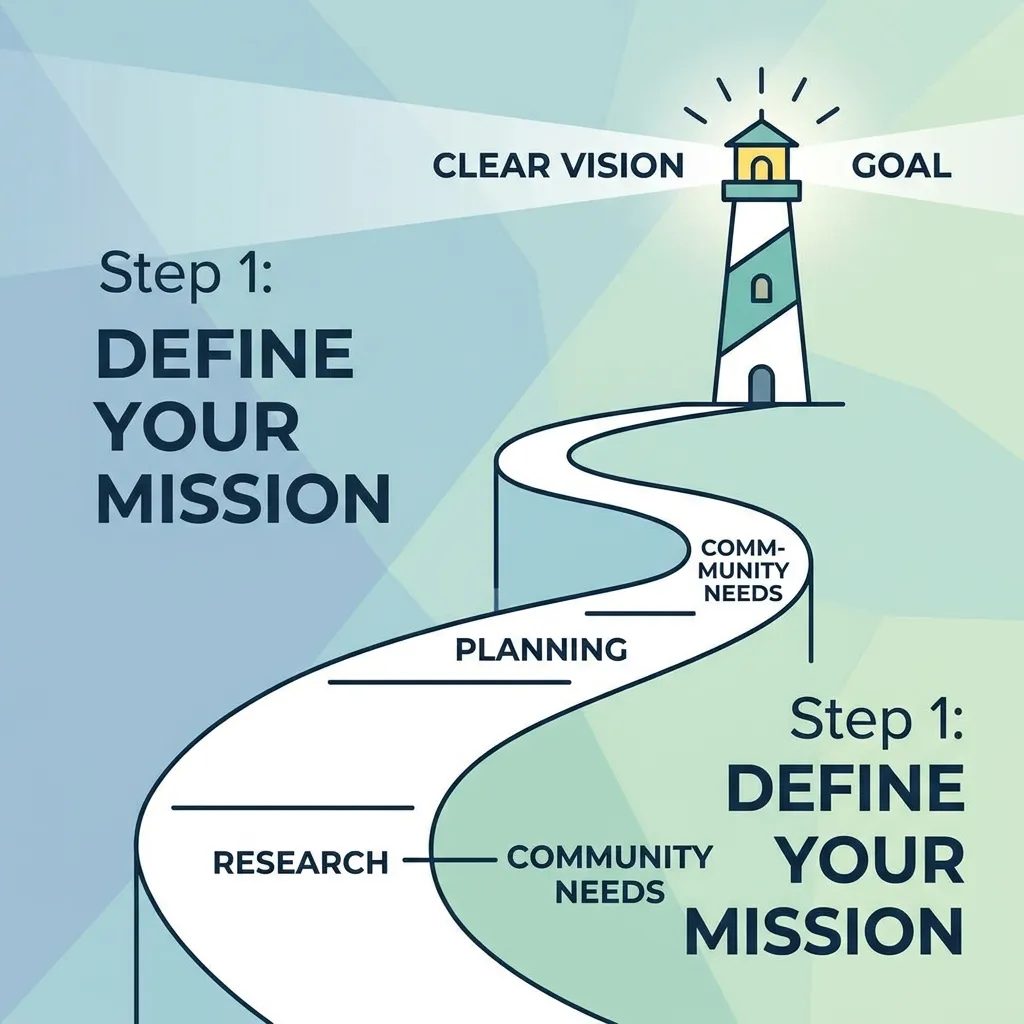
Step 1: Define One Clear, Measurable Goal
Every strong campaign starts with a single primary objective — product launch awareness, demo signups, a specific conversion event — rather than a vague ambition to “get more views.” Vague goals produce vague results, while a specific, measurable target shapes every decision that follows, from the script to the distribution plan.
Step 2: Know Exactly Who You’re Talking To
A campaign built for a broad, undefined audience rarely performs as well as one built for a specific segment. Define who the video needs to convince, what they already believe, and what objection the campaign needs to overcome. This clarity makes the messaging sharper and the media targeting far more efficient later.
Step 3: Build a Core Message and Creative Concept
Every asset in the campaign should trace back to one central message. Jumping between unrelated ideas across different videos dilutes the impact of the whole campaign. Our guide to video brand messaging strategy is a useful reference for developing a message that stays consistent across every format you plan to produce.
Step 4: Plan the Full Asset Set, Not Just One Video
Before production starts, map out every version of the campaign you’ll need: the long-form hero piece, shorter cutdowns for social, a version optimized for paid placements, and any static or text-based companion assets. Planning this upfront is far more efficient than repurposing after the fact, since the shot list and script can account for every format from day one.
Step 5: Set a Realistic Budget and Production Plan
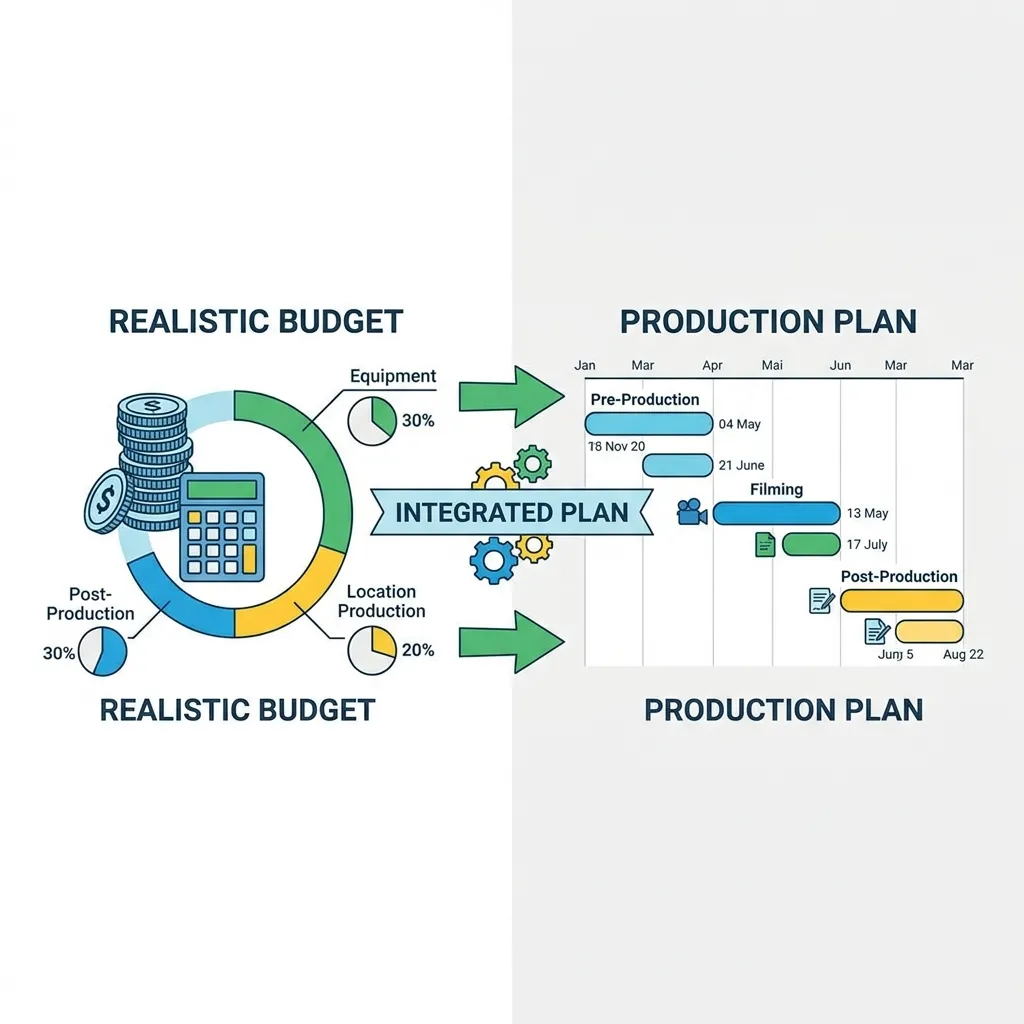
Campaign budgets should be allocated across production and distribution, not just spent entirely on the shoot. A common mistake is spending the full budget on a polished hero video with nothing left to actually get it in front of people. Understanding what different video advertising formats typically cost helps you split spend more realistically between creating the asset and promoting it.
Step 6: Build a Multi-Channel Distribution Plan
A great video with no distribution plan behind it rarely performs. Map out exactly where each asset will run — organic social, paid social, email, landing pages, and any partner or sponsorship placements — and time the rollout so the campaign builds momentum rather than launching everything at once and going quiet. Our breakdown of proven video marketing strategies to drive sales covers specific distribution tactics worth testing.
Step 7: Use a Complementary Channel to Extend Reach
Video rarely needs to work in isolation. Pairing a campaign with a live format like a launch webinar can extend its reach and give you a second wave of content to repurpose. Webinarmarketo’s beginner’s guide to webinar marketing is a useful companion resource if a live event is part of your broader campaign plan.
Step 8: Measure Against the Original Goal
Once the campaign is live, track performance against the specific goal defined in step one — not just surface-level metrics like views. Our guide to reporting on video marketing results like a pro walks through how to build a report that actually shows whether the campaign achieved what it set out to do.
What a Strong Video Marketing Campaign Looks Like in Practice
The best campaigns share a recognizable structure regardless of industry. They open with a hero asset that clearly states the value proposition, follow with shorter, platform-native cutdowns that hit the same message in different formats, and close the loop with a clear, singular call to action repeated across every touchpoint. Nothing about a strong campaign feels scattered — every piece points back to the same goal.
Timing also matters more than most teams expect. A campaign that launches all its assets on the same day and then goes silent burns through attention quickly. Staggering releases — a teaser, the main asset, then supporting cutdowns over the following two weeks — keeps the campaign visible for longer and gives paid distribution more time to compound.
Common Mistakes That Undermine a Video Marketing Campaign
Even well-funded campaigns fail for a handful of predictable reasons:
- Skipping the goal-setting step. Producing content first and figuring out the objective later almost always leads to a diluted, unfocused campaign.
- Spending the entire budget on production. A campaign with no distribution budget left over will struggle to reach anyone beyond existing followers.
- Publishing everything on day one. Front-loading every asset at once instead of staggering the rollout shortens the campaign’s overall visibility.
- Ignoring platform-native formats. Repurposing the exact same cut across every channel underperforms compared to versions edited for each platform’s format and audience behavior.
- Not defining success metrics upfront. Without a measurement plan built before launch, it’s nearly impossible to judge the campaign fairly after the fact.
Adapting the Structure by Business Goal
Not every campaign should follow the exact same shape. A product launch, a lead-generation push, and a brand-awareness effort all call for different asset mixes, even though the underlying planning process stays the same.
Product launch campaigns typically center on a single hero demo video, supported by shorter feature-specific cutdowns and a countdown or teaser sequence in the days before launch. The goal here is usually signups or pre-orders, so every asset should point toward a clear, time-sensitive call to action.
Lead-generation campaigns tend to work best when video is paired with a gated asset or a live event. A short teaser video can drive registrations for a webinar or a downloadable resource, and the recorded session itself becomes a second wave of content — clips, quotes, and highlight reels — that extends the campaign well past its original launch date.
Brand-awareness campaigns usually prioritize reach and emotional resonance over an immediate conversion action. These campaigns often lean more heavily on organic and social distribution, with success measured in view-through rate, share count, and brand recall rather than direct signups.
Recognizing which type of campaign you’re actually running — before locking in the budget and asset list — prevents a common failure mode: building an awareness-style hero video and then being surprised when it doesn’t drive the signup numbers a lead-generation campaign would.
A useful gut check when scoping any new campaign, regardless of type, is to compare it against a strategy you already trust. The way wompromotion’s referral program guide frames goal-setting before tactics — deciding what you’re optimizing for before choosing the mechanics — applies just as directly to planning a video push as it does to a referral system.
Building a Campaign Timeline That Actually Works
A campaign without a timeline tends to drift. Working backward from the launch date, block out separate windows for scripting and creative approval, production and editing, a review and revision pass, and a staggered release schedule once the assets are ready. Leaving a buffer between production wrap and launch day gives you room to catch problems in editing or messaging before they go live, rather than discovering them after the campaign has already started.
For campaigns tied to a specific event or seasonal moment, working backward from that fixed date is non-negotiable — production timelines tend to slip, and a hard external deadline is one of the few forcing functions that reliably keeps a video project on schedule.
Turning One Campaign Into a Repeatable Playbook
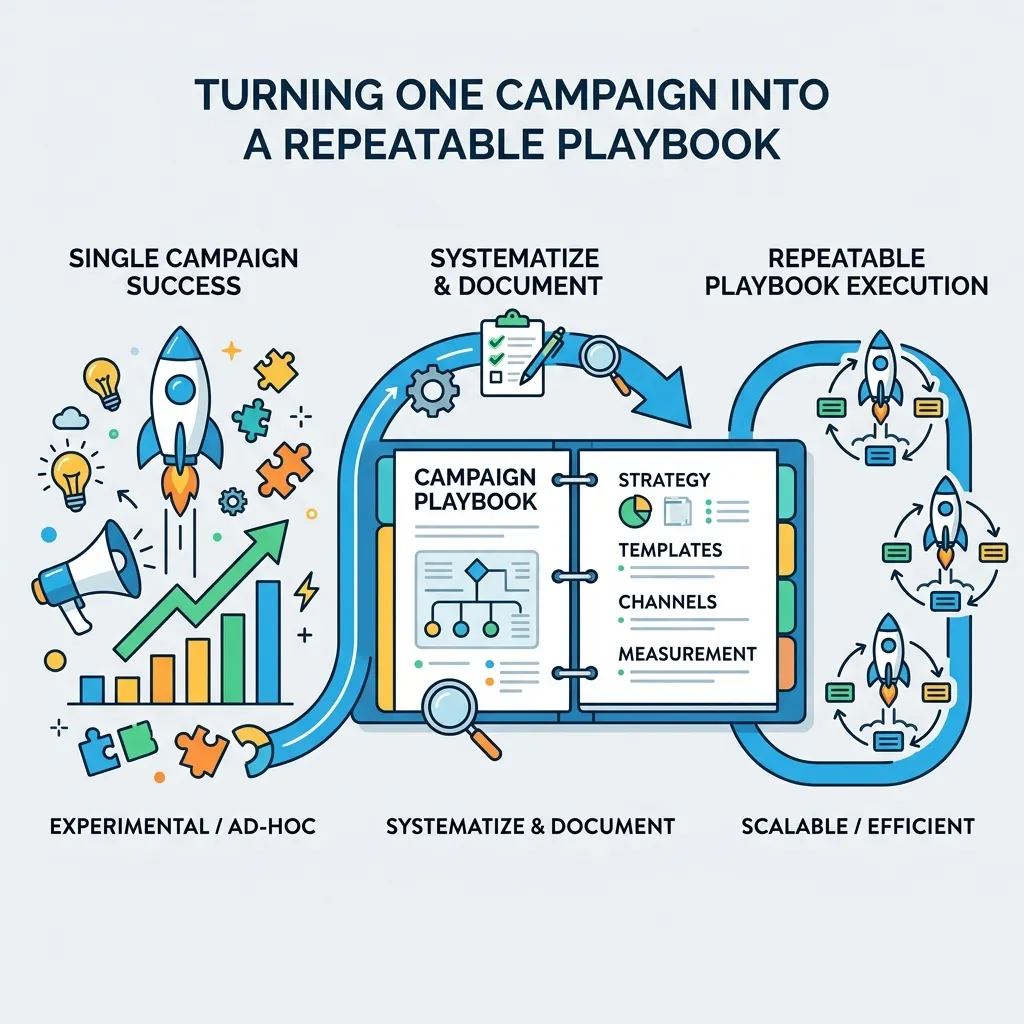
The most efficient teams don’t reinvent their process every time. After a campaign wraps, document what worked — which hooks performed, which channels drove the strongest results, what the ideal cutdown lengths were — and turn that into a lightweight playbook for the next launch. Over several campaigns, this turns video marketing from a series of one-off creative projects into a genuinely repeatable growth channel.
This same compounding logic shows up in other channels too. The way wompromotion frames referral marketing as a repeatable system rather than a one-time push is a useful parallel — this kind of effort gets dramatically more efficient once you’ve built the templates, learnings, and workflows from a first attempt.
Conclusion
This kind of effort only works when it’s treated as a coordinated system rather than a single piece of creative content. Start with one clear, measurable goal, build a core message that stays consistent across every asset, plan the full set of formats before production begins, and put real budget behind distribution rather than production alone. Measure against the original objective, document what worked, and turn each campaign into the starting point for the next one. Done this way, these campaigns stop being isolated bets and start becoming one of the most reliable growth levers a marketing team has.
Frequently Asked Questions
1. What makes something a video marketing campaign rather than just a video?
A campaign has a defined goal, a planned set of assets across multiple formats, a distribution plan, and a way to measure success. A single video post usually has none of those in place.
2. How long should a video marketing campaign run?
Most campaigns run anywhere from two to six weeks, though the right length depends on the goal, the budget, and how much content is available to stagger over time.
3. How much should a business budget for a video marketing campaign?
Budgets vary widely, but a common mistake is spending it all on production. Setting aside a meaningful portion for distribution is just as important as the shoot itself.
4. What’s the most important step in planning a video marketing campaign?
Defining a single, measurable goal before any production begins is the most important step, since every other decision in the campaign should trace back to that objective.
5. Should a video marketing campaign include more than one video?
Yes. Most effective campaigns include a hero asset along with several shorter, platform-specific cutdowns built from the same core message.
6. How do you measure whether a video marketing campaign succeeded?
Measure performance against the specific goal set at the start, such as conversions, signups, or awareness lift, rather than relying on view counts alone.
7. What channels should a video marketing campaign use?
The right mix depends on the audience, but most successful campaigns combine organic social, paid placements, email, and landing pages rather than relying on a single channel.
8. Is it better to launch all campaign assets at once or stagger them?
Staggering the rollout—a teaser, then the hero asset, followed by supporting cutdowns—generally keeps the campaign visible longer than releasing everything on day one.
9. Can a webinar be part of a video marketing campaign?
Yes. A live webinar can serve as a launch moment and a source of additional clips that extend the campaign’s reach after the event ends.
10. What’s the biggest reason video marketing campaigns underperform?
Skipping the goal-setting and distribution planning steps can leave a well-produced video with nowhere effective to go once it’s finished.
11. Should every video marketing campaign have the same structure?
The core principles—clear goal, consistent message, multi-format assets, and planned distribution—stay the same, but the specific format mix should adapt to the objective and audience each time.
12. How can a business improve its video marketing campaigns over time?
Document what worked after each campaign and turn those learnings into a repeatable playbook, so each new campaign starts from a stronger position than the last.