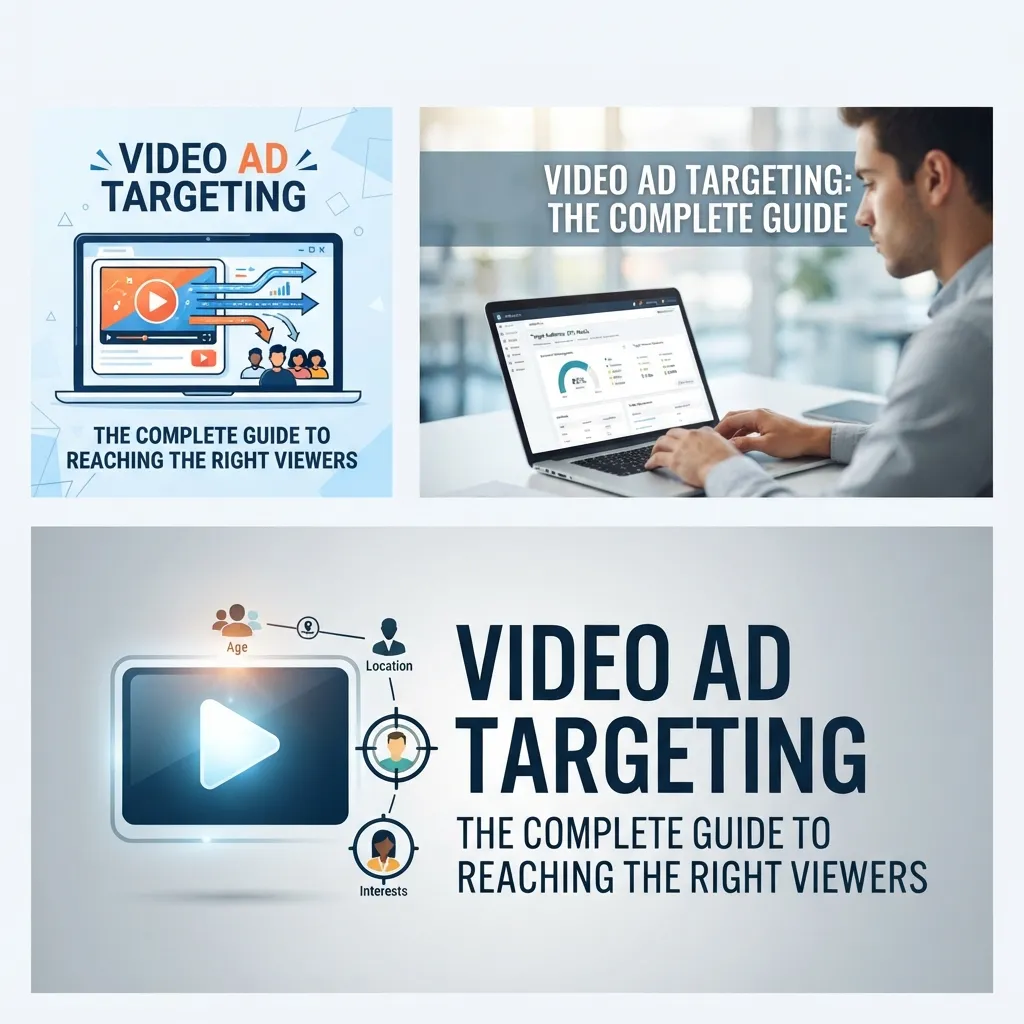
Video ad targeting is the practice of showing video ads to the specific people most likely to respond to them, rather than broadcasting the same creative to everyone within reach of a budget. As video advertising spend continues to climb across platforms like YouTube, Meta, TikTok, and connected TV, the difference between a profitable campaign and a wasted one increasingly comes down to targeting precision rather than creative quality alone. This guide covers the core types of video ad targeting, how they differ across platforms, the data and signals that power them, and the practical steps to build a targeting strategy that reaches real, receptive viewers instead of an anonymous, undifferentiated mass — while also touching on how format choice, personalization, and measurement all tie back into whether a targeting strategy actually delivers a return.
Video advertising has become one of the most effective formats for capturing attention online, but effectiveness only shows up when the ad reaches someone who actually cares about the message. A beautifully produced video shown to the wrong audience still underperforms a simpler ad shown to the right one. That’s the entire premise behind video ad targeting: using data, context, and behavioral signals to put a specific message in front of the specific people most likely to act on it.
Modern video ad targeting has grown far more sophisticated than the basic demographic filters of a decade ago. Platforms now combine first-party data, contextual signals, behavioral history, and machine-learning-driven lookalike modeling to identify audiences with a level of precision that would have been impossible just a few years ago. Understanding how these targeting layers work — and how to combine them — is essential for anyone running video campaigns at scale.
What Is Video Ad Targeting?
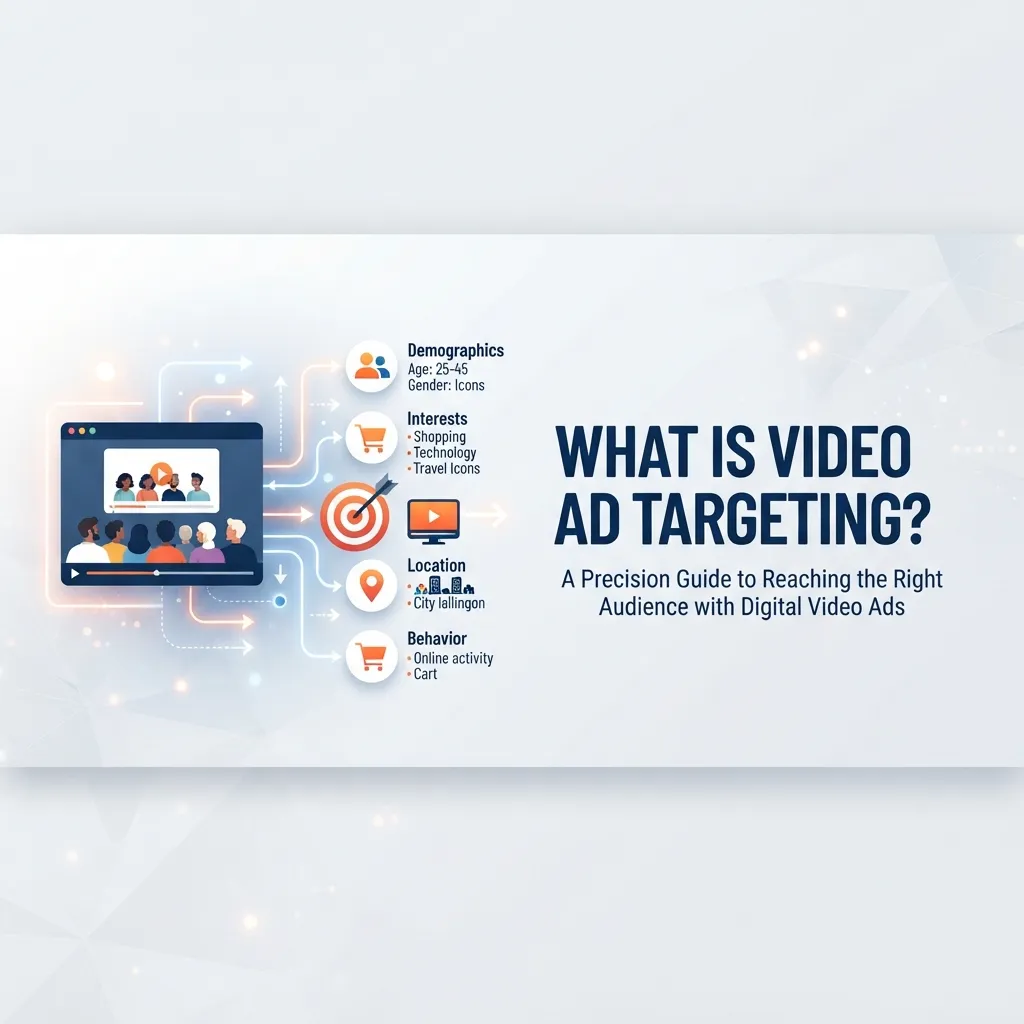
Video ad targeting refers to the methods and data used to determine who sees a given video ad, when, and in what context. Rather than treating an audience as one undifferentiated group, targeting breaks that audience into meaningful segments based on characteristics, behaviors, or intent signals, then matches specific ad creative and messaging to each segment.
Effective video ad targeting typically layers several approaches together rather than relying on a single method. A campaign might combine demographic filters with behavioral retargeting and contextual placement rules, all working simultaneously to narrow the audience down to the people most likely to convert.
Core Types of Video Ad Targeting
Demographic Targeting
The most basic form of targeting uses attributes like age, gender, location, language, and income bracket to define an audience. While demographic targeting alone is rarely precise enough on its own, it remains a useful first filter, especially for brands with a clearly defined core customer profile.
Interest and Affinity Targeting
Platforms track the topics, content categories, and pages users engage with over time, allowing advertisers to reach people who have demonstrated interest in relevant subjects, even if they haven’t searched for anything directly related to the product. This is particularly useful for reaching audiences earlier in their buying journey, before they’ve developed explicit purchase intent.
Behavioral Targeting
Behavioral targeting uses a user’s past actions — purchases, app usage, browsing history, or previous ad interactions — to predict future behavior. It tends to produce stronger performance than interest targeting alone, since past behavior is often a more reliable predictor of future action than stated interest.
Contextual Targeting
Contextual targeting places ads based on the content of the page or video the viewer is currently watching, rather than relying on data about the individual viewer. As privacy regulations tighten and third-party cookies phase out across browsers, contextual targeting has seen a significant resurgence as a privacy-friendly alternative that still delivers relevant placement, a shift covered in more depth in this guide to online video advertising.
Retargeting and Remarketing
Retargeting shows video ads specifically to people who have already interacted with a brand — visiting a website, watching a previous video, or abandoning a cart. Because these viewers have already expressed some level of interest, retargeting campaigns typically produce some of the strongest conversion rates in a video ad targeting mix.
Lookalike and Similar Audience Targeting
Lookalike targeting uses machine learning to identify new users who share characteristics with an existing high-value audience, such as past customers or highly engaged viewers. This approach allows advertisers to scale reach while maintaining much of the precision of a smaller, well-defined seed audience.
Custom Intent and Search-Based Targeting
Some platforms allow advertisers to target users based on recent search queries or specific keywords, effectively combining the intent signals of search advertising with the engagement power of video. This tends to work especially well for products with a clear, definable purchase intent moment, and it connects naturally with broader paid media planning, including how SEO, PPC, and email marketing typically work together across a full-funnel strategy.
Matching Targeting to the Right Ad Format
Targeting decisions don’t happen in isolation from format decisions. A skippable in-stream ad, a short bumper ad, and an out-stream placement each call for different targeting approaches, since viewer tolerance for interruption and attention span vary significantly by format. Pairing the right video ad format with the right targeting layer often matters as much as the targeting criteria themselves — a highly targeted but poorly matched format (say, a long-form narrative ad served as a five-second bumper) can undercut even the most precise audience selection. Reviewing format performance alongside targeting segment performance helps identify these mismatches early, before they quietly erode campaign efficiency.
Video Ad Targeting Across Major Platforms
Targeting options and strengths vary meaningfully by platform:
- YouTube / Google Ads offers deep integration with Google’s search and browsing data, strong custom intent targeting, and access to detailed demographic and affinity audiences.
- Meta (Facebook and Instagram) is known for its detailed interest and behavioral targeting, along with mature lookalike audience tools built from a brand’s own customer data.
- TikTok leans heavily on behavioral and interest signals derived from in-app engagement, with targeting that reflects the platform’s highly active recommendation algorithm.
- Connected TV (CTV) platforms increasingly combine household-level data with contextual targeting, bringing some of the precision of digital targeting to a traditionally broad-reach format.
- Programmatic video networks aggregate targeting data across a wide range of publishers, often supporting the most granular combinations of demographic, behavioral, and contextual criteria in a single campaign.
Choosing the right platform mix depends heavily on where the target audience actually spends their time, which is why many advertisers pair platform-specific targeting with a broader video advertising strategy that spans multiple channels rather than relying on a single network.
Building a Video Ad Targeting Strategy
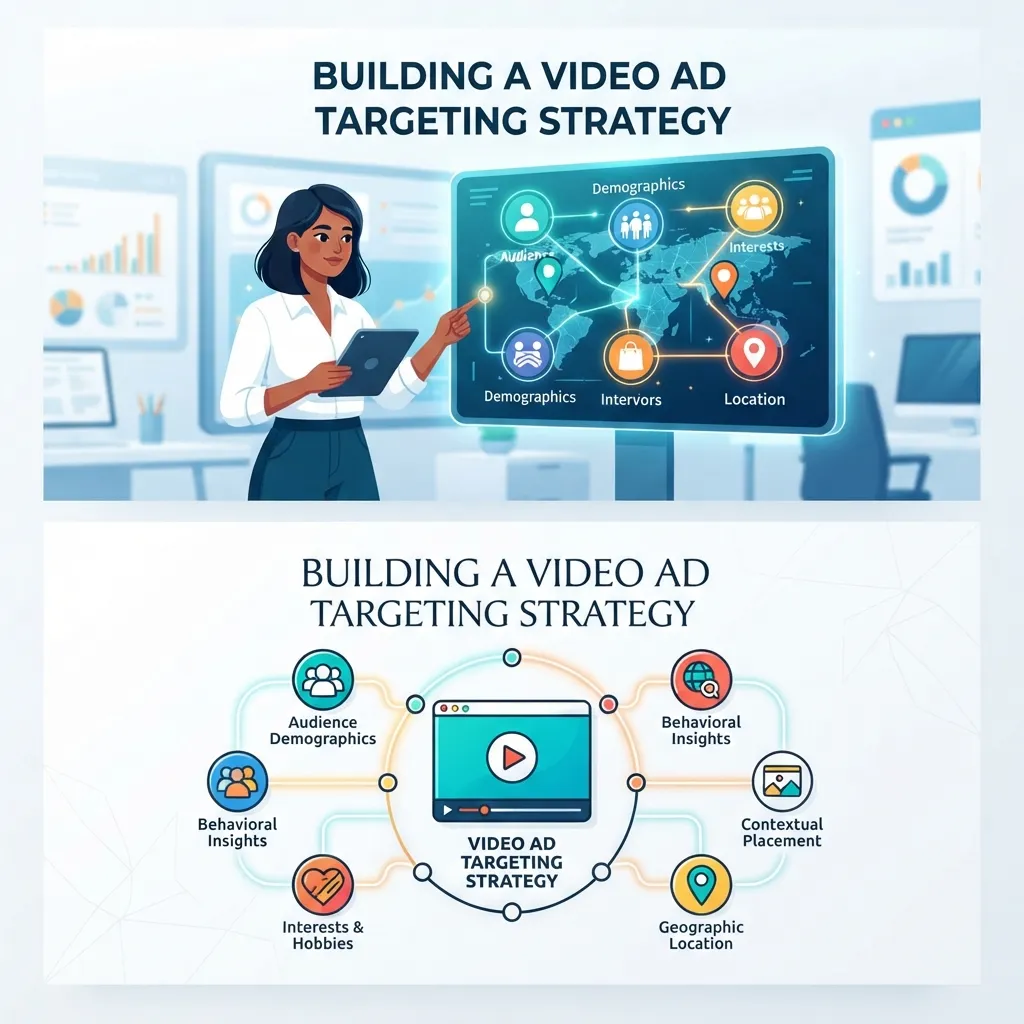
1. Start With a Clear Audience Definition
Before selecting any targeting method, define exactly who the campaign is trying to reach and why. A vague target audience produces vague targeting decisions; a specific, well-researched audience profile makes every subsequent targeting choice easier and more defensible.
2. Layer Targeting Methods Rather Than Relying on One
The strongest video ad targeting strategies combine multiple layers — for example, contextual placement within relevant content, narrowed by interest signals, and refined further through retargeting for warm audiences. Each layer filters the audience further, increasing relevance without necessarily shrinking reach to an unusable size.
3. Match Creative to Each Segment
Targeting only delivers value if the creative itself speaks to the specific segment it reaches. A single generic video shown across every targeting segment wastes much of the precision that targeting is meant to provide; even minor variations in messaging or opening hook can significantly improve performance across different audience segments.
4. Use First-Party Data Wherever Possible
As third-party tracking becomes less reliable, first-party data — email lists, CRM records, and site behavior collected directly by the brand — has become one of the most valuable inputs for video ad targeting. Building and maintaining clean first-party data sources is increasingly a competitive advantage in its own right.
5. Test Targeting Variables Independently
Rather than changing creative, targeting, and bidding all at once, isolating one variable at a time makes it possible to understand which specific change actually drove a performance improvement or decline. This kind of structured, incremental testing tends to produce more reliable long-term targeting decisions than broad, simultaneous changes.
6. Set Frequency Caps to Avoid Fatigue
Even well-targeted audiences will tune out an ad shown too many times. Frequency capping ensures that a targeted segment sees a video ad often enough to build recall without crossing into the kind of repetition that damages brand perception.
Personalization and Video Ad Targeting
Personalization takes targeting a step further by adjusting the video content itself, not just who sees it. Dynamic video ads can swap in different product images, pricing, or messaging based on the viewer’s segment, all from a single base creative template. This approach mirrors trends seen elsewhere in digital marketing, including how AI-driven personalization is reshaping engagement in adjacent formats like webinars, where tailoring content to the individual viewer consistently outperforms one-size-fits-all messaging.
Measuring Video Ad Targeting Performance
A few metrics matter specifically for evaluating targeting quality, separate from creative performance:
- View-through rate by segment. Comparing completion rates across different targeting segments reveals which audiences are genuinely engaged versus merely reached.
- Cost per qualified action. Rather than just cost per view, tracking cost per meaningful conversion by segment shows which targeting layers are actually driving business results.
- Audience overlap and frequency. High overlap between segments can lead to wasted spend showing the same ad to the same person through multiple targeting paths.
- Segment-level conversion rate. Breaking down conversion rate by targeting segment identifies which audiences deserve more budget and which should be scaled back or refined further.
- Incrementality testing. Holding out a control group that doesn’t see the ad helps confirm that targeting-driven conversions represent real incremental impact rather than actions that would have happened anyway.
Tracking these metrics closely ties back to broader video marketing KPI frameworks, since targeting performance is ultimately just one input into overall campaign ROI.
Common Mistakes in Video Ad Targeting
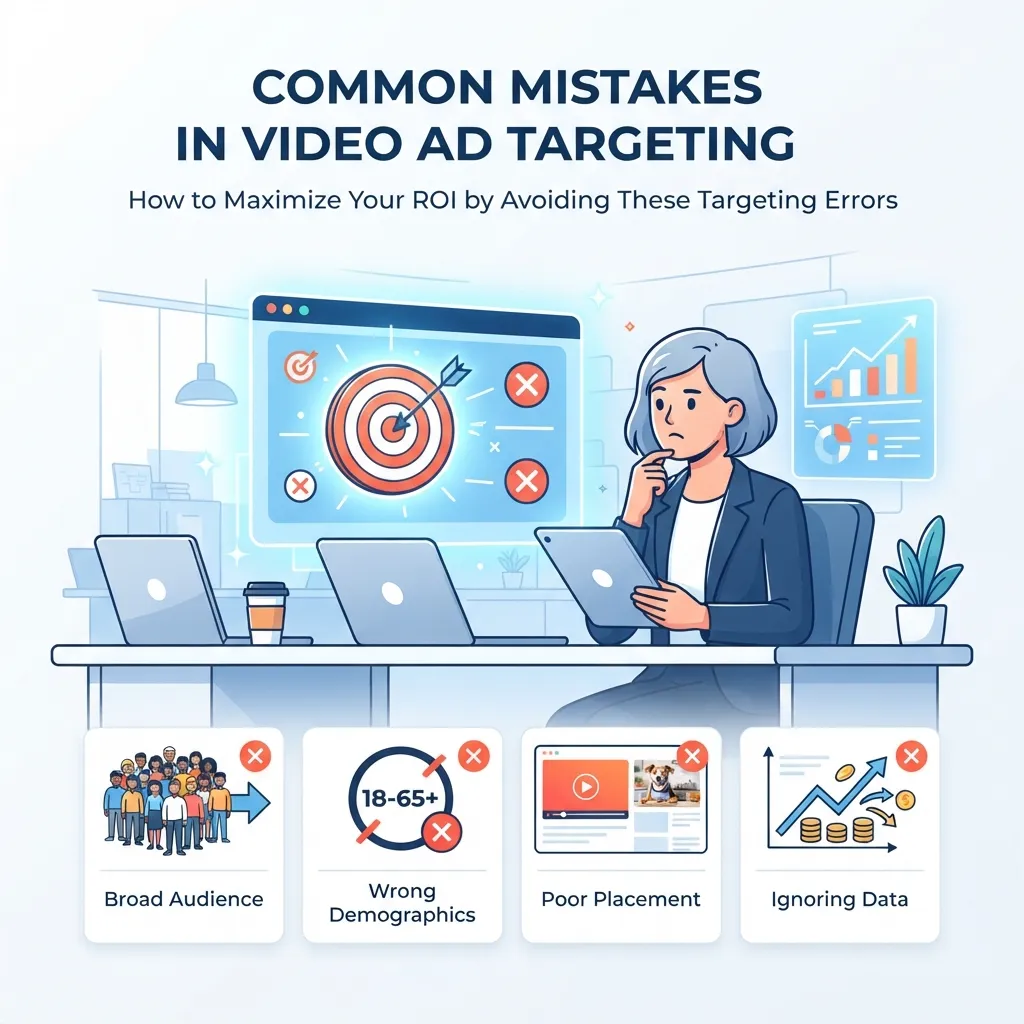
- Targeting too broadly out of fear of missing reach. An audience defined too loosely wastes budget on viewers unlikely to ever convert.
- Targeting too narrowly and starving the algorithm. Extremely small audience segments can limit a platform’s ability to optimize delivery, sometimes increasing cost per result.
- Relying entirely on one targeting method. Single-layer targeting, such as demographics alone, rarely performs as well as a combined, multi-layered approach.
- Ignoring privacy and consent requirements. Targeting strategies built on data collected without proper consent create both legal risk and long-term trust issues with audiences.
- Failing to refresh audience segments. Interests and behaviors change over time; audience definitions built once and never revisited gradually lose accuracy and relevance.
The Future of Video Ad Targeting
Privacy-first advertising is reshaping video ad targeting at a fundamental level. As third-party cookies and cross-app tracking become less available, expect continued growth in contextual targeting, first-party data strategies, and platform-native audience tools that don’t rely on tracking users across the open web. AI-driven targeting is also advancing quickly, with machine learning models increasingly capable of identifying high-value audience segments from smaller, privacy-compliant data sets than traditional targeting once required. Connected TV and streaming platforms are likely to see some of the fastest growth in targeting sophistication, as household-level viewing data becomes more available and advertisers look for ways to bring digital-grade precision to a format that has historically relied on broad demographic buys. Advertisers who invest now in first-party data collection and creative personalization will be best positioned as the targeting landscape continues to shift.
Conclusion
Video ad targeting is what separates a video campaign that quietly burns through budget from one that consistently reaches the right people at the right moment. Getting it right isn’t about picking a single perfect targeting method — it’s about layering demographic, behavioral, contextual, and retargeting signals together, matching creative and format to each segment, and continuously measuring which combinations actually drive results. As privacy rules tighten and third-party data becomes less reliable, the advertisers who invest in first-party data, contextual relevance, and thoughtful segmentation will be the ones who keep getting real value out of every video ad dollar spent.
Frequently Asked Questions
1. What is video ad targeting?
Video ad targeting is the practice of using data, context, and behavioral signals to show video ads to audiences most likely to respond to them.
2. What’s the difference between contextual and behavioral targeting?
Contextual targeting places ads based on the content being viewed, while behavioral targeting uses a person’s past actions to predict future interests.
3. Is retargeting a form of video ad targeting?
Yes. Retargeting is a specific approach that focuses on people who have already interacted with a brand or its content.
4. How does lookalike targeting work for video ads?
Lookalike targeting uses machine learning to find new users who share characteristics with an existing high-value audience, such as past customers.
5. Why has contextual targeting become more popular recently?
As third-party cookies and cross-app tracking become less available, contextual targeting offers a privacy-friendly way to stay relevant without tracking individual users.
6. What is first-party data and why does it matter?
First-party data is information a brand collects directly from its own customers. It has become increasingly valuable as third-party tracking options decline.
7. Can video ad targeting be too narrow?
Yes. Extremely narrow audience segments can limit a platform’s ability to optimize delivery, sometimes increasing the cost per result.
8. Which platform offers the best video ad targeting options?
It depends on the audience and campaign goals. YouTube offers intent-based targeting, Meta provides interest and lookalike options, and TikTok relies heavily on behavioral engagement signals.
9. How often should audience segments be updated?
Regularly. Interests and behaviors change over time, so audience definitions should be reviewed and refreshed periodically to remain accurate.
10. What is frequency capping?
Frequency capping limits how many times a specific person sees the same video ad, helping prevent ad fatigue and protect brand perception.
11. How is personalization different from targeting in video advertising?
Targeting determines who sees an ad, while personalization adjusts the ad’s content based on the viewer’s segment, behavior, or characteristics.
12. What metrics best measure targeting performance?
View-through rate by segment, cost per qualified action, segment-level conversion rate, and incrementality testing are among the most useful metrics.