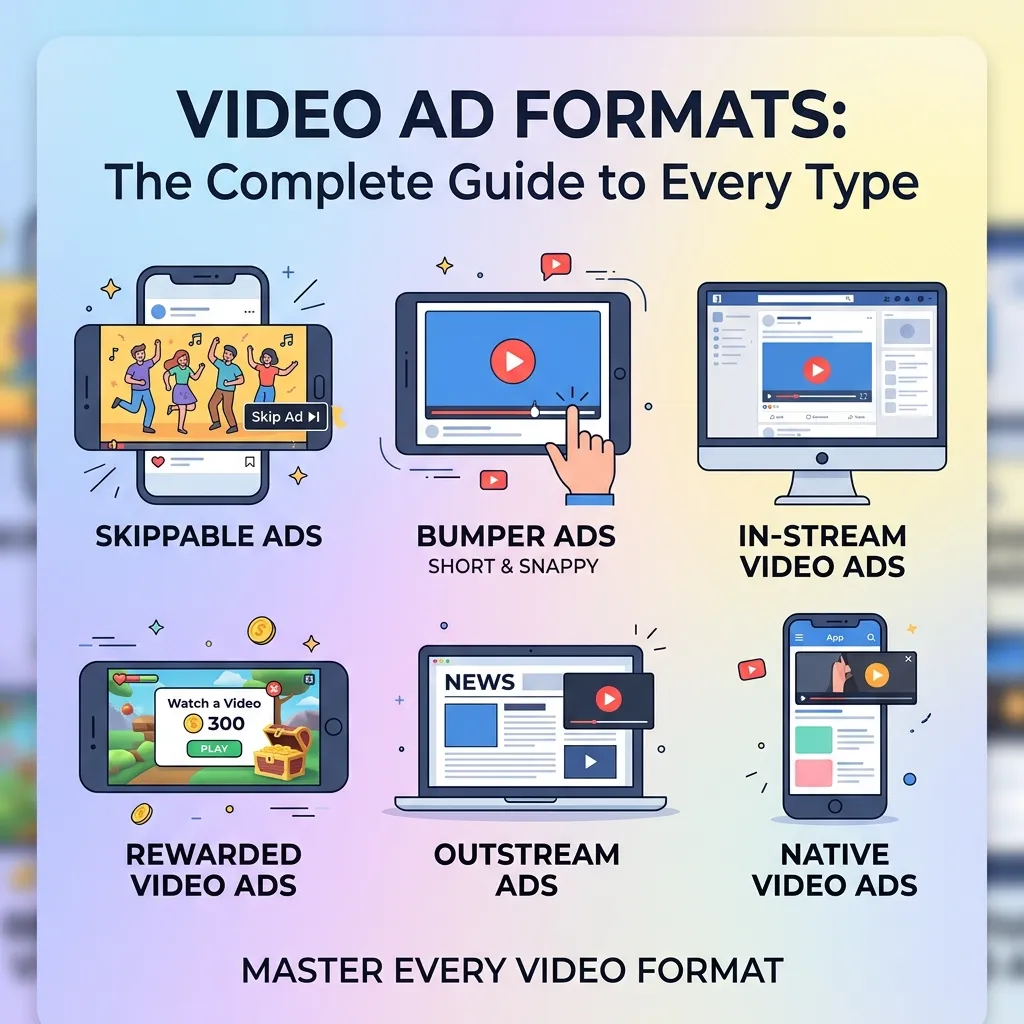
Video ad formats range from six-second bumper ads to full-length in-stream commercials, and each one is built to do a different job within a campaign. Choosing the wrong format for your goal — running a brand-awareness bumper ad when you actually need a direct-response placement, for example — wastes budget regardless of how strong the creative is. This guide breaks down every major video ad format, what each one is genuinely good for, and how to match formats to your specific campaign objective.
Video advertising used to mean one thing: a commercial that played before or during other content. Today the category covers a much wider range of formats, each with its own length, placement logic, and ideal use case, spanning everything from a six-second bumper ad to an interactive shoppable video that lets a viewer buy a product without leaving the ad itself.
Understanding these formats in detail matters because production decisions, budget allocation, and even the message itself all depend on which format you’re building for. A script written for a 30-second skippable pre-roll ad won’t translate directly into an effective 6-second bumper, and a format built for mobile social feeds behaves very differently than one built for a connected TV screen. This guide walks through every major category of video ad formats and how to choose the right one for your goal.
In-Stream Video Ad Formats
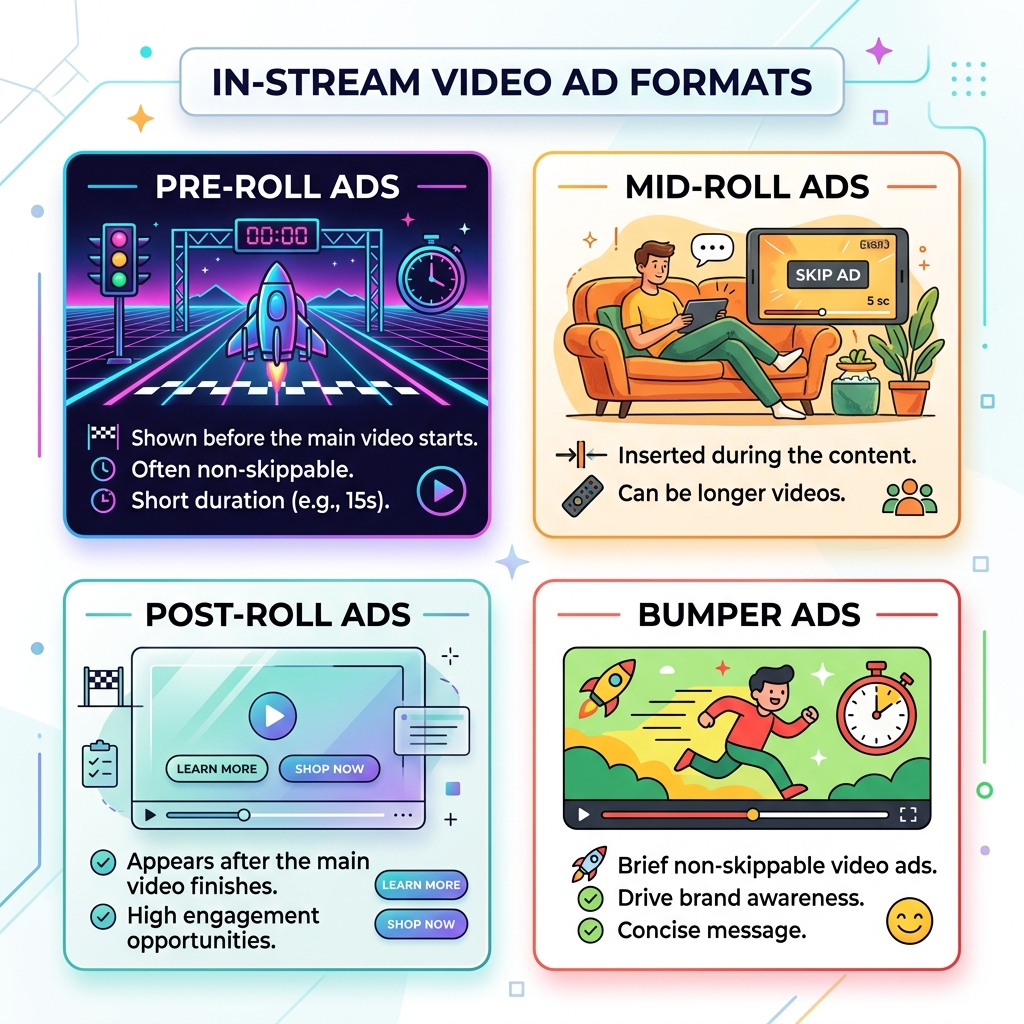
In-stream ads play before, during, or after the video content a viewer has actively chosen to watch, and they remain the backbone of video advertising across platforms like YouTube and connected TV.
Pre-roll ads play before the main content begins and come in two main varieties. Skippable pre-roll typically allows viewers to skip after five seconds, and many platforms only charge advertisers once a meaningful portion of the ad has been watched, making it a relatively low-risk entry point for testing creative. Non-skippable pre-roll runs for a fixed, shorter duration — commonly 15 to 20 seconds — and is billed on impressions rather than views, making it better suited for guaranteed message delivery than for testing multiple creative variations cheaply.
Mid-roll ads appear in the middle of longer video content, such as a livestream or a full episode, and generally require the underlying content to be long enough to support a natural break without feeling disruptive. These placements tend to work well for mid-to-late funnel messaging, since viewers who’ve stayed engaged through part of the content are demonstrating real interest already.
Post-roll ads play after the content ends. Attention is typically lower at this point, but post-roll can still work for follow-up messaging like a call to action, an app install prompt, or a next-step offer aimed at viewers who made it through the full piece of content.
Bumper Ads
Bumper ads are short, non-skippable video ads — typically six seconds or less — designed to deliver a single, memorable message rather than a full narrative. Their brevity is the entire point: six seconds is long enough to land one clear idea and short enough that a viewer can’t mentally check out partway through. Bumpers work especially well for high-frequency brand campaigns where repetition matters more than depth, and they pair effectively with longer-format ads as a way to reinforce a message after a viewer has already seen a more detailed spot.
In-Feed and Discovery Video Ads
In-feed video ads appear within a content feed or search results rather than interrupting a video someone has already chosen to watch. These ads typically only play, or only charge the advertiser, once a viewer actively taps to engage rather than being served automatically. This format tends to map more closely to search or discovery intent than to broad reach, making it a strong fit for viewers already showing some interest in a related topic. Our complete guide to types of video advertising covers how in-feed formats compare to other video ad types in more depth.
Outstream (Out-Stream) Video Ads
Outstream ads run outside of traditional video content — inside articles, social feeds, or other non-video web pages — typically triggering playback when a viewer scrolls the ad into view. Because they don’t rely on existing video content to host them, outstream ads let advertisers reach audiences on publisher sites and apps that don’t have significant native video inventory of their own. They tend to be muted by default and rely on captions or strong opening visuals to communicate a message even without sound, which is an important creative consideration that differs meaningfully from in-stream formats designed for audio-on viewing.
Connected TV (CTV) and OTT Ad Formats
CTV ad formats deliver video ads to streaming devices and smart TVs, and the format landscape here differs in some important ways from mobile and desktop video. In-stream video remains the dominant CTV format, but these placements are typically non-skippable regardless of length, which puts extra weight on getting the opening seconds right since viewers have no option to skip past a weak start. Overlay units and pause ads — smaller graphical elements that appear during a pause in playback or as a banner alongside the video — have also become more common as CTV platforms look for ways to monetize viewing moments beyond the traditional commercial break.
CTV formats increasingly borrow from digital advertising’s playbook, with growing support for interactive elements and shoppable features layered onto what used to be a purely passive viewing experience. This blending of traditional broadcast-style placement with digital interactivity is part of why CTV production has started to resemble both worlds. Our companion piece on traditional TV commercial production is a useful reference for understanding the production standards CTV inherited from broadcast television, even as the format itself becomes more digitally native.
Social and Native Video Ad Formats
Social platforms have developed their own vertical, short-form ad formats built specifically for how people scroll through feeds — Stories, Reels, TikTok’s in-feed placements, and similar vertical video formats across other apps. These formats generally perform best when they don’t look like a traditional polished commercial, since content that blends naturally into the surrounding feed tends to hold attention longer than something that visually announces itself as an ad. Vertical framing, fast pacing, and on-screen text designed for sound-off viewing are now standard creative considerations for this category, reflecting how differently people consume video on a phone compared to a television or desktop screen.
Shoppable and Interactive Video Ad Formats
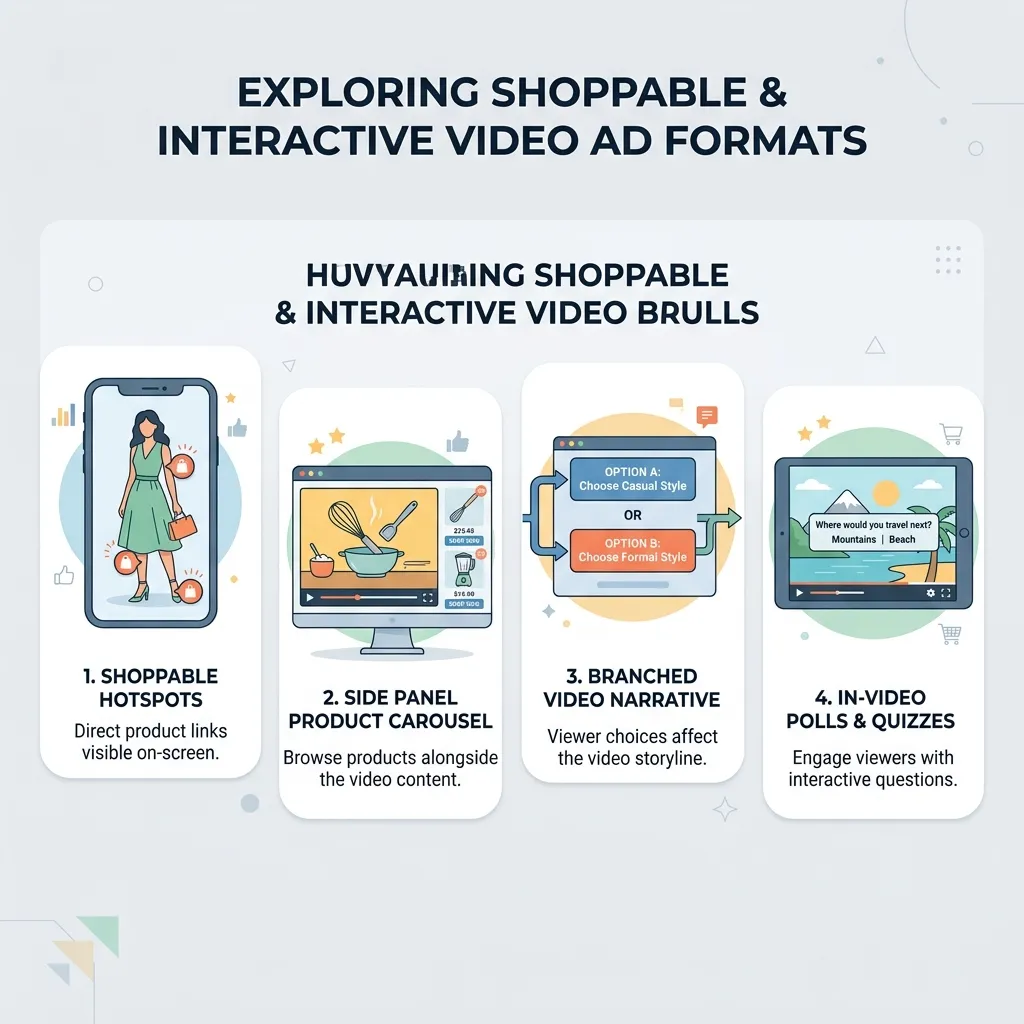
Shoppable video ads let viewers purchase a product directly from within the ad experience, collapsing the path between seeing a product and buying it into a single interaction rather than requiring a separate click-through and browsing session. Interactive formats more broadly include clickable hotspots, embedded polls, and branching narratives that let a viewer’s choices shape which version of the ad they see next. These formats generally require more production complexity than a standard linear video ad, but they can meaningfully shorten the funnel for advertisers focused on direct response rather than pure awareness.
Choosing the Right Video Ad Formats for Your Goal
Rather than defaulting to whichever format is easiest to produce, match the format to what the campaign actually needs to accomplish:
- For broad awareness and repetition, bumper ads and CTV in-stream placements deliver a simple message at scale without requiring a viewer to take any action.
- For consideration and mid-funnel engagement, longer skippable pre-roll and mid-roll formats give you room to explain a product or address an objection in more depth.
- For direct response, in-feed, outstream, and shoppable formats are generally better suited since they’re built around a viewer actively choosing to engage rather than being interrupted.
- For social-first audiences, native vertical formats built for sound-off, fast-scrolling consumption will consistently outperform a repurposed traditional ad that wasn’t designed for that context.
- For premium brand positioning, CTV placements offer a high-attention, television-like viewing environment that still carries some of the credibility associated with traditional broadcast advertising.
Matching Creative Production to Format
Each of these video ad formats comes with real creative constraints that should shape production from the very beginning rather than being addressed after a video is already shot. A bumper ad script needs to fit one idea into six seconds, while a mid-roll ad has room for a more complete narrative arc. Outstream and social formats need to work with sound off, while in-stream CTV ads can rely on audio the way a traditional television spot always has. Planning creative around these constraints from the outset avoids the common, costly mistake of shooting one long video and awkwardly cutting it down to fit formats it was never designed for. Our video advertising strategy guide covers how to plan creative production around the specific formats and platforms a campaign will actually run on.
Common Mistakes When Choosing Video Ad Formats
- Using one video across every format without adaptation. A single 30-second cut rarely works equally well as a bumper, a social vertical ad, and a CTV placement without real editing for each context.
- Ignoring sound-off viewing for outstream and social formats. Ads that depend entirely on audio to communicate their message underperform badly in feeds where most viewers scroll with sound muted.
- Choosing non-skippable formats without a tight enough message. A weak or slow opening in a non-skippable format guarantees the viewer sits through content that isn’t landing, which can hurt brand perception rather than help it.
- Defaulting to the cheapest format regardless of goal. The most affordable format to produce isn’t automatically the right one if it doesn’t match what the campaign is actually trying to achieve.
- Underestimating production cost differences between formats. Interactive and shoppable formats generally require more upfront production investment than a standard linear video ad, and skipping that planning leads to budget surprises mid-campaign.
Budgeting Across Different Formats
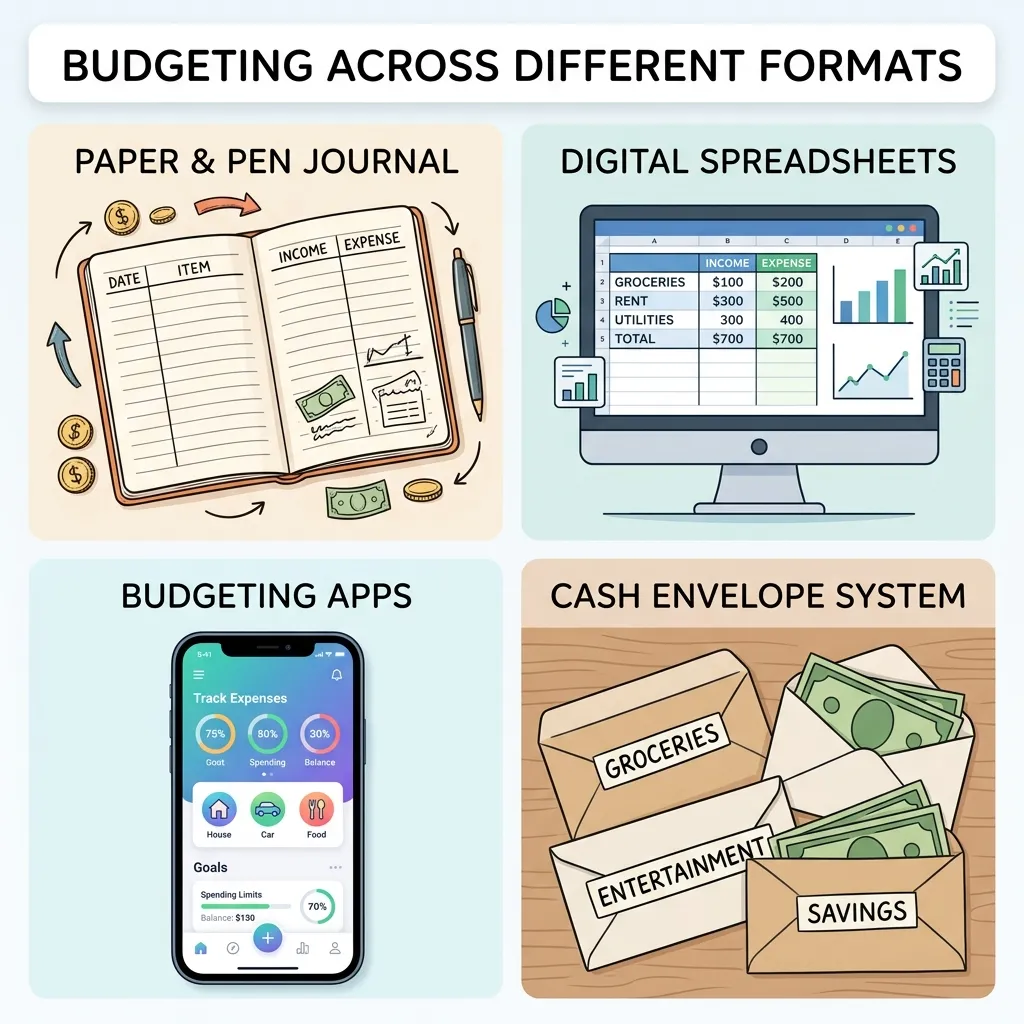
Cost varies substantially across video ad formats, and understanding those differences upfront helps set realistic expectations before committing to a production plan. Our breakdown of video advertising costs covers how pricing differs across format types, which is worth reviewing alongside the format choices in this guide since a format that looks appealing creatively isn’t always the most cost-efficient option for a given budget.
A Similar Principle in Other Video Formats
Matching format to goal isn’t unique to paid video advertising — the same logic applies across other video-based channels. A live, interactive format like a webinar serves a fundamentally different purpose than a pre-recorded, one-way video ad, even though both fall under the broader umbrella of video marketing. Webinarmarketo’s overview of webinar marketing illustrates this same principle from a different angle — live, participatory formats build a different kind of engagement than passive viewing does, and recognizing which format actually fits your goal matters just as much in owned video content as it does in paid video ad formats.
Conclusion
Video ad formats aren’t interchangeable, and treating them that way is one of the most common and costly mistakes in video advertising. In-stream pre-roll, mid-roll, and post-roll placements each serve different points in a viewer’s session. Bumper ads deliver quick, repeatable messages. In-feed, outstream, and shoppable formats target viewers already showing intent to engage. CTV and social-native formats each demand their own creative approach shaped by how and where people actually watch. Match the format to your specific campaign goal, plan production around each format’s real constraints from the start, and budget realistically for the format types that fit your funnel rather than defaulting to whichever one is simplest to produce.
Frequently Asked Questions About Marketing Automation Software
What is the single best marketing automation software?
There isn’t one universal answer — the right platform depends on your business size, buyer journey, and whether you need deep CRM integration, ecommerce-specific features, or enterprise-scale complexity.
Is HubSpot the best marketing automation software for small businesses?
HubSpot works well for businesses that want CRM and marketing tightly integrated, but its pricing can climb quickly at higher tiers, so simpler SMB-focused platforms may be a better fit for very small teams.
What’s the difference between SMB and enterprise-grade marketing automation software?
SMB platforms prioritize ease of use and fast setup, while enterprise suites offer deeper lead scoring, account-based marketing, and attribution capabilities but require more implementation and ongoing administration.
Is Klaviyo considered marketing automation software?
Yes, Klaviyo is a marketing automation platform built specifically for ecommerce, with deep integration into store and purchase data that general-purpose platforms don’t always match.
Do I need a CRM before choosing marketing automation software?
Not necessarily. Some platforms include a native CRM, while others are designed to integrate with a CRM you already use, so the right choice depends on your existing tech stack.
How much does marketing automation software typically cost?
Costs vary widely by platform and tier, with SMB-friendly tools generally more affordable at entry level and enterprise suites requiring significantly larger budgets and implementation investment.
What features matter most when comparing marketing automation platforms?
Workflow automation depth, native integrations, segmentation, lead scoring, and reporting that ties activity back to actual revenue outcomes are the features most worth comparing closely.
Can a small business outgrow its marketing automation software?
Yes. As buyer journeys, team size, and campaign complexity grow, businesses often need to migrate to a platform with deeper automation logic or tighter CRM integration than what they started with.
Is AI a meaningful differentiator between marketing automation platforms in 2026?
AI capability is now common across most platforms, but maturity varies significantly, so it’s worth testing actual AI features rather than relying on marketing claims alone.
Should I choose marketing automation software based on price or features first?
Neither in isolation. The better approach is defining your actual workflow needs first, then comparing platforms that meet those needs at a price your business can sustain long-term.
What’s the biggest risk of choosing the wrong marketing automation software?
Automating a poorly defined process, which scales confusion and wasted effort rather than genuine efficiency, regardless of how powerful the underlying platform is.
How often should a business re-evaluate its marketing automation software?
Reviewing your platform choice annually, or whenever your buyer journey or team size changes significantly, helps confirm that what you once considered the best marketing automation software for your situation still fits, rather than assuming the original choice remains correct indefinitely.