A strong video advertising strategy helps businesses attract attention, communicate value, reach specific audiences, and drive measurable actions through video ads. From defining campaign goals and choosing the right audience to creating compelling creatives, selecting advertising platforms, setting budgets, and measuring performance, every step affects campaign success. This guide explains how to build an effective video advertising strategy and optimize campaigns for better engagement, conversions, and return on investment.
What Is a Video Advertising Strategy?
A video advertising strategy is a structured plan for using paid video content to promote a product, service, brand, or offer to a specific audience. It combines audience research, creative development, platform selection, targeting, budgeting, campaign optimization, and performance measurement.
Unlike organic video marketing, video advertising involves paying a platform or advertising network to distribute your video to selected audiences. Depending on your objective, video ads can generate brand awareness, website traffic, leads, sales, app installs, or engagement.
A successful strategy does not simply focus on producing attractive videos. It connects the creative message with the right audience, platform, placement, offer, and measurable business objective.
For businesses that are new to paid video campaigns, understanding the broader video advertising guide and strategies can provide useful foundational knowledge before launching a campaign.
Why Is Video Advertising Important?
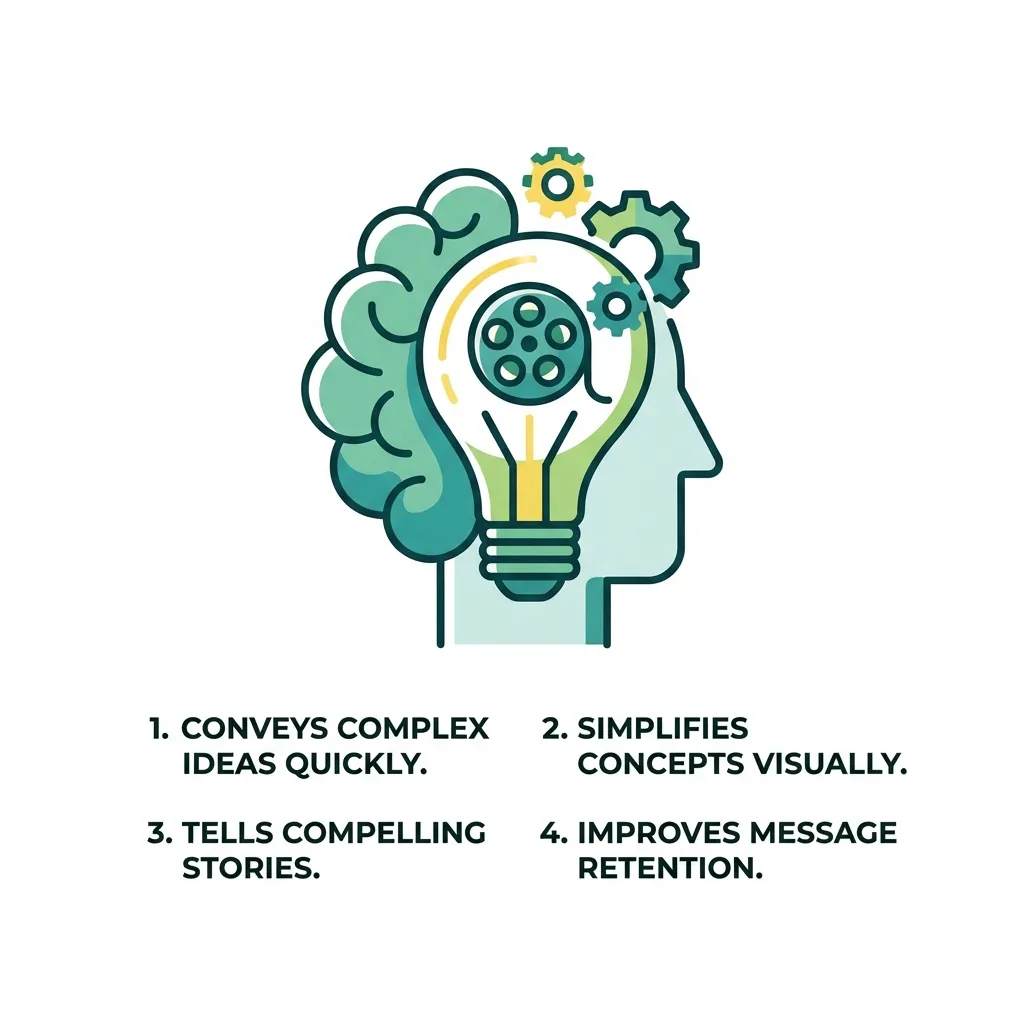
Video allows brands to demonstrate products, explain complicated ideas, tell stories, and create emotional connections in a relatively short amount of time. Paid distribution makes it possible to place those videos in front of audiences that are more likely to be interested in the offer.
A well-planned video advertising strategy can help businesses:
- Increase brand awareness
- Reach targeted audiences
- Generate qualified website traffic
- Increase product or service consideration
- Generate leads
- Drive online sales
- Retarget previous visitors
- Improve customer engagement
- Support product launches
- Strengthen brand recall
The biggest advantage is that video advertising can be measured. Marketers can analyze impressions, views, watch time, clicks, conversions, cost, and other performance indicators to understand whether their investment is producing meaningful results.
How to Build a Video Advertising Strategy
Creating an effective campaign requires more than uploading a video and selecting a budget. Follow these steps to build a strategy that supports your business goals.
1. Define Your Campaign Objective
Start by determining exactly what you want the campaign to achieve.
Common objectives include:
- Brand awareness
- Reach
- Video views
- Website traffic
- Lead generation
- Product sales
- App installs
- Conversions
- Retargeting
- Customer engagement
Your objective should influence your creative, targeting, bidding strategy, and measurement approach.
For example, an awareness campaign may prioritize reach and completed views, while a performance campaign may focus on conversions and cost per acquisition.
Google Ads also structures video campaigns around business objectives such as sales, leads, website traffic, and YouTube reach, views, and engagement.
2. Understand Your Target Audience
The effectiveness of a video advertisement depends heavily on showing it to the right people.
Research your audience before creating your creative. Consider:
- Age and demographic characteristics
- Location
- Interests
- Search behavior
- Buying intent
- Pain points
- Content preferences
- Device usage
- Previous interactions with your brand
Instead of trying to reach everyone, identify the audience most likely to benefit from your product or service.
For example, a SaaS company targeting business owners may create different campaigns for startup founders, marketing managers, and enterprise decision-makers. Each group may have different problems and therefore require different messaging.
3. Create a Strong Video Ad Concept
Your creative is the heart of your video advertising strategy.
A good video should quickly answer three questions:
- What problem does the viewer have?
- How does your product or service solve it?
- What should the viewer do next?
Avoid spending most of the video introducing your company. Instead, lead with something relevant to the audience.
A simple structure is:
Hook → Problem → Solution → Benefit → Proof → Call to Action
For example, a cybersecurity company could begin with a common security problem, demonstrate the consequences, introduce its solution, provide evidence of its value, and finish with a clear CTA.
4. Capture Attention Quickly
People scroll quickly, skip ads, and move between platforms constantly. Your opening seconds therefore matter.
Effective hooks can include:
- A surprising statistic
- A direct question
- A common customer problem
- A strong visual
- A product demonstration
- A bold statement
- A short story
- A before-and-after scenario
The goal is not to create unnecessary hype. The goal is to immediately establish relevance.
If viewers understand why the video matters to them, they are more likely to continue watching.
5. Choose the Right Video Ad Format
Different formats serve different purposes.
Common video advertising formats include:
Skippable In-Stream Ads
These ads appear before, during, or after other video content and allow viewers to skip after a certain point.
They are useful when you want to communicate a broader message while still giving users control over whether they continue watching.
Non-Skippable Video Ads
These force the viewer to watch the advertisement before continuing to the content. They can work well when the message is short and highly relevant.
Bumper Ads
Bumper ads are very short and designed for memorable, focused messages. They are useful for awareness and frequency campaigns.
In-Feed Video Ads
These appear in discovery environments such as content feeds and search or browsing experiences. They can be useful for attracting viewers who are actively exploring content.
Shorts and Vertical Video Ads
Short-form vertical video is particularly useful for mobile-first audiences. Creating multiple aspect ratios allows advertisers to adapt creative assets to different placements.
Google Ads currently supports several video formats, including skippable in-stream, non-skippable in-stream, in-feed, bumper, Shorts, and Masthead formats.
6. Select the Best Advertising Platform
Your platform should match your audience and campaign objective.
Popular options include:
- YouTube
- TikTok
- Connected TV platforms
- Programmatic video networks
You do not necessarily need to advertise everywhere.
For example:
- YouTube can be effective for broad reach, intent-based audiences, and educational content.
- Instagram and Facebook can support visual product promotion and retargeting.
- TikTok can work well for short-form, entertainment-driven creative.
- LinkedIn can be valuable for B2B campaigns.
- Connected TV can support large-screen awareness campaigns.
Choose platforms based on where your target audience actually spends time rather than simply following the latest advertising trend.
7. Develop Platform-Specific Creative
One video should not automatically be used unchanged across every platform.
Consider adapting:
- Aspect ratio
- Video length
- Opening hook
- Captions
- CTA placement
- Text overlays
- Editing speed
- Thumbnail
- Sound design
For mobile-first placements, vertical video can provide a better fit. For larger screens, horizontal formats may be more appropriate.
Google recommends maintaining suitable creative assets for different environments, including horizontal, vertical, and square formats.
8. Write a Clear Call to Action
Every performance-focused video advertisement should have a clear next step.
Examples include:
- Shop Now
- Learn More
- Get Started
- Book a Demo
- Sign Up
- Download Now
- Request a Quote
- Visit Our Website
Avoid giving viewers several competing actions. Choose the CTA that directly supports your campaign objective.
For example, a lead-generation campaign should not simply ask viewers to “learn more” if the actual objective is to collect inquiries. The CTA should match the desired conversion.
Video Advertising Strategy for Different Funnel Stages

A strong campaign can use different video messages depending on where a prospect is in the buying journey.
Top-of-Funnel Video Advertising
At the awareness stage, focus on introducing the problem and making the brand memorable.
Useful content includes:
- Brand stories
- Educational videos
- Problem-focused videos
- Short awareness ads
- Product introductions
The primary goal is to attract attention rather than immediately force a purchase.
Middle-of-Funnel Video Advertising
At this stage, prospects already understand the problem and may be researching solutions.
Use:
- Product demonstrations
- Comparisons
- Tutorials
- Customer stories
- Testimonials
- Case studies
- Feature explanations
The objective is to build trust and move prospects closer to a decision.
Bottom-of-Funnel Video Advertising
Bottom-of-funnel audiences are closer to taking action.
Your advertisements can emphasize:
- Special offers
- Free trials
- Product benefits
- Testimonials
- Guarantees
- Demonstrations
- Strong CTAs
Retargeting people who previously visited your website or interacted with your content can make these campaigns more relevant.
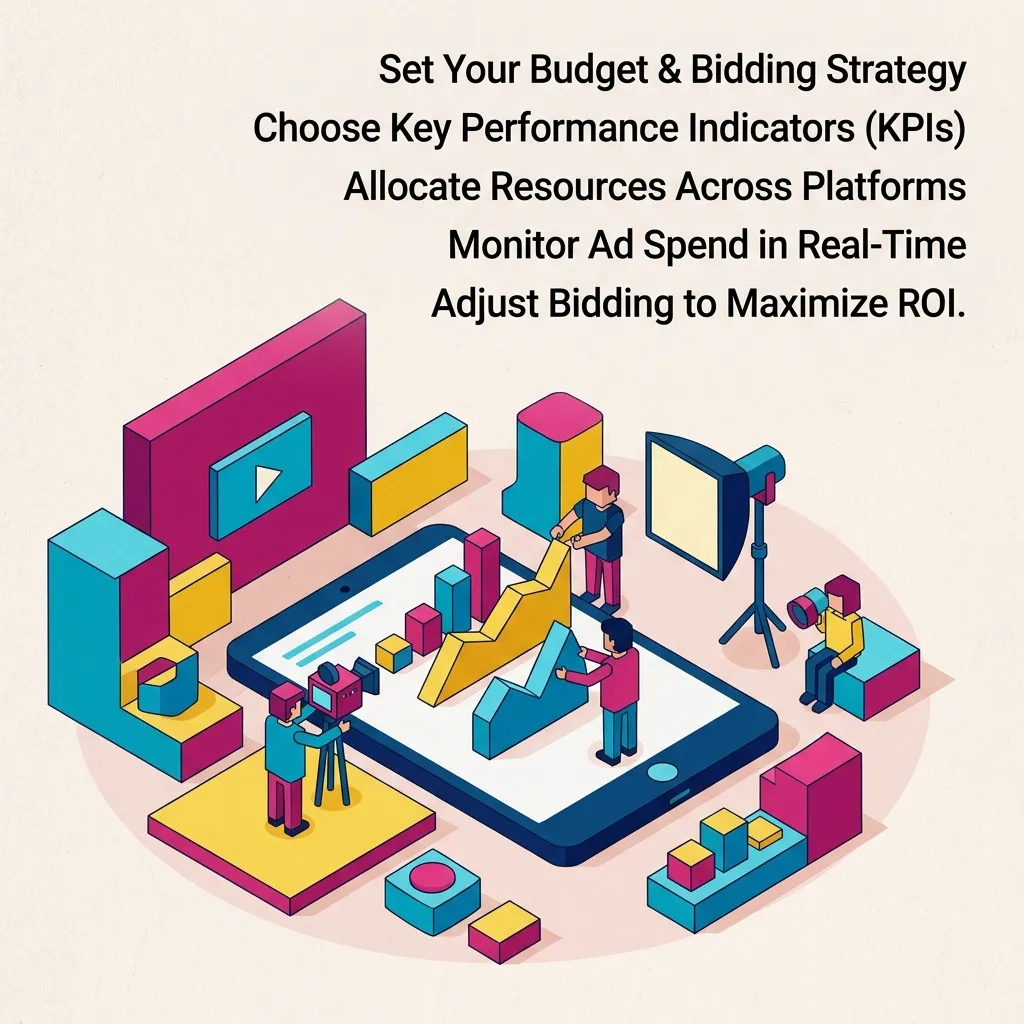
How to Set a Video Advertising Budget
Your budget should be based on your objective, audience size, platform, competition, creative requirements, and expected conversion value.
Start with a controlled test budget instead of committing a large amount immediately.
A practical testing process is:
- Launch several creative variations.
- Test different audience segments.
- Compare performance.
- Identify the strongest combinations.
- Shift more budget toward winners.
- Continue testing new variations.
Do not judge a campaign solely by how many views it receives. A video can generate thousands of views while producing very few meaningful business results.
Understanding video advertising costs can also help marketers plan spending and evaluate the financial side of campaign execution.
How to Optimize a Video Advertising Strategy
Optimization should continue after launch.
Test Different Creative Hooks
Create multiple versions of the first few seconds.
One version might begin with a question, while another starts with a product demonstration. Compare performance and identify which opening keeps viewers engaged.
Test Different Audiences
Compare audience segments based on:
- Demographics
- Interests
- Intent
- Location
- Previous interactions
- Customer lists where appropriate
Keep the strongest-performing segments and refine weaker ones.
Improve Landing Pages
A video advertisement can perform well while the campaign still generates poor results because the landing page is confusing or irrelevant.
Make sure the landing page:
- Matches the advertisement
- Loads quickly
- Works well on mobile
- Clearly communicates the offer
- Has a visible CTA
- Minimizes unnecessary distractions
The promise made in the video should match what visitors see after clicking.
Use Retargeting
Retargeting allows you to reconnect with people who have already interacted with your brand.
You might create separate messages for people who:
- Watched a video
- Visited your website
- Viewed a product
- Added an item to a cart
- Started but did not complete a form
These audiences can receive more specific messaging than cold audiences.
Key Video Advertising Metrics to Track
Measuring the right metrics is essential for understanding whether your strategy is working.
Important metrics include:
| Metric | What It Tells You |
|---|---|
| Impressions | How often your ad was shown |
| Reach | How many people saw the ad |
| Views | How many qualified views occurred |
| View Rate | How frequently impressions became views |
| Watch Time | How long viewers watched |
| Completion Rate | How many viewers reached the end |
| Click-Through Rate | How often viewers clicked |
| Conversion Rate | How many visitors completed the desired action |
| Cost Per Click | Average cost of each click |
| Cost Per Acquisition | Cost of generating a conversion |
| ROAS | Revenue generated relative to advertising spend |
For deeper measurement, businesses can use a dedicated video marketing metrics guide for ROI to understand how different metrics connect with campaign performance.
The most important metric depends on your objective. An awareness campaign should not necessarily be judged using the same criteria as a lead-generation campaign.
Common Video Advertising Strategy Mistakes
Even well-funded campaigns can struggle when the strategy is poorly structured.
Focusing Only on Views
Views are useful, but they do not automatically equal business success.
Always connect viewing metrics with your actual objective.
Making the Video About the Brand
A long company introduction may not immediately matter to viewers.
Lead with their problem, need, desire, or question.
Using One Creative Everywhere
Different platforms have different viewing behaviors. Adapt creative rather than simply resizing the same video.
Weak Calls to Action
If viewers do not know what to do next, valuable attention can be lost.
Ignoring Mobile Users
Many users consume video on mobile devices. Make sure text, visuals, captions, and CTAs remain understandable on smaller screens.
Failing to Test
Even experienced marketers cannot predict with certainty which creative will perform best.
Testing reduces guesswork.
Best Practices for a High-Performing Video Advertising Strategy

Follow these best practices to improve campaign quality:
- Start with a clearly defined objective.
- Research your audience before creating the ad.
- Make the opening immediately relevant.
- Keep the message focused.
- Show the product or solution clearly.
- Use captions when appropriate.
- Make the CTA obvious.
- Create multiple creative variations.
- Match the landing page to the advertisement.
- Monitor performance regularly.
- Use retargeting strategically.
- Scale campaigns gradually.
- Protect brand suitability and placement quality.
- Measure conversions rather than relying only on views.
For advertisers working across digital video and connected TV environments, the IAB Tech Lab video advertising standards provide technical guidance around video ad delivery and standards.
Conclusion
A successful video advertising strategy combines creative storytelling with precise targeting, appropriate platforms, clear objectives, controlled spending, and continuous optimization. The best campaigns are not necessarily the ones with the most expensive production or the largest budgets. They are the campaigns that communicate the right message to the right audience at the right stage of the customer journey.
Start by defining your goal, understanding your audience, developing several creative concepts, selecting the right platforms, and tracking meaningful performance metrics. Then use campaign data to improve your creative, targeting, landing pages, and budget allocation.
As video advertising continues to evolve across social platforms, YouTube, streaming services, and connected TV, businesses that treat video as a measurable performance channel—not simply a creative format—will be better positioned to generate sustainable results.
Frequently Asked Questions
1. What is a video advertising strategy?
A video advertising strategy is a plan for using paid video content to reach a specific audience and achieve business objectives such as awareness, traffic, leads, sales, or conversions.
2. Why is video advertising effective?
Video combines visuals, audio, storytelling, and demonstrations, allowing brands to communicate complex ideas quickly while capturing audience attention.
3. What is the best platform for video advertising?
There is no single best platform for every business. YouTube, Facebook, Instagram, TikTok, LinkedIn, and connected TV can all be effective depending on the audience and campaign objective.
4. How long should a video advertisement be?
The ideal length depends on the platform, format, audience, and objective. Short ads can communicate focused messages, while longer videos can support demonstrations, storytelling, and consideration.
5. How much does video advertising cost?
Video advertising costs vary based on platform, targeting, competition, campaign objective, creative quality, bidding model, and audience size. Testing with a controlled budget is usually a practical starting point.
6. What makes a good video ad?
A good video ad captures attention quickly, addresses a relevant problem, communicates a clear benefit, supports the brand message, and provides an obvious next step.
7. Should video ads include captions?
Captions can improve accessibility and help viewers understand the message when they watch without sound. They are particularly useful for mobile and social environments.
8. What metrics should I track for video advertising?
Important metrics include reach, impressions, views, watch time, completion rate, click-through rate, conversion rate, cost per acquisition, and return on advertising spend.
9. What is video ad retargeting?
Video ad retargeting involves showing advertisements to people who have previously interacted with your videos, website, products, or other brand assets.
10. How can I improve video ad conversion rates?
Improve the opening hook, audience targeting, offer, CTA, creative relevance, landing page experience, and conversion tracking. Testing different combinations can reveal what works best.
11. Should I use the same video on every platform?
Not necessarily. Adapt the format, length, hook, captions, aspect ratio, and CTA to match each platform and audience behavior.
12. How often should I optimize a video advertising campaign?
Monitor performance regularly, but avoid making major changes based on extremely limited data. Use meaningful performance trends to decide when to adjust creative, targeting, bidding, or budget.