Video has become one of the most effective ways for businesses to connect with audiences, communicate their value, and increase online visibility. From short social media clips to product demonstrations and educational tutorials, video content helps brands deliver information in an engaging and memorable format. However, achieving meaningful results requires more than simply recording and uploading videos. Businesses need a well-organized video marketing plan that connects content creation, audience targeting, distribution, and performance measurement.
A successful approach helps companies attract potential customers, build trust, improve engagement, and generate sales. Whether you operate a small business or manage an established brand, understanding video marketing strategies can help you compete in the digital marketplace. This guide explains how to develop an effective strategy, create valuable content, explore campaign ideas, follow industry trends, and measure marketing performance.
Video Marketing Strategy
A successful video marketing strategy begins with understanding what your business wants to achieve and who you want to reach. Before producing any content, identify your target audience, their interests, purchasing behavior, challenges, and preferred social media platforms. This information helps you create videos that address real customer needs rather than producing content without a clear purpose. The next step is setting specific marketing objectives. Your goals might include increasing brand awareness, generating qualified leads, promoting new products, improving website traffic, or increasing customer engagement. Each objective requires a different content approach. For example, educational videos can help establish industry authority, while product demonstrations can encourage potential customers to make purchasing decisions.
A practical video marketing plan should also include a consistent brand identity. Your videos should communicate a recognizable message through visual elements, tone of voice, storytelling, and presentation. Maintaining consistency across different platforms makes it easier for audiences to recognize and remember your business. Understanding customer conversations is equally important. Businesses can use social listening to discover what people discuss, what problems they experience, and which topics attract attention. A well-developed social media listening strategy for businesses can provide valuable audience insights that help marketers select relevant video topics and improve campaign messaging.
Ultimately, your strategy should connect creative production with measurable business objectives. Review your performance regularly and adjust your approach according to audience feedback and campaign results.
Video Content Marketing Plan
Content planning is one of the most important parts of successful video marketing. Without a clear schedule and content direction, businesses may struggle to publish consistently or produce videos that support their marketing objectives. A structured video marketing plan helps organize ideas, production schedules, publishing dates, and promotional activities.
Start by identifying the types of videos that are most relevant to your audience. Educational tutorials, product demonstrations, customer testimonials, behind-the-scenes videos, interviews, and explainer videos are useful formats for different marketing purposes. Instead of focusing exclusively on promotional content, provide information that helps viewers understand a problem or discover a practical solution.
Creating a content calendar can make the process more manageable. Plan your video topics around product launches, seasonal campaigns, industry events, customer questions, and trending discussions. Assign realistic deadlines for researching, scripting, recording, editing, and publishing each video.
You should also consider how one video can support multiple marketing channels. For example, a long educational video can be divided into several short clips for social media. Important sections can become blog content, email marketing material, or website resources. This approach saves time and allows businesses to get more value from their original content.
For a deeper understanding of planning, production, optimization, and distribution, explore this comprehensive guide to video content marketing strategy. It provides additional insights into creating content that supports business growth.
A good video marketing plan should remain flexible. Monitor audience engagement and identify which topics generate the strongest response. Use those insights to improve your upcoming content calendar.
Video Marketing Tips for Businesses
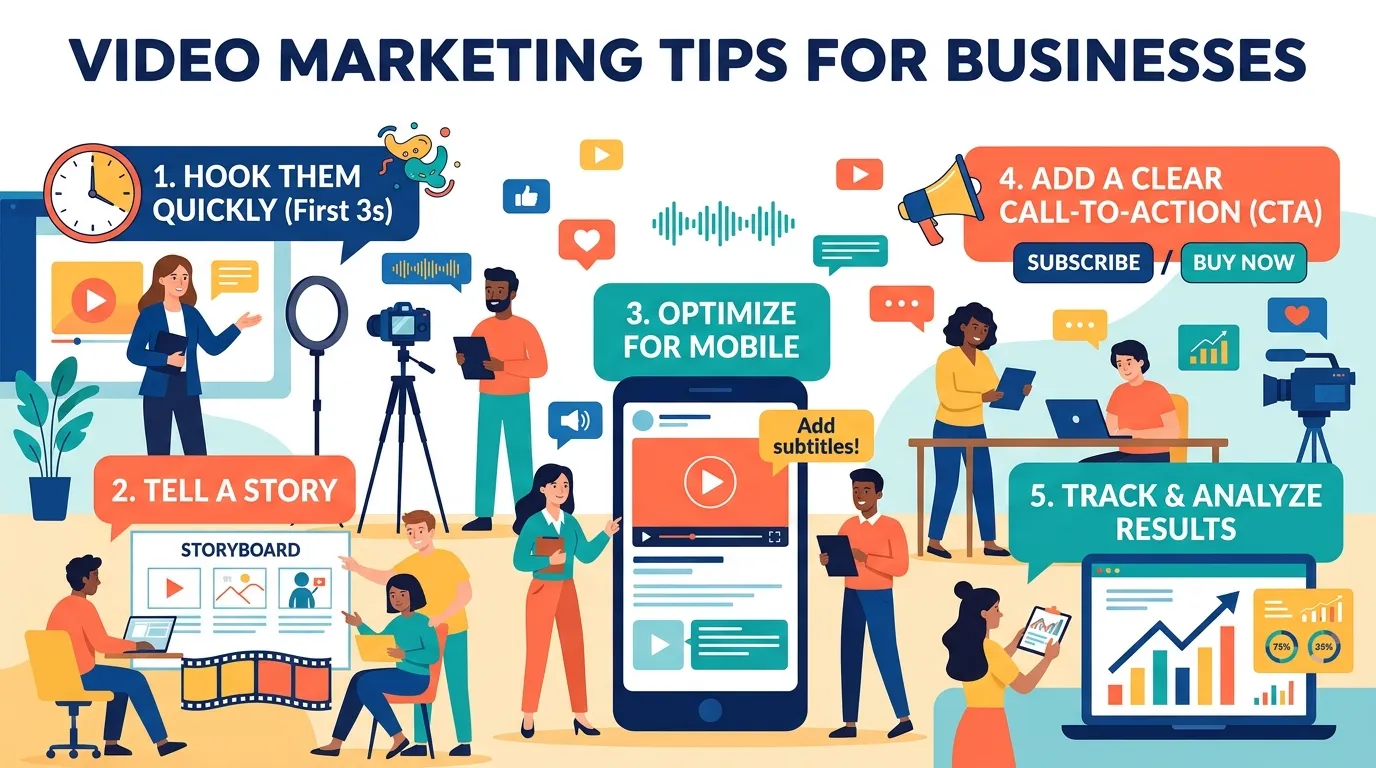 Businesses do not need expensive cameras or professional studios to create effective marketing videos. What matters most is communicating a useful message clearly and presenting it in a way that captures attention. Good planning, understandable audio, suitable lighting, and relevant content can make a significant difference. One important tip is to capture attention during the first few seconds. Online audiences often scroll quickly, so begin with an interesting question, an unexpected fact, or a problem your target customers want to solve. Avoid lengthy introductions that delay the main message.
Storytelling is another powerful technique. Instead of simply listing product features, explain how your product or service improves customers’ lives. Share real experiences, demonstrate practical benefits, and use relatable examples. This makes your content more engaging and helps viewers understand why your business matters. Businesses should also include clear calls to action. Depending on the video’s purpose, encourage viewers to visit your website, subscribe to your channel, explore a product, register for an event, or contact your team.
Consistency is equally important. Publishing useful videos regularly helps maintain audience interest and creates more opportunities for people to discover your brand. Your video marketing plan should establish a realistic publishing frequency that your team can maintain without sacrificing content quality. Finally, pay attention to customer feedback. Comments, questions, reviews, and social media discussions can reveal what your audience wants to see next. Responding to these interactions also helps develop stronger relationships with potential customers.
Digital Video Marketing Strategy
Digital video marketing involves using online platforms and digital channels to distribute video content, attract audiences, and achieve business objectives. These channels include websites, search engines, social media platforms, email campaigns, and online advertising networks. Search engine optimization is an important part of digital video marketing. Businesses should use relevant keywords in video titles, descriptions, captions, and supporting webpage content. Informative titles help viewers understand the subject, while accurate descriptions provide additional context.
Your website should also support your video campaigns. Create relevant landing pages where visitors can watch videos, explore related information, and take action. Make sure these pages load efficiently and work properly on smartphones, tablets, and desktop computers. Website design plays an important role in the overall experience. A well-organized layout, readable content, responsive design, and visible calls to action can help visitors interact with your videos more easily. Businesses can explore these website design trends to understand how modern website experiences support engagement and digital marketing performance.
Email marketing is another useful distribution channel. Adding video content to newsletters or promotional emails can make communication more engaging. For example, an online store can share a product demonstration, while a service provider can send an educational video explaining a common customer challenge. An effective video marketing plan combines these channels instead of depending on a single platform. By connecting website content, social media, email, and search visibility, businesses can create a more consistent customer journey.
Video Marketing Campaign Ideas
Creative campaigns help businesses attract attention and communicate their brand messages in memorable ways. However, successful campaigns should be developed around audience interests and clear marketing objectives rather than following trends without a purpose. One useful idea is creating customer testimonial videos. Ask satisfied customers to explain their experiences, discuss the problems they faced, and describe how your products or services helped them. Genuine customer stories can provide social proof and help potential buyers feel more confident.
Product demonstration videos are another effective option. Show how a product works, explain its features, and highlight practical benefits. These videos are particularly useful for e-commerce businesses because they allow customers to understand products before making a purchase. Educational campaigns can also generate valuable engagement. Share tutorials, industry insights, frequently asked questions, and practical recommendations. When businesses consistently provide useful information, audiences have more reasons to follow their channels and return for future content.
Behind-the-scenes videos offer another opportunity to humanize your brand. Introduce employees, show production processes, share company activities, or explain how your services are delivered. This type of content can make businesses feel more approachable and authentic. Webinars can also become an important part of a broader campaign. Businesses can create short promotional videos to introduce webinar topics, explain key benefits, and encourage registrations. A coordinated webinar marketing strategy can help connect video promotion with audience engagement, lead generation, and follow-up communication. Your video marketing plan should include a combination of educational, promotional, entertaining, and relationship-building campaigns. Testing different formats will help identify which ideas connect most effectively with your audience.
Video Content Strategy
 A strong content strategy ensures that every video serves a meaningful purpose. Instead of creating videos randomly, businesses should develop content around different stages of the customer journey. At the awareness stage, viewers may not know much about your company or products. Educational videos, industry explainers, and short informational clips can introduce your brand and attract relevant audiences.
During the consideration stage, potential customers begin comparing different solutions. Product comparisons, detailed demonstrations, expert interviews, and customer testimonials can help them understand your offering and evaluate its benefits. At the decision stage, videos should address final concerns and encourage action. Customer success stories, product walkthroughs, pricing explanations, and frequently asked question videos can help remove uncertainty.
Content variety is also important. Some audiences prefer short videos that deliver information quickly, while others enjoy longer tutorials and detailed discussions. Understanding your audience’s viewing habits will help determine the most suitable video formats. Your video marketing plan should also include a process for reviewing and updating older content. Information can become outdated, product features may change, and audience expectations can evolve. Updating existing videos or producing improved versions can help maintain content relevance. Most importantly, focus on delivering value before asking viewers to make a purchase. When audiences consistently receive useful information, they are more likely to develop confidence in your brand and consider your business when they need a solution.
Social Media Video Marketing
Social media platforms provide businesses with opportunities to distribute video content, communicate directly with customers, and increase brand visibility. Platforms such as Facebook, Instagram, YouTube, TikTok, and LinkedIn offer different ways to reach audiences depending on their interests and demographics. Short-form videos are particularly useful for capturing attention. Quick tutorials, product highlights, behind-the-scenes clips, customer reactions, and industry tips can communicate important messages within a limited amount of time.
Long-form content also has value, especially on platforms where users actively search for educational information. Detailed tutorials, interviews, webinars, and product explanations can help businesses establish expertise and build stronger audience relationships. Each platform requires an appropriate content approach. A professional software company might prioritize educational videos on LinkedIn and YouTube, while a fashion retailer may focus on visual product content for Instagram and TikTok.
Captions are essential because many users watch videos without sound. Adding subtitles improves accessibility and helps viewers understand your message in different environments. You should also create platform-appropriate thumbnails, descriptions, and hashtags where relevant.
An effective video marketing plan should include regular interaction with viewers. Respond to comments, answer questions, acknowledge customer feedback, and encourage meaningful discussions. These activities can help transform passive viewers into an active community.
Businesses should also monitor audience conversations to discover emerging interests and content opportunities. Social media performance is not only about views; meaningful engagement and customer relationships are equally important.
Video Marketing Trends
Video marketing continues to evolve as technology, audience behavior, and digital platforms change. Businesses that understand emerging trends can discover new opportunities to improve their content and remain competitive. Short-form video remains an important format because it delivers information quickly and fits naturally into everyday social media browsing. Brands can use short clips to introduce products, share quick tips, answer common questions, and direct viewers toward longer resources.
Authentic content is another important trend. Audiences increasingly appreciate videos that feel relatable and informative rather than overly promotional. Employee stories, customer experiences, product demonstrations, and genuine behind-the-scenes footage can help businesses communicate more naturally. Artificial intelligence is also influencing video production. AI-powered tools can assist with editing, captions, transcription, content repurposing, and idea generation. These tools may help marketing teams save time, although human review remains important for accuracy, originality, and brand consistency.
Interactive video experiences are also creating opportunities for audience participation. Polls, clickable elements, questions, and live sessions can encourage viewers to become more involved with the content. Personalization is another developing area. Businesses can use customer interests and relevant audience insights to create more targeted messages. However, personalization should always respect privacy and applicable data protection requirements. A forward-looking video marketing plan should allow room for experimentation. Rather than adopting every new trend, test formats that align with your audience, brand identity, available resources, and marketing goals.
Video Marketing for Small Businesses
Video marketing is not limited to large companies with substantial advertising budgets. Small businesses can also use video content to build awareness, introduce products, communicate expertise, and attract customers. Smartphones provide an affordable starting point for video production. With good lighting, a quiet recording environment, and a clear script, small businesses can create professional-looking content without investing in expensive equipment.
Local businesses can produce videos that introduce their services, show their locations, explain their processes, and feature customer experiences. For example, a restaurant can share food preparation videos, while a fitness studio can publish exercise tutorials and trainer introductions. Small businesses should focus on consistency rather than production volume. Publishing two or three useful videos regularly may be more manageable than trying to create daily content without sufficient resources.
Repurposing content is another effective way to reduce production costs. A single interview can become several short clips, a blog article, an email newsletter, and a collection of social media posts. This allows smaller teams to maintain visibility across multiple channels. Brand identity should remain consistent throughout the process. Videos should reflect your business values, communication style, and customer expectations. Building trust requires more than attracting views; it involves providing reliable information and positive customer experiences.
For businesses interested in developing long-term customer relationships, understanding brand loyalty strategies can complement video marketing efforts. Educational content, customer stories, and ongoing communication can encourage customers to remain connected with your brand. A realistic video marketing plan should consider available time, budget, equipment, and staff responsibilities. Start with manageable goals, evaluate your results, and gradually expand your production efforts as your business grows.
Video Marketing ROI and Analytics
 Measuring performance is essential for understanding whether your video campaigns are delivering meaningful results. Views alone do not provide a complete picture of success. Businesses should evaluate how audiences interact with videos and whether those interactions contribute to their marketing objectives.
Video views can help measure initial reach, while watch time indicates how long viewers engage with your content. Audience retention shows where people continue watching or stop viewing. These measurements can help identify whether your introductions, storytelling, and overall content structure are effective.
Engagement metrics are also valuable. Likes, comments, shares, and saves can reveal how audiences respond to your videos. High engagement may indicate that viewers find the content relevant, useful, or interesting, although the meaning depends on the platform and campaign objective.
Conversion tracking is especially important for businesses focused on generating leads and sales. Monitor website visits, form submissions, product inquiries, registrations, and purchases that result from video campaigns. Use analytics tools and tracking links where appropriate to understand which content contributes to these actions. Return on investment can be calculated by comparing the financial value generated by a campaign with its total cost.
A basic ROI formula is:
ROI = (Revenue Generated – Total Marketing Cost) / Total Marketing Cost × 100
For example, if a business spends $1,000 producing and promoting videos and generates $3,000 in attributable revenue, its campaign ROI is 200%.
However, not every video produces immediate sales. Some campaigns primarily improve awareness, audience trust, or customer retention. These outcomes should also be considered when evaluating overall performance.
Your video marketing plan should establish key performance indicators before a campaign begins. Review analytics regularly, compare results across platforms, and identify opportunities for improvement. Testing different video lengths, titles, thumbnails, and calls to action can help refine future campaigns. The goal is not simply to generate more views. It is to create content that supports measurable business growth.
Conclusion
Video content has become an important part of modern digital marketing because it helps businesses communicate, educate, and connect with audiences more effectively. From developing a clear strategy to selecting content formats, promoting campaigns, and analyzing performance, every stage contributes to achieving better results. The most successful businesses focus on understanding their audiences and delivering valuable content consistently. They also adapt to changing platforms, experiment with creative ideas, and use analytics to improve their decisions.
FAQ
1. What is a video marketing plan?
A video marketing plan is a structured document that explains how a business will create, publish, distribute, and measure video content. It includes marketing objectives, target audiences, content formats, publishing schedules, budgets, and performance indicators.
2. Why is video marketing important for businesses?
Video marketing helps businesses communicate information quickly, demonstrate products, build trust, increase engagement, and reach potential customers across digital platforms. It can also support lead generation, customer education, and sales growth.
3. How do I create an effective video marketing strategy?
Start by identifying your target audience and business objectives. Research relevant topics, choose suitable video formats, create a content calendar, select distribution channels, and establish measurable performance indicators. Review results regularly and improve your approach.
4. What types of videos work best for marketing?
Popular formats include product demonstrations, educational tutorials, customer testimonials, explainer videos, behind-the-scenes content, interviews, short-form social media clips, and live sessions. The best format depends on your audience and marketing objectives.
5. How often should a business publish marketing videos?
There is no universal publishing frequency. Businesses should choose a realistic schedule based on their resources and audience expectations. Publishing consistently is generally more valuable than producing large amounts of content without maintaining quality.
6. Is video marketing suitable for small businesses?
Yes. Small businesses can create effective videos using smartphones and affordable editing tools. Product demonstrations, customer testimonials, educational clips, and behind-the-scenes content are practical ways to build visibility without requiring a large production budget.
7. Which social media platforms are best for video marketing?
YouTube, Facebook, Instagram, TikTok, and LinkedIn are popular options. The right platform depends on your target audience, industry, content format, and marketing goals. Businesses should prioritize channels where their potential customers are most active.
8. How can I improve video engagement?
Use attention-grabbing introductions, clear storytelling, relevant topics, captions, and appealing thumbnails. Encourage viewers to comment, share, or visit your website. Analyzing audience feedback can also help you understand what content performs best.
9. How do I measure video marketing ROI?
Track campaign expenses and compare them with the revenue directly generated by your videos. You should also monitor supporting metrics such as watch time, engagement, website traffic, leads, conversions, and customer retention to understand overall campaign performance.
10. What are the future trends in video marketing?
Important trends include short-form videos, AI-assisted production, authentic storytelling, interactive content, personalized experiences, live streaming, and improved video analytics. Businesses should experiment with relevant developments while maintaining a clear marketing strategy.