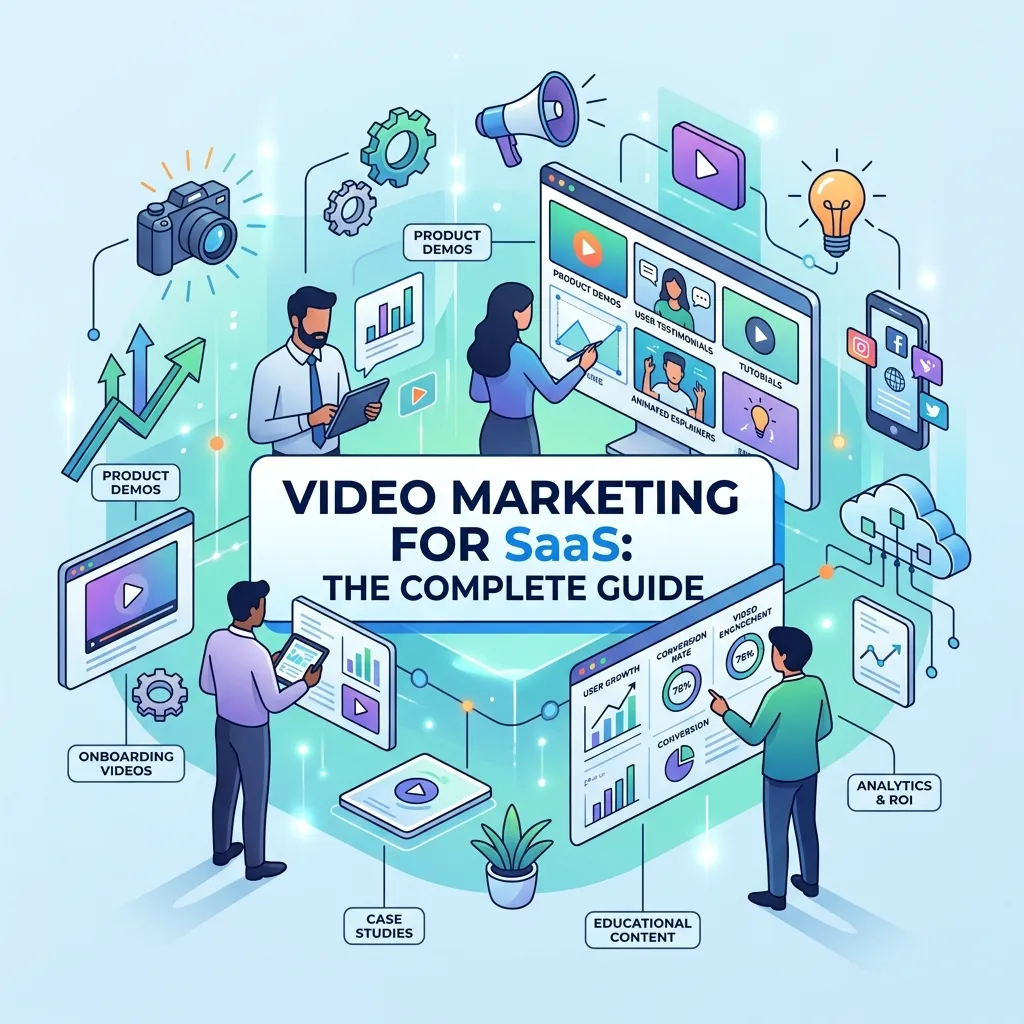
SaaS products are often abstract, feature-dense, and hard to explain in a screenshot or a paragraph of copy — which is exactly why video has become one of the most effective tools in a SaaS marketing stack. From short explainer videos on a landing page to detailed onboarding walkthroughs, video helps prospects understand what a product actually does, shortens the evaluation process, and reduces the support burden after signup. This guide covers the video formats that matter most for SaaS companies, how to map them to each stage of a typically longer B2B buying cycle, and how to measure whether video is actually moving the metrics that matter — trial conversions, activation, and retention.
Unlike a physical product that can be photographed or demonstrated in a single glance, SaaS software often requires context to understand: what problem it solves, how it fits into an existing workflow, and why it’s worth the switching cost from whatever a prospect uses today. Video consistently outperforms static screenshots and long-form copy at communicating that context quickly, which is why it has become a core part of nearly every stage of the modern SaaS funnel.
This guide breaks down exactly how to use video marketing throughout the SaaS customer journey, building on the fundamentals from this complete guide to B2B video marketing, and applying them specifically to the unique challenges SaaS companies face — long sales cycles, technical complexity, and the ongoing need to keep customers engaged well after the initial sale.
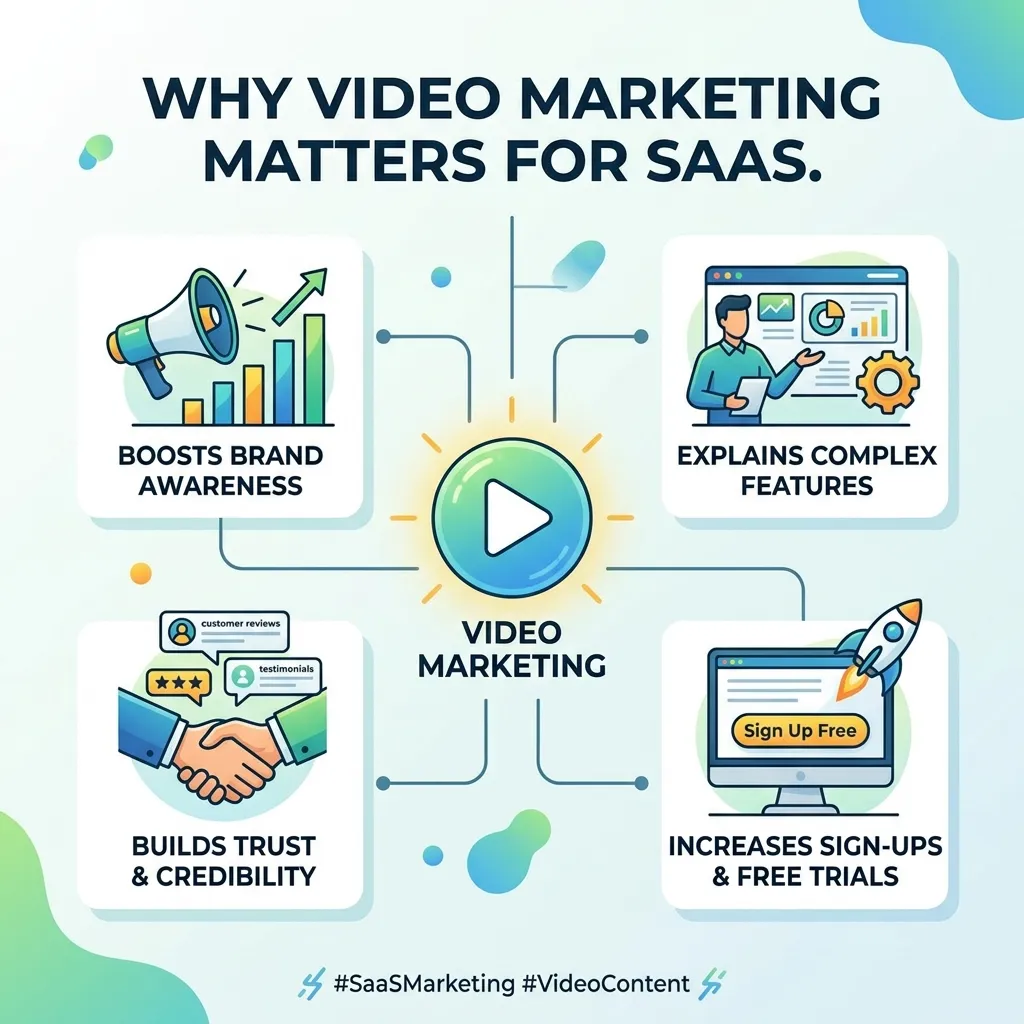
Why Video Marketing Matters for SaaS
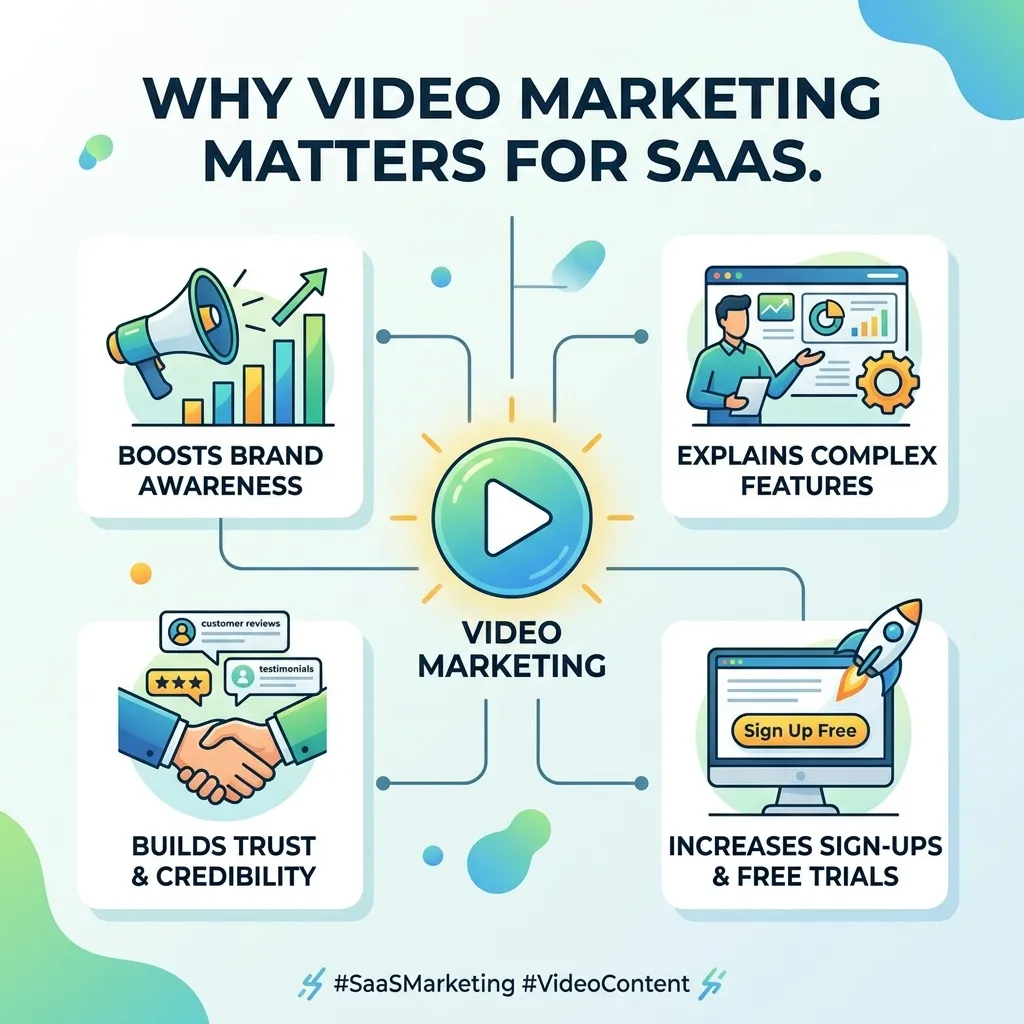
- Simplifies complex products. A 60-second explainer video can communicate a product’s core value proposition far more efficiently than a page of feature descriptions.
- Builds trust before a sales call. Prospects who watch a product demo or customer testimonial video often arrive at a sales conversation already understanding the basics, making the call more productive for both sides.
- Shortens the evaluation process. Video content addresses common objections and questions upfront, reducing the back-and-forth typically needed during a SaaS buyer’s research phase.
- Reduces onboarding friction. Walkthrough and tutorial videos help new users activate faster, directly impacting retention and reducing early churn.
- Reinforces value throughout the customer lifecycle. Feature announcement and use-case videos keep existing customers engaged and aware of capabilities they may not be using yet, supporting stronger long-term retention. This overview of why B2B video marketing is a secret weapon covers additional reasons video performs so well in B2B and SaaS contexts specifically.
Core Video Formats for SaaS Companies
1. Explainer Videos
A short, high-level video that communicates what the product does, who it’s for, and why it matters — typically placed front and center on a homepage or landing page to quickly orient new visitors.
2. Product Demo Videos
More detailed walkthroughs showing the actual product interface in use, often addressing specific use cases or pain points relevant to a particular buyer segment rather than trying to cover every feature at once.
3. Customer Testimonial and Case Study Videos
Real customers describing measurable results — time saved, revenue generated, problems solved — build the kind of credibility that’s especially important for SaaS buyers making a purchase decision that affects their whole team or organization.
4. Onboarding and Tutorial Videos
Step-by-step videos guiding new users through initial setup and key features directly impact activation rates, since users who understand how to get value quickly are far more likely to become long-term customers.
5. Feature Announcement Videos
Short videos introducing new features or updates keep existing customers engaged and aware of the product’s evolving value, which supports both retention and upsell opportunities.
6. Webinars and Live Product Sessions
Live or recorded sessions covering specific use cases, integrations, or best practices give prospects and customers a deeper, more interactive understanding of the product than a pre-recorded demo alone. Many SaaS teams also rely on video conferencing tools for these sessions, and this guide to video conferencing tools covers the platforms best suited for hosting them.
7. Animated Explainer Content
For highly technical or abstract concepts, animation can simplify ideas that would be difficult or expensive to demonstrate with live-action footage. This animated video marketing strategy guide covers how to approach animation specifically for software and technical products.
Mapping Video to the SaaS Buyer Journey
Awareness Stage
Short explainer and brand videos introduce the product to a cold audience, often through paid social or search ads, focusing on the problem being solved rather than deep feature detail.
Consideration Stage
Detailed product demos and customer testimonial videos help prospects evaluate whether the product fits their specific use case, typically placed on comparison pages, case study pages, or in nurture email sequences.
Decision Stage
Case study videos featuring similar companies or industries help de-risk the final purchase decision, especially for buyers who need to justify the choice internally to other stakeholders.
Onboarding Stage
Tutorial and setup videos reduce time-to-value for new users, directly influencing whether a trial converts to a paid plan or a new customer becomes an active, engaged user.
Retention and Expansion Stage
Feature announcement and advanced use-case videos keep existing customers engaged, support upsell conversations, and reduce the likelihood of churn from underutilization.
How to Build a SaaS Video Marketing Strategy
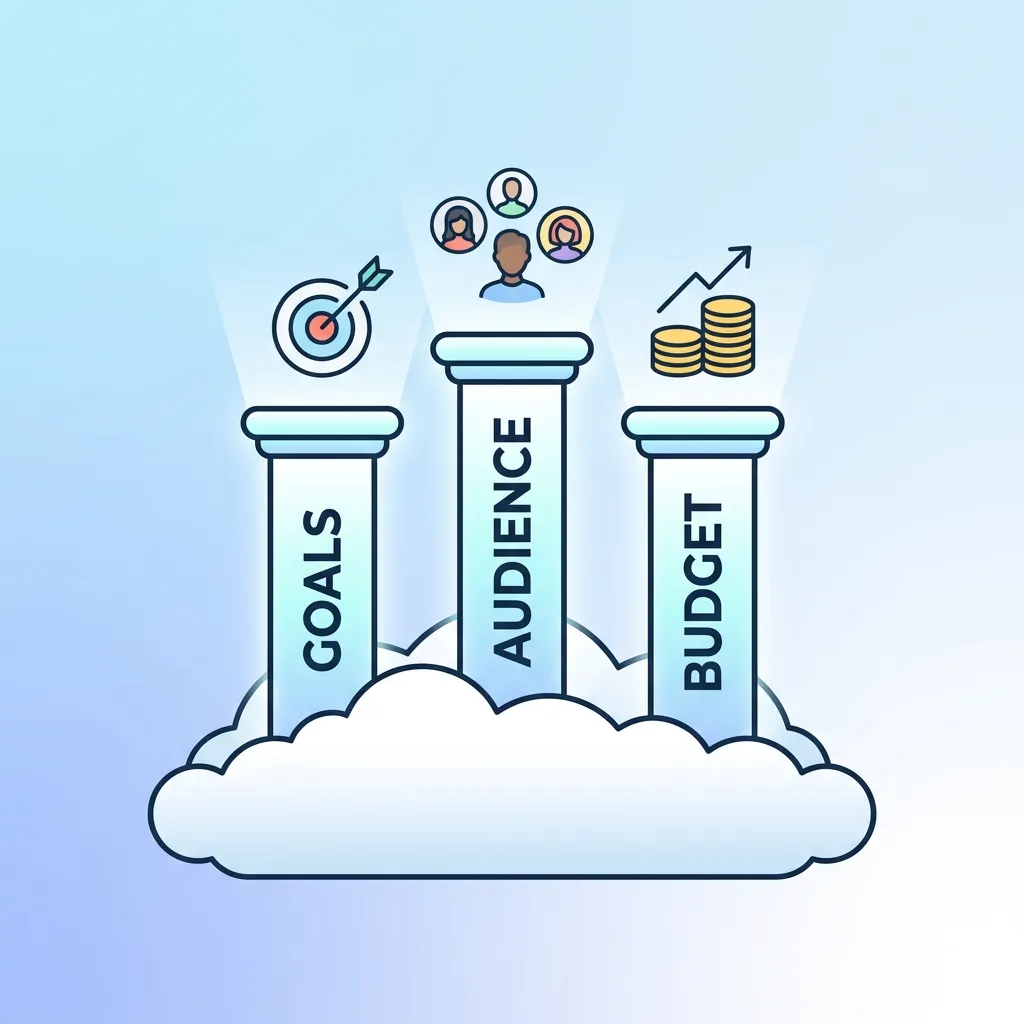
Step 1: Identify Your Biggest Funnel Drop-Off Points
Look at where prospects or trial users are dropping off — landing page bounce, trial-to-paid conversion, or early-stage churn — and prioritize video content that directly addresses that specific gap first.
Step 2: Keep Explainer Content Short and Focused
Homepage and landing page videos should communicate value within the first 10–15 seconds, since SaaS buyers researching multiple tools rarely commit to watching a lengthy video before deciding whether to keep exploring.
Step 3: Use Real Product Footage Wherever Possible
Authentic screen recordings of the actual interface build more trust than heavily stylized marketing footage, since prospects want an accurate sense of what they’ll actually be using.
Step 4: Build a Video-Supported Onboarding Flow
Embed short, contextual tutorial videos directly within the product experience rather than relying solely on a separate help center, since users are far more likely to watch something relevant to the exact step they’re stuck on.
Step 5: Repurpose Webinars Into Shorter Content
A single webinar or live product session can be cut into multiple shorter clips for social media, email campaigns, or landing pages, extending its value well beyond the original live audience.
Step 6: Track Metrics Tied to Revenue, Not Just Views
View counts matter less for SaaS than metrics like trial conversion rate, activation rate, and reduction in support tickets following the introduction of a specific tutorial video. Reviewing video marketing KPIs can help set the right benchmarks for a SaaS-specific video program rather than borrowing generic consumer video metrics.
Measuring the ROI of SaaS Video Marketing
SaaS companies can tie video performance directly to core business metrics more precisely than many other industries, since trial signups, activation, and churn are all trackable within the product itself. Useful metrics include:
- Landing page conversion rate with and without an explainer video present.
- Trial-to-paid conversion rate for users who watched an onboarding video versus those who didn’t.
- Support ticket volume for topics covered by a specific tutorial video, before and after it was introduced.
- Sales cycle length for deals where a demo or case study video was shared during the evaluation process.
- Customer retention and expansion revenue among accounts regularly engaging with feature announcement content.
This guide to reporting on video marketing results covers how to present these metrics clearly to stakeholders who care more about pipeline and retention impact than raw view counts. Since customer acquisition cost and lifetime value are core metrics in most SaaS businesses, tying video performance back to concepts like customer acquisition cost and customer lifetime value helps demonstrate video’s impact in language finance and leadership teams already use to evaluate marketing spend.
Using Video for Sales Enablement in SaaS
Marketing-produced video content doesn’t have to stop working once a prospect enters a sales conversation. Many SaaS sales teams now use short, personalized video clips — a rep walking through a specific feature relevant to a prospect’s use case, for example — as follow-up after a discovery call, often outperforming a plain text email in both open rates and response rates. This approach works especially well for deals that stall after an initial call, since a short, targeted video can re-engage a prospect without requiring another scheduled meeting.
Sales teams can also draw directly from the marketing team’s library of demo clips, case study videos, and feature announcements rather than creating new content from scratch for every deal. Building a shared, searchable video library that both marketing and sales can pull from reduces duplicated effort and ensures prospects see consistent, on-brand messaging regardless of which team member sends it. This kind of marketing-sales alignment around video content is increasingly common in product-led SaaS companies, where the line between marketing and sales touchpoints has grown considerably thinner than in traditional B2B sales motions.
Choosing the Right Video Hosting and Platform
SaaS companies often need to embed video directly within marketing pages, in-app onboarding flows, and help documentation, which makes hosting platform choice more important than it might seem at first. This video hosting platform guide covers the tradeoffs between different providers, including page load speed, analytics depth, and embedding flexibility — all of which matter more for a product-led SaaS company than for a simple marketing-only video presence.
Video Marketing for SaaS in a Broader Growth Strategy
Video rarely works in isolation — it performs best when integrated into a broader growth and content strategy. This guide to digital marketing strategies for SaaS provides useful context for how video fits alongside SEO, paid acquisition, and content marketing within a complete SaaS growth motion, rather than existing as a standalone initiative disconnected from the rest of the marketing plan.
Common Mistakes in SaaS Video Marketing
- Trying to explain every feature in one video. Overloaded explainer videos overwhelm new visitors instead of clearly communicating core value.
- Using generic stock footage instead of real product screens. Prospects want to see the actual interface, not abstract visuals unrelated to the software itself.
- Skipping onboarding video content entirely. Text-only help documentation often fails to reduce activation friction as effectively as a short, contextual video walkthrough.
- Measuring success by views alone. View counts don’t reflect whether video is actually influencing trial conversions, activation, or retention.
- Letting demo videos go stale. SaaS products change quickly, and an outdated demo showing a redesigned interface undermines trust rather than building it.
- Not repurposing webinar content. A single live session often contains enough material for months of shorter, reusable clips if it’s edited and repurposed properly.
Conclusion
Video marketing for SaaS works because it solves a problem unique to software: communicating value that’s often invisible until someone actually sees the product in action. From a concise homepage explainer to a detailed onboarding sequence embedded directly in the product, video shortens the distance between a prospect’s first impression and genuine understanding of what your software does. The SaaS companies that get the most out of video treat it as a tool tied to specific funnel stages and measurable business outcomes — trial conversion, activation, retention — rather than a one-time production project measured by view counts alone. Start by identifying your biggest drop-off point, build video content specifically to address it, and expand from there as you confirm real impact on the metrics that matter most to your business.
Frequently Asked Questions About SaaS Video Marketing
Why is video marketing especially important for SaaS companies?
SaaS products are often abstract and feature-rich, making them difficult to explain through text alone. Video can demonstrate value, functionality, and use cases more clearly and quickly.
What’s the best video format to start with for a SaaS company?
A short homepage explainer is usually a strong starting point because it introduces the product to new visitors and communicates the core value proposition effectively.
How long should a SaaS explainer video be?
Most effective explainers are around 60 to 90 seconds. The content should focus on the main problem, solution, and benefits instead of covering every product feature.
Can video reduce SaaS churn?
Yes. Onboarding and tutorial content can help users understand the product faster, improve activation, and reduce early churn. Feature updates can also keep existing customers engaged.
Should SaaS demo videos show the real product interface?
Yes. Authentic screen recordings can build trust by showing prospects what the actual product looks like and how key features work before they sign up.
How do I measure the ROI of video marketing for a SaaS business?
Track metrics such as trial-to-paid conversion, activation rates, customer engagement, support ticket reduction, and sales cycle length. Views alone do not provide the full picture.
Are webinars considered part of SaaS video marketing?
Yes. Product demonstrations, educational sessions, and webinars are valuable formats. They can also be repurposed into tutorials, short clips, social posts, and other content.
Do onboarding videos really improve product activation?
Yes. Short, contextual walkthroughs can reduce confusion and help new users complete important actions faster than relying only on static documentation.
How often should SaaS demo videos be updated?
Update them whenever the interface, features, or user experience changes significantly. Keeping demonstrations accurate helps maintain credibility and prevents confusion.
Is animation a good option for explaining SaaS products?
Yes. Animation is particularly useful for explaining abstract, technical, or complex concepts that may be difficult to demonstrate through traditional live-action content.
Where should case study videos be used in the SaaS funnel?
They work especially well during the decision stage. Customer stories can demonstrate real-world results and help potential buyers understand how similar businesses benefited from the product.
What’s the biggest mistake SaaS companies make with video marketing?
A common mistake is trying to include every feature in one video. Creating focused content for different funnel stages and customer questions is usually more effective.
For a deeper foundation on B2B video strategy, see our complete guide to B2B video marketing, or explore video marketing metrics for ROI to benchmark your current content.