B2B video marketing has moved from a nice-to-have to a core part of how businesses educate buyers, build trust, and shorten long sales cycles. This guide covers what B2B video marketing looks like in practice, the video types that perform best at each funnel stage, and how to measure whether your videos are actually driving pipeline.
Business buyers research differently than consumers, but they’re just as influenced by what they see and hear before ever speaking to a sales rep. That’s exactly why B2B video marketing has grown from a niche tactic into a core channel for demand generation, sales enablement, and customer education. Unlike a single-purchase consumer decision, B2B buying usually involves multiple stakeholders, longer evaluation periods, and higher stakes — all of which make video an unusually effective format for building the trust and clarity these buyers need.
In this guide, we’ll break down what effective B2B video marketing actually looks like, the specific video formats that work best at each stage of a business buying journey, and how to measure results in a category where the sales cycle can stretch for months. For a broader foundation, our companion piece on why B2B video marketing is a secret weapon covers the high-level case for investing in this channel.
Why B2B Video Marketing Works So Well
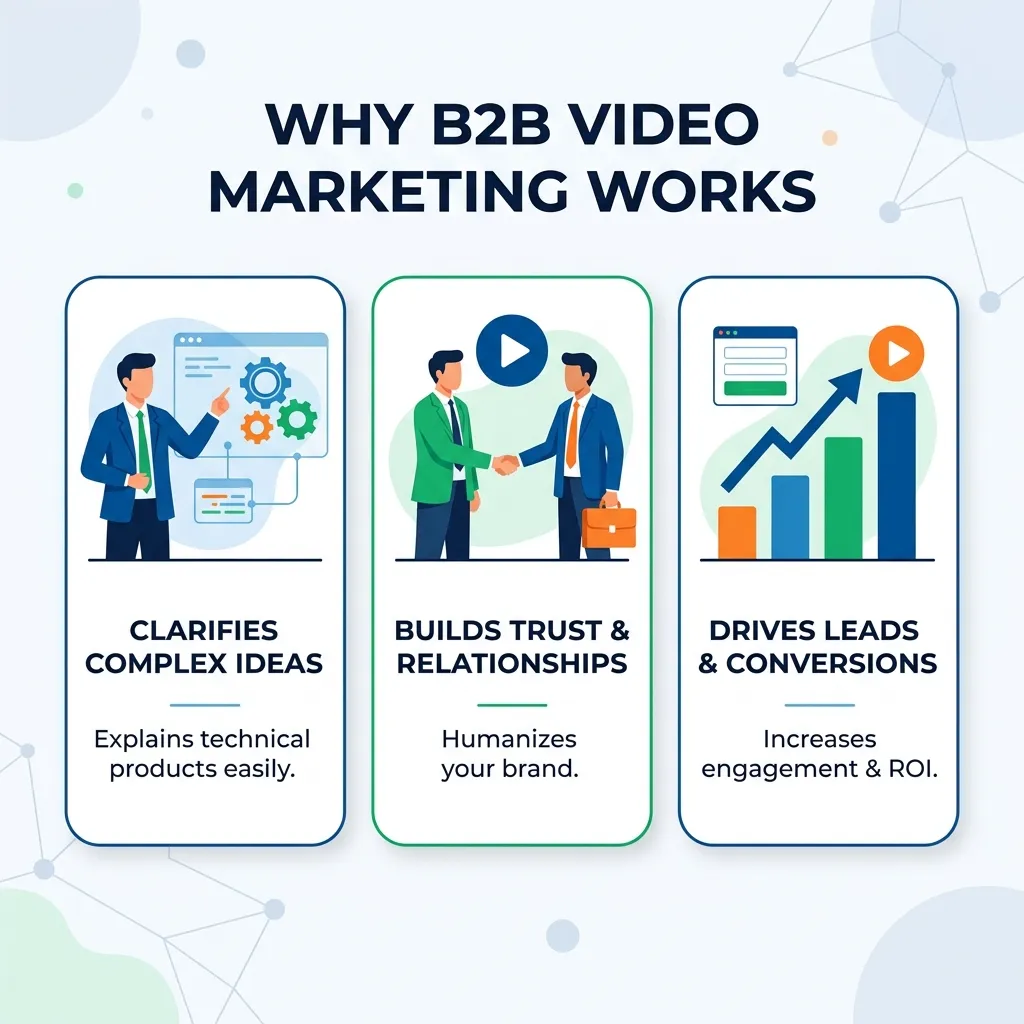
Text-heavy whitepapers and dense product pages still have a place in B2B marketing, but they ask a lot of a busy buyer’s attention. B2B video marketing compresses complex ideas — how a platform works, why a solution matters, what results other companies achieved — into a format that’s faster to consume and easier to retain. Video also does something text can’t: it conveys tone, credibility, and human connection, which matters enormously when a buyer is trying to judge whether a vendor can actually be trusted with a significant contract.
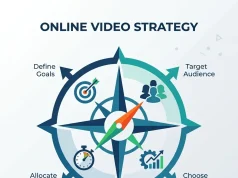
This is part of why our guide on building a video marketing strategy that works emphasizes starting with buyer psychology before jumping into production, since understanding why video works is what shapes which formats will actually move a B2B buyer forward.
Types of B2B Video Content by Funnel Stage
Not every B2B video marketing asset serves the same purpose. The most effective B2B video marketing programs map specific video types to specific stages of the buyer’s journey.
Top-of-Funnel: Awareness
At this stage, the goal is visibility and education rather than a hard sell. Common formats include:
- Thought leadership videos featuring executives or subject matter experts discussing industry trends
- Explainer videos that introduce a broad problem and hint at a category of solution
- Short-form social videos built for platforms like LinkedIn, designed to stop the scroll and build initial brand awareness
Middle-of-Funnel: Consideration
Once a prospect knows they have a problem, B2B video marketing shifts toward demonstrating capability and building credibility:
- Product demo videos walking through specific features and use cases
- Webinars and recorded panel discussions that go deeper into a topic than a short video allows
- Customer testimonial and case study videos showing how similar companies solved a similar problem
Bottom-of-Funnel: Decision
Near the final decision point, B2B video marketing needs to reduce risk and reinforce confidence:
- Detailed case study videos with specific, quantifiable results
- Onboarding and implementation preview videos showing exactly what happens after signing
- Personalized video messages from sales reps, addressing a specific prospect’s stated concerns directly
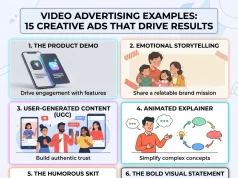
Our detailed breakdown of video marketing examples that drive real results includes several formats that translate directly into B2B contexts across all three of these funnel stages.
The Power of Case Study and Testimonial Videos in B2B
If there’s one format that consistently delivers strong results in B2B video marketing, it’s the customer case study video. Business buyers are inherently risk-averse, since a bad vendor choice can affect their own reputation internally. Seeing a real customer — ideally in a similar industry or role — describe specific, measurable outcomes does more to reduce that perceived risk than almost any other marketing asset.
Effective case study videos in B2B video marketing typically follow a simple structure: the challenge the customer faced, the solution they implemented, and the specific, quantifiable results that followed. Vague praise without numbers tends to underperform compared to testimonials that include concrete metrics like cost savings, time saved, or revenue growth.
Platforms and Distribution for B2B Video Marketing
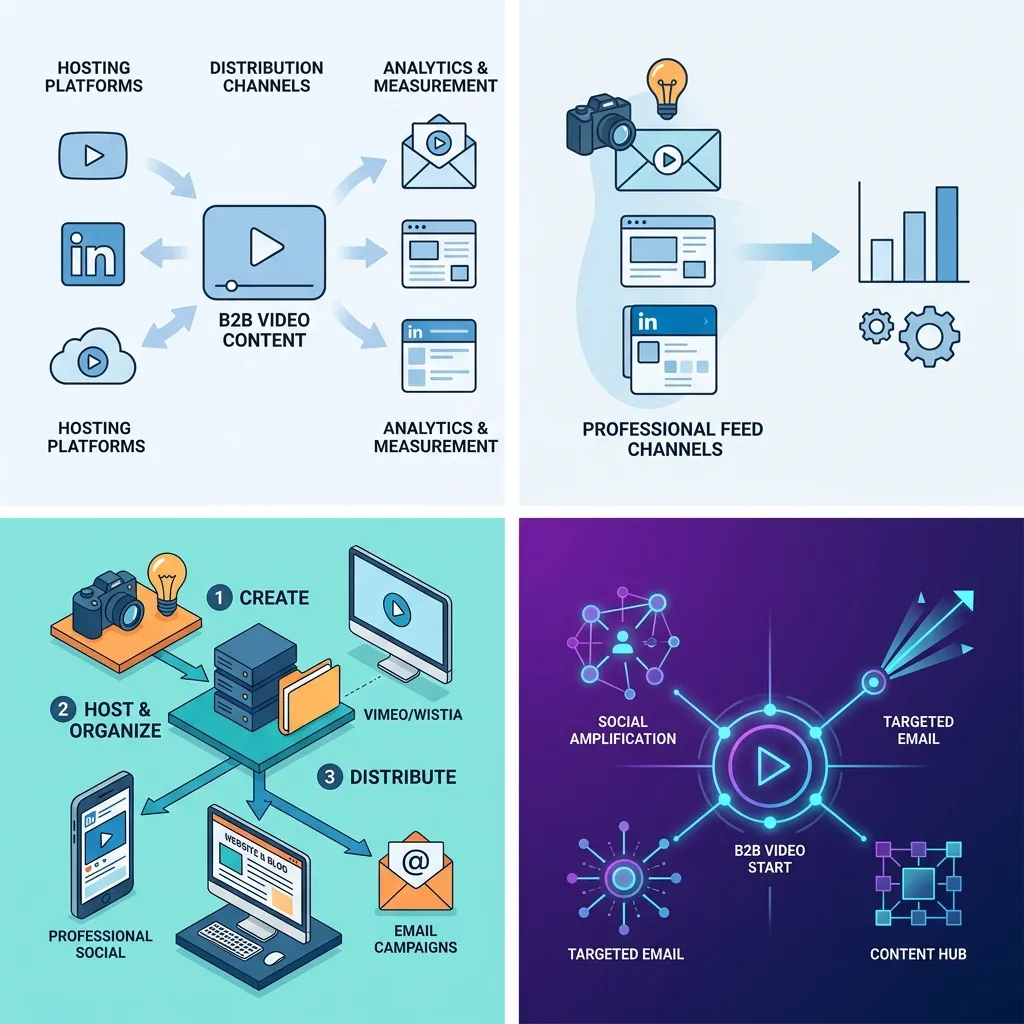
Where a video lives matters just as much as what’s in it. LinkedIn has become one of the primary distribution channels for B2B video marketing, since it reaches decision-makers directly in a professional context. YouTube remains valuable for searchable, evergreen content like tutorials and product walkthroughs, while embedding video directly on website landing pages and product pages can meaningfully improve time-on-page and conversion rates.
Email also plays a role — including a video thumbnail in a sales or nurture email often increases click-through rates compared to text alone, even when the recipient doesn’t watch the full video immediately. A strong B2B video marketing strategy typically distributes the same core video across several of these channels rather than relying on a single platform.
Producing B2B Video Content on a Realistic Budget
One common misconception about B2B video marketing is that it requires Hollywood-level production values. In practice, authenticity often outperforms polish, especially for testimonial and thought leadership content, where a slightly less polished but genuine delivery can feel more trustworthy than an overly scripted, corporate-feeling video.
That said, production quality does matter for product demos and explainer videos, where clarity is the priority. Clean audio, readable on-screen text, and a logical structure matter more than expensive equipment. Many successful B2B video marketing programs start with a smartphone camera, a decent microphone, and simple editing software before scaling up production budgets once the format proves effective.
Measuring the ROI of B2B Video Marketing
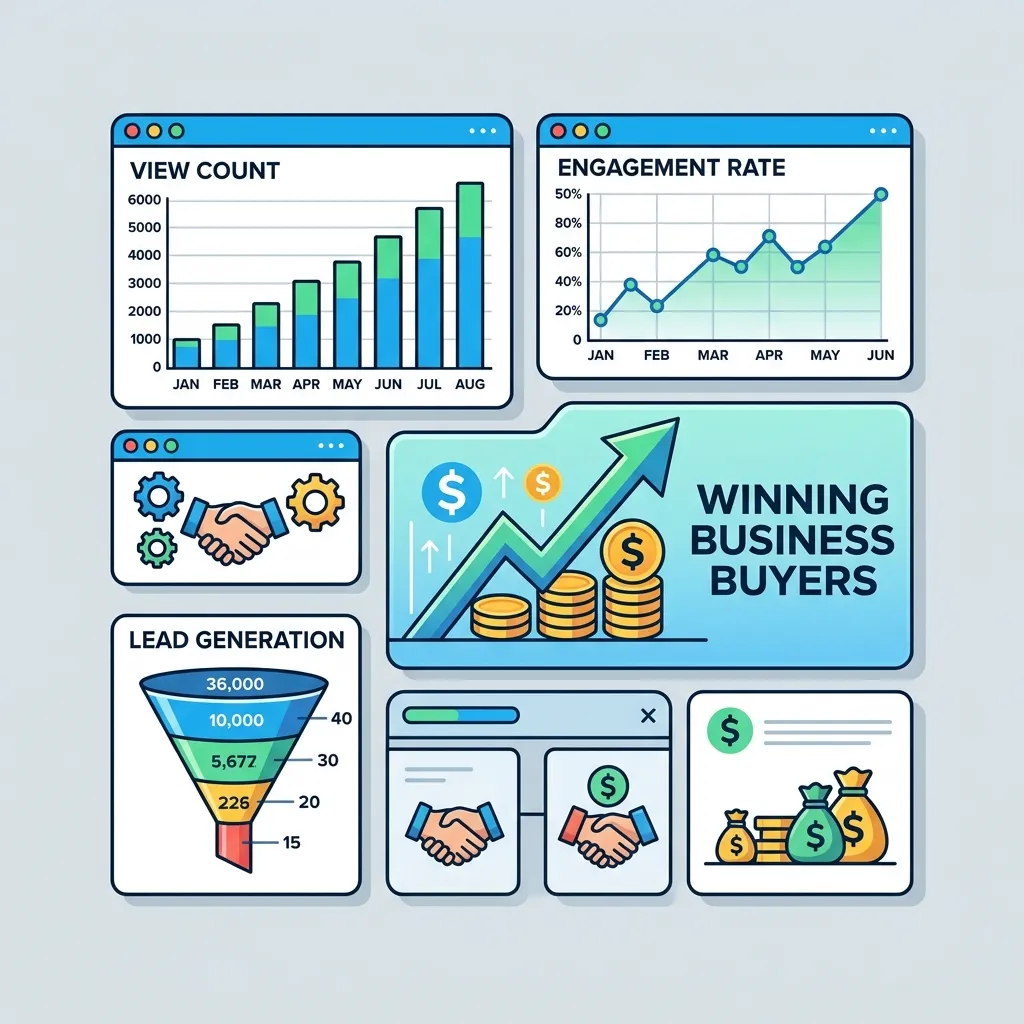
Because B2B sales cycles are long, measuring B2B video marketing requires looking beyond simple view counts. More meaningful metrics include:
- Watch time and completion rate, indicating whether the content actually holds a business audience’s attention
- Click-through rate to a landing page or demo request following the video
- Influence on pipeline, tracking whether leads exposed to specific videos progress through the funnel faster
- Sales team feedback, since reps often notice directly whether prospects reference specific videos during calls
Our guide on measuring video marketing success and the companion resource on video marketing KPIs both offer frameworks that apply directly to B2B video marketing’s longer, multi-touch attribution challenges.
How AI Is Changing B2B Video Marketing
Artificial intelligence is increasingly used to personalize B2B video marketing at scale — generating variations of a script for different industries, automatically creating short clips from longer webinar recordings, or even producing personalized video thumbnails based on a viewer’s company or role. Our guide on AI video marketing tools covers several of these emerging capabilities in more depth.
These tools are particularly valuable in B2B video marketing because personalization at scale has traditionally been difficult and expensive in this space — a single sales rep simply can’t record a custom video for every prospect, but AI-assisted tools are starting to close that gap.
Common Mistakes in B2B Video Marketing
Even well-funded B2B video marketing programs run into avoidable issues:
- Focusing on features instead of outcomes, losing the buyer’s attention before explaining why it matters to their business
- Making videos too long for the funnel stage they’re meant to serve, especially at the awareness stage where attention is limited
- Ignoring distribution strategy, producing strong videos that never reach the right audience because they’re only posted in one place
- Skipping case studies with real numbers, relying instead on vague, unquantified praise that doesn’t reduce buyer risk
- Not aligning video content with sales enablement, leaving sales teams unaware that useful videos even exist to share with prospects
Building a Repeatable B2B Video Marketing Program
The most successful B2B video marketing efforts aren’t built around isolated, one-off video projects — they’re built around a repeatable system. This typically means maintaining a content calendar mapped to funnel stages, repurposing longer content like webinars into shorter clips for social distribution, and creating a consistent visual and tonal identity so videos feel like part of the same brand rather than disconnected experiments.
Pairing this with strong broader B2B strategy is essential — our external resource on B2B digital marketing strategies provides useful context on how video fits into a wider B2B marketing mix alongside content, email, and paid channels. Since B2B relationships often extend well beyond the initial sale, understanding customer lifetime value can also help prioritize which accounts and segments deserve the most investment in dedicated video content.
B2B Video Marketing Across Different Industries
The specifics of an effective B2B video marketing approach shift depending on the industry and the complexity of what’s being sold.
Software and SaaS companies tend to rely heavily on product demo videos and interactive walkthroughs, since prospects often want to see the interface and workflow before committing to a trial or demo call. Short, feature-focused clips paired with longer, in-depth webinars covering integrations and use cases are common in this category’s B2B video marketing mix.
Manufacturing and industrial companies often use video to show physical processes, equipment in action, or facility tours that would be impractical to describe in text alone. This type of B2B video marketing leans heavily on demonstrating scale, precision, and reliability — qualities that are difficult to convey through photos or written specifications.
Professional services firms, including consulting, legal, and financial advisory businesses, typically lean on thought leadership and expert interview formats. Since these purchases are built almost entirely on trust in the people involved, B2B video marketing in this space often centers on showcasing expertise and personality rather than a physical product.
Healthcare and life sciences companies face additional considerations around compliance and accuracy, making case studies and peer-reviewed testimonial content especially valuable. B2B video marketing here often needs closer legal review, but the payoff in credibility can be significant given how trust-sensitive healthcare purchasing decisions tend to be.
Logistics and supply chain companies frequently use video to simplify genuinely complex operational concepts, turning dense process diagrams into visual explainer content that’s far easier for a prospective client to absorb quickly.
Recognizing which of these patterns applies to your own industry helps prioritize which video formats are worth investing in first, rather than attempting to produce every possible format without a clear sense of what your specific audience actually needs to see.
Webinars as a B2B Video Marketing Cornerstone
Live and recorded webinars deserve special attention within any B2B video marketing strategy, since they combine several strengths other formats can’t match on their own. A webinar allows for real-time audience interaction through Q&A, positions the presenting company as a genuine expert rather than just a vendor, and generates a long recording that can later be repurposed into shorter clips for social distribution, email campaigns, and landing pages.
Many of the most efficient B2B video marketing programs treat each webinar as a content multiplier rather than a single-use asset — extracting highlight clips, quote graphics, and even blog content from a single 45-minute recording. This approach maximizes the return on the significant planning and promotion effort that a well-attended webinar typically requires.
Key Takeaways on B2B Video Marketing
Before wrapping up, here’s a quick recap of what makes B2B video marketing effective: mapping video formats to the right funnel stage, prioritizing genuine case studies with measurable results, distributing content across multiple relevant channels rather than just one, and measuring performance through metrics that reflect the realities of a long B2B sales cycle rather than simple view counts alone. Programs that treat B2B video marketing as a connected, repeatable system — rather than a series of isolated projects — tend to see the strongest long-term returns.
Conclusion
B2B video marketing has earned its place as a core channel because it does something few other formats can: it builds trust, explains complexity clearly, and moves risk-averse business buyers forward with genuine confidence. By mapping video types carefully to each funnel stage, prioritizing authentic case studies and testimonials, and measuring performance beyond simple view counts, any B2B company can build a video marketing program that meaningfully contributes to pipeline and revenue rather than existing as a disconnected creative exercise.
Frequently Asked Questions (FAQs)
1. What is B2B video marketing?
B2B video marketing is the use of video content to educate, engage, and convert business buyers throughout the sales funnel, from initial awareness through final purchase decisions.
2. How is B2B video marketing different from B2C video marketing?
B2B video marketing typically targets longer sales cycles, multiple decision-makers, and a greater emphasis on trust and measurable ROI compared to more emotion-driven B2C video content.
3. What types of videos work best for B2B companies?
Explainer videos and thought leadership content work well early in the funnel, while product demos, testimonials, and detailed case studies perform best later in the buying journey.
4. Do B2B videos need to be highly polished and expensive?
Not necessarily. Authenticity often matters more than production value, especially for testimonials, though clarity and audio quality remain important across all video types.
5. Where should B2B video marketing content be distributed?
LinkedIn, YouTube, website landing pages, and email are all common and effective distribution channels for B2B video marketing content.
6. How do you measure B2B video marketing ROI?
Key metrics include watch time, click-through rate to demo or landing pages, pipeline influence, and direct sales team feedback on video effectiveness.
7. Why are case study videos so effective in B2B video marketing?
They reduce perceived risk by showing real, quantifiable results from similar companies, which is especially persuasive to risk-averse business buyers.
8. How long should a B2B marketing video be?
Length should match funnel stage — shorter for top-of-funnel awareness content, and longer for detailed demos or in-depth case studies further down the funnel.
9. Can small B2B companies compete with larger budgets in video marketing?
Yes, since authenticity and clarity often outperform expensive production, especially for testimonial and thought leadership content.
10. How is AI changing B2B video marketing?
AI is enabling personalization at scale, including automated clip generation, personalized thumbnails, and script variations tailored to different industries or roles.
11. Should sales teams be involved in B2B video marketing?
Yes, aligning video content with sales enablement ensures reps know which videos exist and can share the right one at the right stage of a deal.
12. What’s the most common mistake in B2B video marketing?
Focusing on product features instead of clear business outcomes is one of the most common mistakes, often losing buyer attention before the value is even communicated.