Types of video advertising include in-stream ads, out-stream ads, social media video ads, connected TV ads, native video ads, shoppable videos, interactive video ads, and more. Each format serves a different marketing goal, audience, and stage of the customer journey. Understanding these video advertising types helps businesses choose the right format, platform, creative approach, and measurement strategy for better engagement and conversions.
Video advertising has become one of the most versatile forms of digital promotion. Businesses can use video to introduce a brand, explain a product, demonstrate a service, generate leads, increase website traffic, or encourage direct purchases.
However, video advertising is not a single format. There are multiple types of video advertising, and each one behaves differently depending on where it appears, how users interact with it, and what the advertiser wants to accomplish.
A short social media video may be ideal for generating awareness, while a shoppable video may be better for driving product sales. Similarly, an in-stream advertisement can reach viewers while they watch online content, whereas a connected TV advertisement can deliver a more television-like experience through internet-connected devices.
This guide explains the major types of video advertising, how they work, their advantages and limitations, and how businesses can select the right format for their campaigns.
What Is Video Advertising?
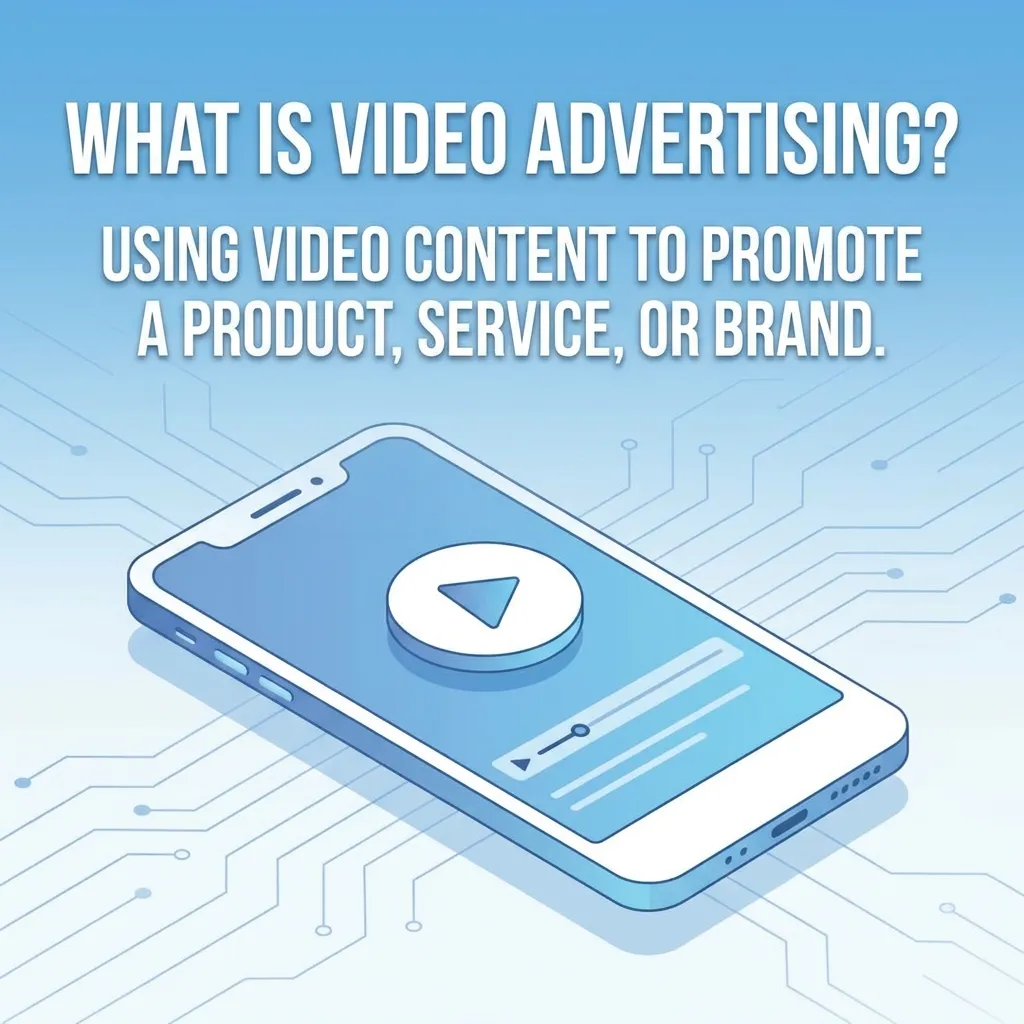
Video advertising is a form of advertising that uses video content to communicate a promotional message to a target audience.
Unlike static advertisements, video can combine visuals, sound, motion, narration, demonstrations, text, animation, and storytelling. This makes it useful for communicating complex ideas and creating memorable brand experiences.
Video advertisements can appear across many environments, including:
- Social media platforms
- Video-sharing websites
- Streaming services
- Connected TV platforms
- Publisher websites
- Mobile applications
- Search and display networks
- E-commerce platforms
- Websites and landing pages
The right format depends on the campaign objective, target audience, budget, placement, and desired action.
Businesses looking for a broader foundation can also explore this complete guide to video advertising before developing a campaign.
Why Are There Different Types of Video Advertising?
Different audiences consume video content in different ways.
Someone watching a YouTube tutorial has a different mindset from someone scrolling through Instagram or watching a streaming television program. Therefore, advertisers need different formats to match different viewing environments.
The major reasons for having multiple video advertising types include:
Different Viewing Behaviors
Some users actively choose video content, while others encounter advertisements while browsing a website or scrolling through a feed.
Different Marketing Objectives
An awareness campaign may prioritize reach and completed views, while an e-commerce campaign may focus on clicks and purchases.
Different Devices
Video advertisements can appear on:
- Smartphones
- Tablets
- Desktop computers
- Smart TVs
- Streaming devices
- Gaming consoles
Different Levels of User Intent
A person searching for a product demonstration may have stronger purchase intent than someone casually watching entertainment content.
Different Creative Requirements
Vertical short-form video requires a different creative approach from a 30-second connected TV commercial.
Understanding these differences is essential when selecting among the various types of video advertising.
Major Types of Video Advertising
There are several important video advertising formats businesses can use today. The following types cover the most common and strategically useful options.
1. In-Stream Video Advertising
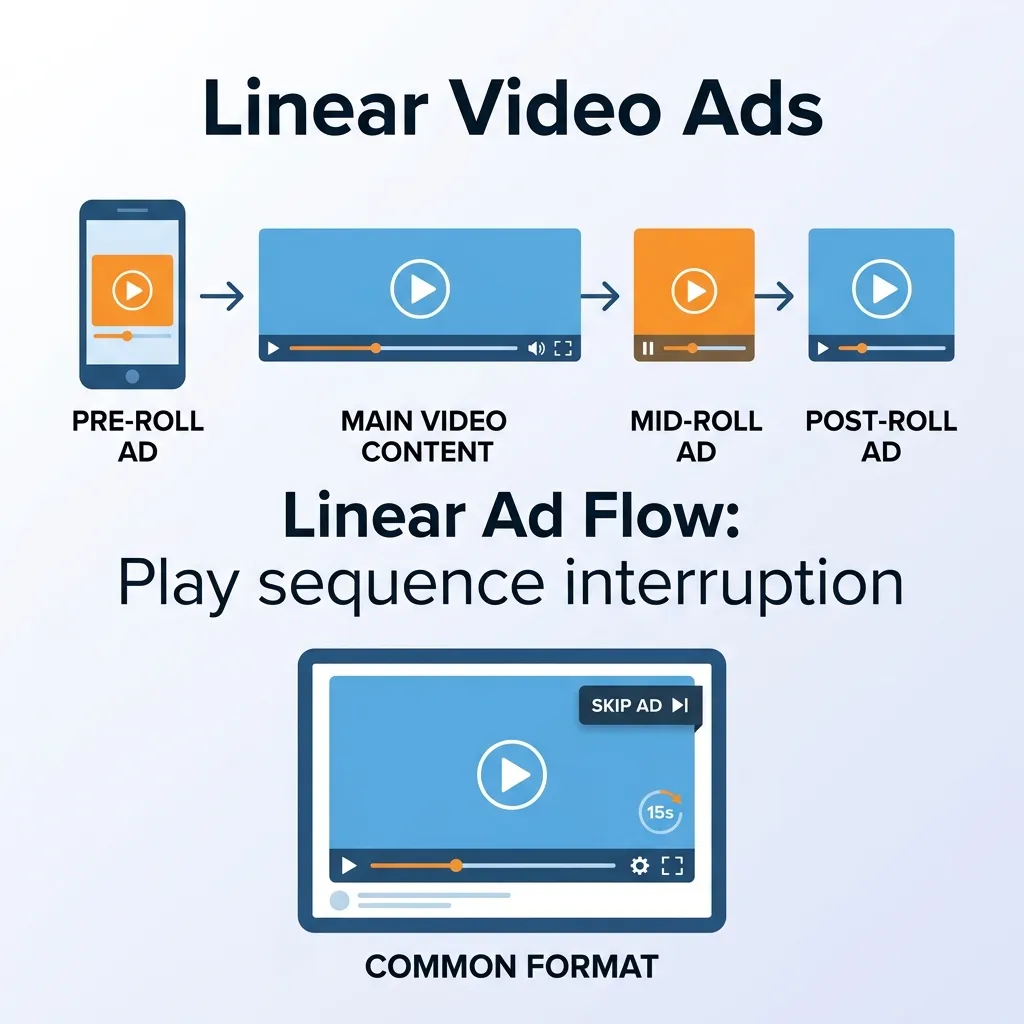
In-stream advertising appears within video content that a user is already watching.
It is one of the most recognizable types of video advertising.
In-stream ads can appear:
- Before a video starts
- During a video
- After a video ends
These are commonly known as pre-roll, mid-roll, and post-roll advertisements.
Pre-Roll Ads
Pre-roll ads appear before the main video begins.
They are useful for reaching viewers before they consume their selected content.
Mid-Roll Ads
Mid-roll ads appear during a video.
They can provide strong visibility because users are already engaged with the content, although poorly timed interruptions can negatively affect the viewing experience.
Post-Roll Ads
Post-roll ads appear after the main video has finished.
They can be useful for viewers who remain engaged after completing the content.
Best For
In-stream video advertising works well for:
- Brand awareness
- Product promotion
- Lead generation
- Website traffic
- Retargeting
- Product demonstrations
2. Out-Stream Video Advertising
Out-stream video advertising does not require the advertisement to be placed inside another video.
Instead, the video advertisement typically appears within written content or a publisher’s webpage.
For example, a video advertisement might automatically appear between paragraphs of an article when the placement becomes visible to the user.
This format allows advertisers to reach audiences beyond traditional video platforms.
Advantages of Out-Stream Ads
- Expands video reach
- Works across publisher websites
- Can reach users who are not actively watching videos
- Creates additional inventory for advertisers
- Can support awareness campaigns
Out-stream advertising is particularly useful when a business wants to expand video reach beyond dedicated video platforms.
3. Social Media Video Advertising
Social media video advertising involves promotional videos distributed through social networking platforms.
These advertisements can appear in:
- Feed placements
- Stories
- Reels
- Short-video sections
- Explore areas
- Sponsored content placements
Social video is particularly effective because users are already consuming visual content within these environments.
The creative should generally match the platform’s viewing behavior instead of simply repurposing a traditional television commercial.
Social Video Best Practices
- Capture attention quickly
- Design for mobile screens
- Use captions when appropriate
- Keep the message focused
- Show branding naturally
- Include a clear call to action
- Test multiple opening scenes
Businesses interested in this area can also explore the site’s guide to social media video marketing for additional strategy ideas.
4. Short-Form Video Advertising
Short-form video advertisements are designed around brief viewing sessions.
They are particularly suitable for mobile-first platforms and fast-scrolling environments.
Short-form ads can include:
- Product teasers
- Quick demonstrations
- Before-and-after concepts
- Customer testimonials
- Educational tips
- Brand storytelling
- Promotional announcements
The primary challenge is communicating value quickly.
A short advertisement does not necessarily need to explain everything. Instead, it should generate enough interest to encourage the viewer to continue learning, visit a website, or take another action.
5. Connected TV Advertising
Connected TV advertising delivers video advertisements through internet-connected television environments.
These advertisements can appear on:
- Smart TVs
- Streaming devices
- Connected gaming systems
- Streaming applications
Connected TV combines some characteristics of traditional television with digital targeting and measurement capabilities.
It can therefore be useful for brands that want premium, large-screen video experiences while maintaining more flexible digital campaign capabilities.
Connected TV can be particularly valuable for:
- Large consumer brands
- Regional businesses
- Product launches
- Brand awareness
- Household-level campaigns
- Retargeting strategies
6. Over-the-Top (OTT) Video Advertising
OTT advertising refers to video advertisements delivered through internet-based streaming services rather than traditional cable or satellite television systems.
Consumers increasingly watch entertainment through streaming platforms, making OTT an important advertising environment.
OTT campaigns can help advertisers reach viewers who spend less time with traditional television.
OTT Advertising Benefits
- Access to streaming audiences
- Flexible targeting opportunities
- Digital-style campaign measurement
- Multiple device environments
- High-quality video experiences
OTT and connected TV advertising can overlap, but they are not always identical. OTT generally describes internet-delivered streaming content, while connected TV refers more specifically to viewing through connected television environments.
7. Native Video Advertising
Native video advertisements are designed to fit naturally within the surrounding content or platform experience.
Instead of appearing as an obvious interruption, native video ads are presented in a way that matches the visual and contextual environment of the platform.
For example, a publisher may place a sponsored video within an editorial content feed.
Why Native Video Works
Native video can reduce the feeling of interruption and create a more integrated browsing experience.
However, advertisers should still clearly distinguish promotional content from editorial material and follow platform disclosure requirements.
Native video advertising can be effective for:
- Awareness
- Content promotion
- Brand storytelling
- Educational campaigns
- Audience engagement
8. Interactive Video Advertising
Interactive video advertising allows viewers to engage with the advertisement rather than simply watching it.
Interaction can include:
- Clicking buttons
- Exploring products
- Answering questions
- Choosing content paths
- Opening product information
- Visiting landing pages
- Completing forms
This format transforms video from a passive experience into a more participatory one.
For businesses focused on engagement, interactive video can be especially useful.
VidPromot also covers interactive video marketing and how interactive experiences can support engagement and sales.
Best Uses
Interactive video works well for:
- Product discovery
- Lead generation
- Education
- Product demonstrations
- Customer engagement
- E-commerce
9. Shoppable Video Advertising
Shoppable video combines promotional video with purchasing functionality.
Instead of requiring viewers to watch an advertisement and then manually search for a product, the video can provide opportunities to explore or purchase featured products directly.
For example, a fashion brand could show several outfits in a video and allow viewers to select individual products.
Benefits of Shoppable Video
- Shortens the path to purchase
- Connects content with commerce
- Encourages product discovery
- Supports impulse purchases
- Creates measurable shopping interactions
This format is particularly relevant to e-commerce brands.
Businesses interested in the broader concept can also review the site’s resource on video shopping platforms.
10. In-Game Video Advertising
In-game video advertising places video advertisements inside gaming environments.
These ads can appear between gameplay sessions, during loading periods, or as rewarded video experiences.
Rewarded video is especially interesting because users may voluntarily watch an advertisement in exchange for an in-game benefit.
For example, a player might watch a video advertisement to receive:
- Extra lives
- Virtual currency
- Game items
- Additional playing time
- Other digital rewards
Why In-Game Video Advertising Matters
Gaming audiences can be highly engaged, making the environment attractive for brands targeting younger and digitally active consumers.
However, advertisements must be carefully designed so they do not create unnecessary frustration or interrupt gameplay at inappropriate moments.
11. Video Advertising in Mobile Apps
Mobile app video advertising places promotional videos inside mobile applications.
Common placements include:
- Rewarded videos
- Interstitial videos
- In-feed videos
- App content placements
Mobile video ads need to account for smaller screens, shorter attention spans, mobile data usage, and touch-based interactions.
Mobile Video Best Practices
A successful mobile advertisement should:
- Load efficiently.
- Communicate the message quickly.
- Use readable text.
- Include a clear CTA.
- Work without relying completely on audio.
- Make interaction easy on touchscreens.
12. Video Display Advertising
Video display advertising combines characteristics of display advertising and video content.
Instead of using a static banner, advertisers use moving visual content to communicate their message.
These advertisements can appear across websites and digital publishing environments.
They are useful when advertisers want to introduce motion and storytelling into display campaigns.
Common Goals
Video display ads can support:
- Brand awareness
- Retargeting
- Product promotion
- Website traffic
- Audience education
13. Video Search Advertising
Video search advertising appears when users search for relevant information or products.
The advertisement is connected to the user’s search intent, which can make this format particularly valuable for demand capture.
For example, someone searching for a software demonstration may be more receptive to a relevant video advertisement than someone who is simply browsing entertainment content.
This format can support users at different stages of the buying journey.
14. Retargeting Video Advertising
Retargeting video advertising targets people who have previously interacted with a business.
A user may have:
- Visited a website
- Viewed a product
- Watched part of a previous video
- Added an item to a cart
- Engaged with a social media account
- Visited a landing page
The advertiser can then deliver a relevant video message to encourage the person to return.
Example
A customer visits an online store and views running shoes but does not purchase.
A later video advertisement could highlight:
- The same product
- Customer reviews
- A product demonstration
- Related products
- A limited-time offer
Retargeting can make video advertising more relevant because the audience has already demonstrated some level of interest.
15. Personalized Video Advertising
Personalized video advertising uses audience information or behavioral signals to make advertisements more relevant to specific viewers or audience segments.
Personalization may involve:
- Location
- Previous interactions
- Product interests
- Customer segments
- Purchase behavior
- Website activity
For example, a travel business could create different video messages for customers interested in beach vacations versus city breaks.
Personalized video is particularly useful when a brand has enough audience data to create meaningful segmentation without making the experience feel intrusive.
16. 360-Degree Video Advertising
360-degree video advertising creates an immersive viewing experience in which users can explore different parts of the visual environment.
This can be useful for industries where seeing the environment is important.
Potential applications include:
- Travel
- Real estate
- Automotive
- Hospitality
- Tourism
- Events
- Experiential marketing
For example, a hotel could use 360-degree video to allow potential guests to explore a property virtually.
VidPromot also provides a dedicated resource covering 360-degree video marketing.
17. Explainer Video Advertising
Explainer video advertisements focus on communicating what a product, service, or concept does.
They are particularly useful for businesses offering products that require explanation.
An explainer advertisement may demonstrate:
- How a product works
- How a service solves a problem
- Why a solution is different
- How customers can get started
This format can be especially valuable for software, technology, financial services, professional services, and complex products.
18. Testimonial Video Advertising
Testimonial video advertisements use customers or other trusted individuals to communicate positive experiences with a brand.
Rather than simply claiming that a product works, the advertisement allows customers to describe their experience.
A strong testimonial video can include:
- The customer’s original problem
- Why they selected the product
- Their experience using it
- Specific outcomes
- A recommendation
Authenticity is critical. Overly scripted testimonials may appear less credible.
19. Product Demonstration Video Advertising
Product demonstration advertisements show how a product works in practice.
They are especially useful when the product has visual or functional features that are difficult to communicate through static imagery.
A demonstration can show:
- The problem.
- The product.
- How the product works.
- The main benefit.
- The next step.
This format works across consumer products, software, electronics, appliances, beauty products, and many other categories.
20. Live Video Advertising
Live video advertising is associated with real-time or live-streamed video experiences.
Businesses can use live video to promote:
- Product launches
- Events
- Interviews
- Demonstrations
- Q&A sessions
- Limited-time offers
- Behind-the-scenes content
Live video can create urgency because viewers know the experience is happening in real time.
Types of Video Advertising by Marketing Objective
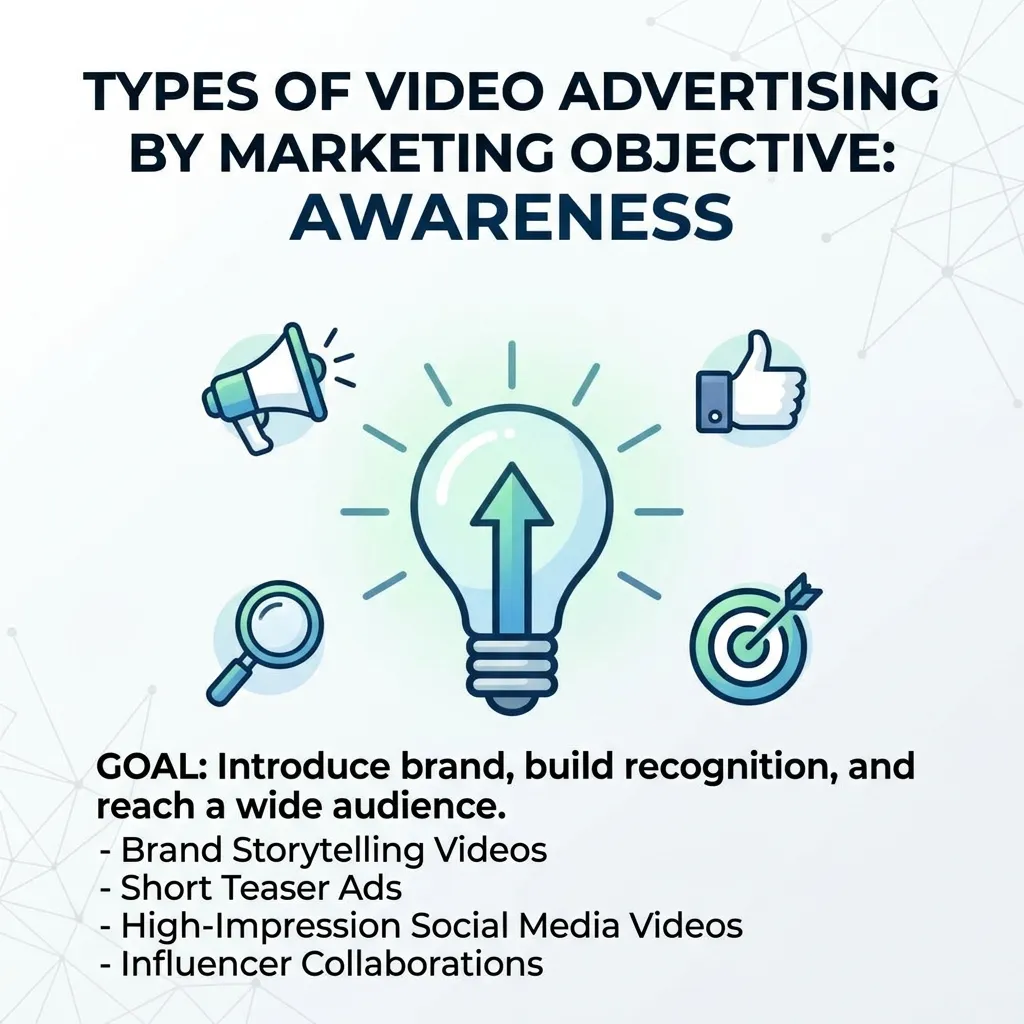
Another useful way to classify types of video advertising is by campaign objective.
| Marketing Objective | Suitable Video Types |
|---|---|
| Brand awareness | Social video, in-stream, CTV, OTT |
| Product education | Explainer, demonstration, interactive video |
| Lead generation | Interactive, testimonial, in-stream |
| E-commerce sales | Shoppable, product demonstration, retargeting |
| Customer retention | Personalized, testimonial, educational |
| Website traffic | Social, native, search video |
| App promotion | Mobile app, rewarded, social video |
| Product launch | CTV, social, live video, in-stream |
| Engagement | Interactive, short-form, social |
| Retargeting | Personalized, retargeting, in-stream |
This objective-based approach helps prevent businesses from selecting a video format simply because it is popular.
Types of Video Advertising by Funnel Stage
Video advertising can also support different stages of the customer journey.
Awareness Stage
At the awareness stage, the audience may not know the brand.
Useful formats include:
- Short-form video
- Social video
- CTV advertising
- OTT advertising
- In-stream video
The goal is usually to generate recognition and interest.
Consideration Stage
At this stage, potential customers are researching solutions.
Effective formats include:
- Explainer videos
- Product demonstrations
- Testimonial videos
- Interactive videos
- Educational advertisements
The goal is to help users understand the product and build confidence.
Conversion Stage
At the conversion stage, viewers may already be interested.
Useful formats include:
- Shoppable videos
- Retargeting videos
- Personalized advertisements
- Product demonstrations
- Offer-focused video ads
The goal is to encourage action.
Retention Stage
After purchase, video can continue supporting customer relationships.
Examples include:
- Product tutorials
- Customer education
- Personalized videos
- Onboarding videos
- Cross-selling advertisements
How to Choose the Right Type of Video Advertising
Choosing among different types of video advertising requires more than selecting the most popular format.
Use the following process.
Step 1: Define Your Objective
Start by identifying what you want the campaign to accomplish.
Ask:
- Do we need awareness?
- Do we want website traffic?
- Are we generating leads?
- Are we promoting a product?
- Do we need direct sales?
- Are we trying to re-engage existing visitors?
Your objective should determine your format.
Step 2: Understand Your Audience
Identify:
- Age group
- Interests
- Device usage
- Viewing habits
- Buying behavior
- Content preferences
- Purchase intent
A mobile-first audience may respond differently from a television-focused audience.
Step 3: Select the Appropriate Platform
Consider where your target customers spend their time.
Different platforms support different creative formats, targeting options, audience behaviors, and campaign objectives.
Choosing the right platform is just as important as choosing the video format.
For additional guidance, see this resource on choosing the right video marketing platform for your business.
Step 4: Match the Creative to the Placement
Do not create one video and automatically use it everywhere.
A vertical social video, connected TV commercial, and in-stream advertisement have different requirements.
Consider:
- Aspect ratio
- Video length
- Opening seconds
- Text placement
- Captions
- CTA placement
- Sound behavior
Step 5: Build a Strong CTA
Every advertisement should have a clear next step.
Examples include:
- Shop now
- Learn more
- Get started
- Book a demo
- Visit the website
- Download the app
- Sign up today
The CTA should match the campaign objective.
How to Measure Video Advertising Performance
Selecting the right types of video advertising is only the beginning. Advertisers also need to measure whether the campaigns are delivering meaningful results.
Important metrics include:
Impressions
The number of times an advertisement is displayed.
Reach
The number of unique users exposed to the advertisement.
View Rate
The percentage of users who watch the video after being served the advertisement.
Completion Rate
The percentage of viewers who watch the video through the selected completion point.
Click-Through Rate
The percentage of viewers who click the advertisement or associated CTA.
Conversion Rate
The percentage of users who complete the desired action.
Cost Per View
The average amount spent for each video view under the campaign’s measurement definition.
Cost Per Acquisition
The cost required to generate a conversion or customer.
Return on Ad Spend
ROAS compares advertising revenue with advertising expenditure.
Businesses should not evaluate every video campaign using the same metric. An awareness campaign and a direct-response campaign have different success criteria.
For more measurement guidance, see the video marketing metrics guide.
Common Mistakes in Video Advertising
Even the right format can perform poorly if the execution is weak.
1. Starting Too Slowly
If the first few seconds fail to attract attention, viewers may move on.
2. Trying to Say Everything
A single video advertisement should communicate one primary idea rather than overwhelming viewers with information.
3. Ignoring Mobile Viewing
Many audiences encounter video advertising on smartphones. Creative should therefore remain readable and understandable on smaller screens.
4. Forgetting the CTA
A viewer may enjoy a video but still not know what to do next.
5. Using the Same Creative Everywhere
Each placement has different audience expectations and technical requirements.
6. Measuring Only Views
A large number of views does not automatically mean business success.
Advertisers should connect video metrics with broader campaign goals.
7. Ignoring Audience Segmentation
A single message may not be equally relevant to every customer segment.
8. Focusing Only on Production Quality
A highly polished video can still fail if its message, targeting, offer, or CTA is weak.
How to Improve Video Advertising Results
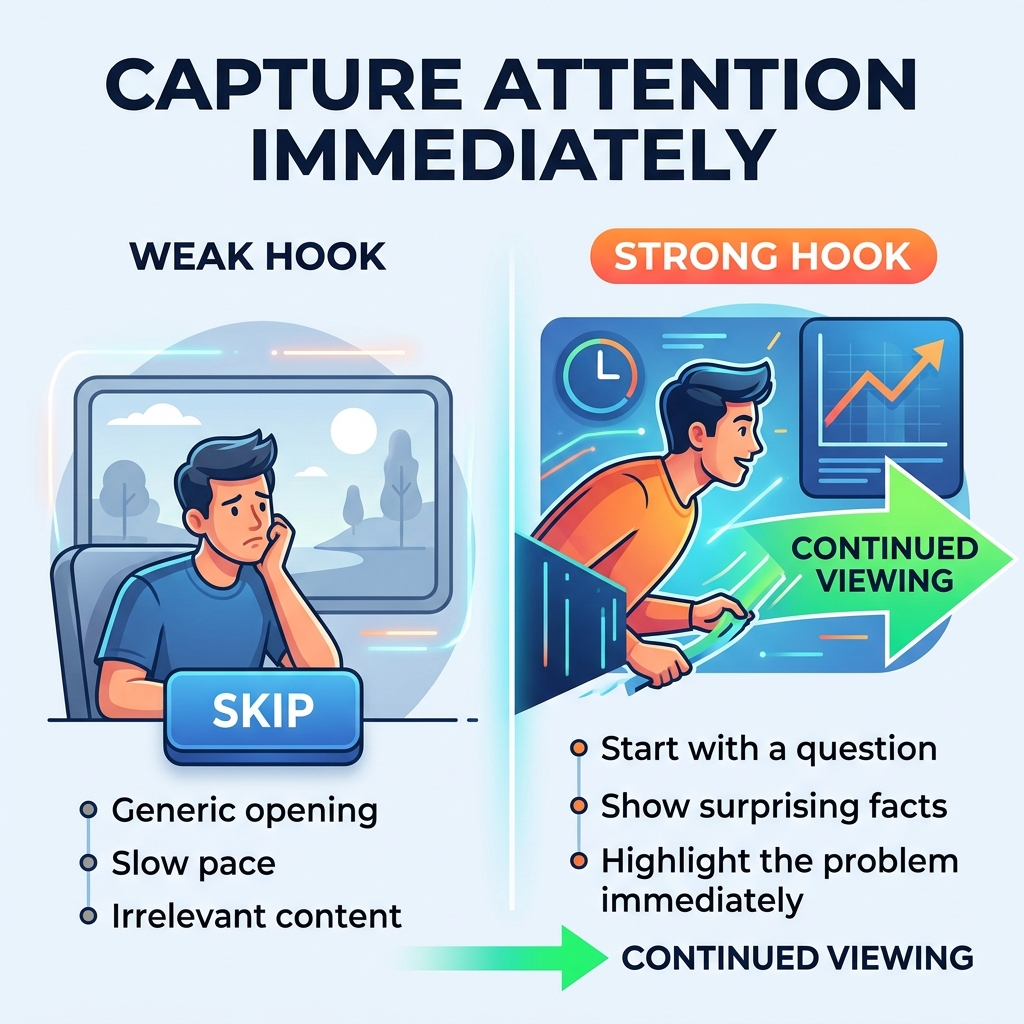
A strong video campaign usually requires continuous testing and optimization.
Test different:
- Hooks
- Video lengths
- Headlines
- CTAs
- Thumbnails
- Offers
- Audience segments
- Placements
- Landing pages
For example, instead of creating one advertisement and running it unchanged for months, create several creative variations and compare their performance.
This process can reveal which message, audience, and format produce the strongest results.
Businesses can also review the site’s resource on video marketing strategies to boost engagement for broader optimization ideas.
Future of Video Advertising
The video advertising ecosystem continues to evolve as audience behavior, technology, and advertising platforms change.
Several developments are particularly important.
AI-Powered Video Creation
Artificial intelligence can assist with:
- Script development
- Video editing
- Creative variations
- Personalization
- Audience analysis
- Content production
AI can make it easier for advertisers to test more creative variations.
More Personalized Advertising
Advertisers are increasingly interested in delivering relevant messages based on audience characteristics and behavior.
Interactive Experiences
Video is becoming more interactive as platforms support clickable elements, product discovery, and other engagement features.
Shoppable Video
The connection between video content and commerce is likely to become increasingly important for e-commerce brands.
Connected TV Growth
Streaming and connected television environments provide advertisers with another way to combine premium video experiences with digital campaign capabilities.
Better Measurement
Advertisers are increasingly focused on connecting video exposure with meaningful business outcomes instead of measuring views alone.
Final Thoughts
The growing number of types of video advertising gives businesses more opportunities to reach audiences at different stages of the customer journey.
In-stream, out-stream, social media, short-form, connected TV, OTT, native, interactive, shoppable, mobile, retargeting, personalized, 360-degree, testimonial, demonstration, and other video formats all serve different purposes.
The best approach is not to choose the format that is simply most popular. Instead, businesses should match the video format with their audience, campaign objective, platform, creative requirements, and measurement strategy.
A strong video advertising campaign starts with the right audience and message, uses the appropriate format, and continuously tests performance. When these elements work together, video can become a powerful tool for awareness, engagement, leads, and sales.
Frequently Asked Questions About Types of Video Advertising
1. What are the main types of video advertising?
The main types include in-stream, out-stream, social media, short-form, connected TV, OTT, native, interactive, shoppable, mobile app, retargeting, personalized, and product demonstration video advertising.
2. What is in-stream video advertising?
In-stream video advertising appears before, during, or after another video. Pre-roll, mid-roll, and post-roll are the most common forms.
3. What is out-stream video advertising?
Out-stream video advertising appears outside traditional video players, often within written articles, publisher pages, or other digital content environments.
4. Which type of video advertising is best for social media?
Short-form and social-feed video advertising are generally well suited to social media because they match mobile-first, fast-scrolling viewing behavior.
5. What is connected TV advertising?
Connected TV advertising delivers video advertisements through internet-connected televisions and related streaming environments.
6. What is shoppable video advertising?
Shoppable video allows viewers to interact with products featured in a video and potentially move directly toward product discovery or purchase.
7. Is interactive video advertising effective?
Interactive video can be effective when interaction adds value to the viewer experience. It can support engagement, product discovery, lead generation, and conversions.
8. What type of video advertising is best for e-commerce?
Shoppable videos, product demonstrations, social video, personalized video, and retargeting advertisements can be particularly useful for e-commerce campaigns.
9. What type of video advertising is best for brand awareness?
Social video, in-stream video, connected TV, OTT, and short-form video are commonly suitable for brand awareness campaigns.
10. How long should a video advertisement be?
There is no single ideal length. The appropriate duration depends on the platform, audience, message, and campaign objective. The advertisement should communicate its core value efficiently.
11. What metrics should be used to measure video advertising?
Important metrics include reach, impressions, view rate, completion rate, click-through rate, conversions, cost per view, cost per acquisition, and return on ad spend.
12. How do I choose the right type of video advertising?
Start with the campaign objective, identify your audience, select the appropriate platform, match the creative to the placement, establish a clear CTA, and test different formats to determine what performs best.